Understanding Spinal Decompression Therapy
Spinal decompression therapy is a non‑invasive, motor‑controlled traction treatment that gently stretches the spine to create negative intradiscal pressure, encouraging re‑hydration of disc tissue and relieving pressure on nerves. It is most suitable for patients with chronic low‑back or neck pain caused by bulging, herniated, or degenerated discs, sciatica, or mild spinal stenosis who have not improved after a trial of conservative care (rest, NSAIDs, physical therapy, or chiropractic adjustments). A stepped‑care philosophy guides clinicians to begin with the least invasive options—education, exercise, manual therapy—and only progress to decompression when imaging confirms disc pathology and symptoms persist, reserving surgery for those who fail non‑surgical measures.
How the Decompression Machine Works and What It Can Achieve
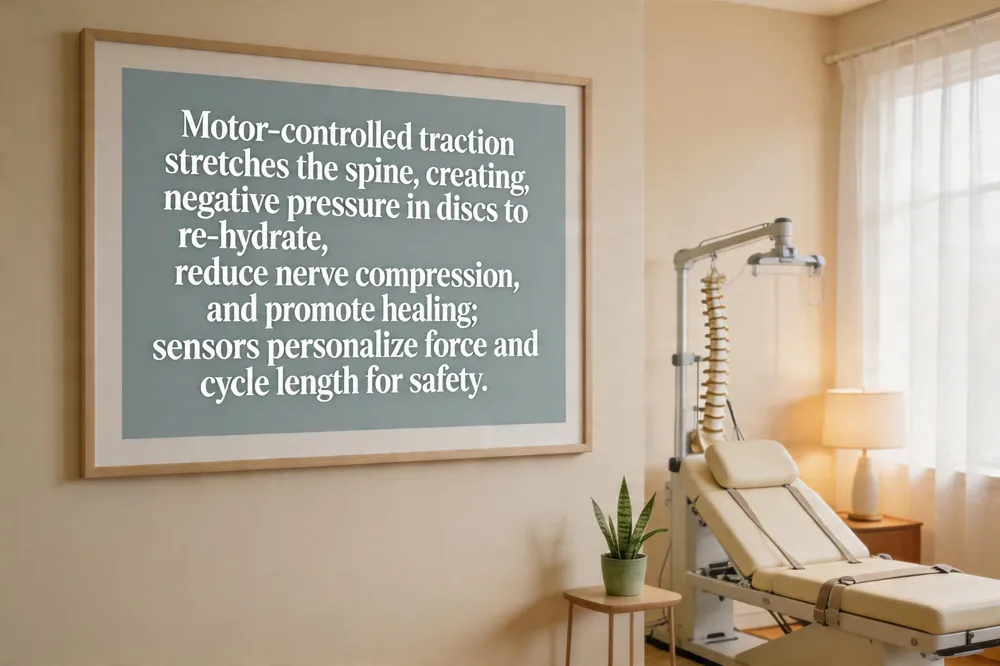 A spinal decompression machine is a motor‑controlled traction table equipped with pelvic and trunk harnesses that gently stretch the spine. By pulling the vertebrae apart, it creates a negative‑pressure environment inside the intervertebral disc, encouraging fluid to flow back into the disc and promote re‑hydrate. This reduction of intradiscal pressure relieves nerve compression, diminishes inflammation, and supports natural healing of bulging, herniated, or degenerated disc tissue. Modern units are fitted with sensors that detect muscle tension and automatically adjust force and cycle length, delivering a safe, personalized experience.
Pros of non‑surgical spinal decompression include a drug‑free, non‑invasive approach that can lower pain, improve mobility, and potentially avoid surgery. It can be combined with chiropractic adjustments, myofascial release, and corrective exercises, often yielding a temporary increase in disc height. Cons are that a full course usually requires multiple 20‑45‑sessions, results are variable, and certain patients—those with severe osteoporosis, spinal hardware, or advanced instability—are excluded. Insurance coverage is inconsistent, and out‑of‑pocket costs can be a factor.
Many patients notice a temporary height gain of roughly half‑inch to one inch immediately after a session as the discs re‑hydrate and expand. This gain is short‑term; disc height returns to baseline once fluid equilibrium normalizes.
When to Avoid Spinal Decompression: Contra‑indications and Red Flags
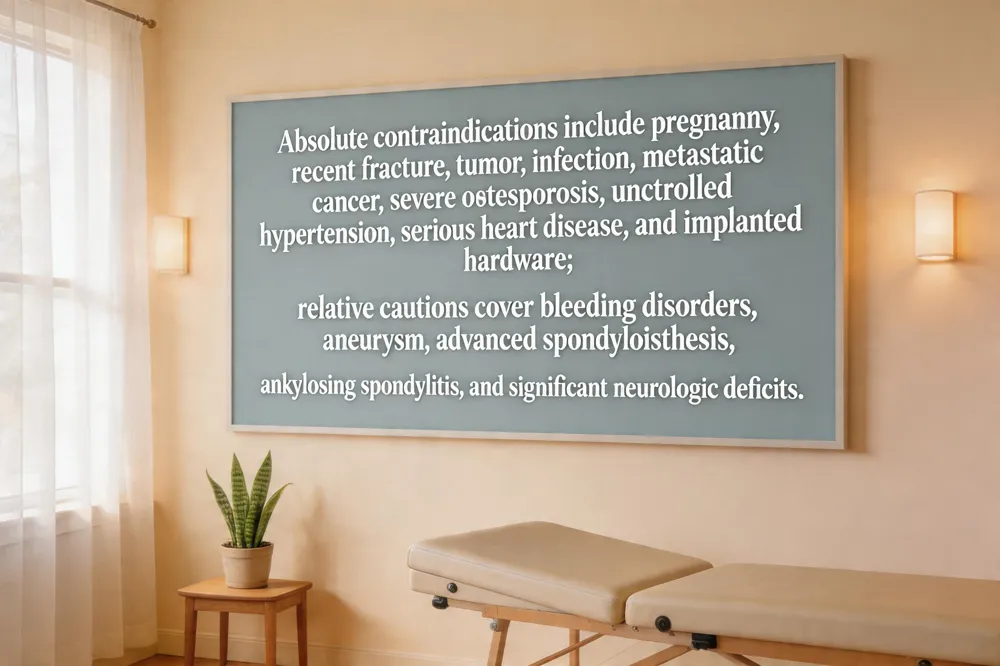 Spinal decompression therapy should be withheld whenever a patient presents an absolute contraindication, such as pregnancy (especially the third trimester), recent vertebral fracture, spinal tumour, active infection (e.g., discitis), metastatic cancer, severe osteoporosis, uncontrolled hypertension, severe cardiovascular disease, or any implanted spinal hardware (fusion plates, screws, artificial discs). Relative cautions include uncontrolled bleeding disorders, recent abdominal aortic aneurysm, advanced spondylolisthesis, severe ankylosing spondylitis, and neurologic deficits that impair sensation or motor control; these conditions require careful screening and may necessitate alternative non‑traction treatments. Special populations—pregnant women, patients with severe osteoporosis, those who have had back surgery within the past six weeks, or individuals with extensive spinal instrumentation—should avoid traction because the pulling forces can exacerbate bone fragility or compromise implants. In these cases, clinicians often recommend gentle chiropractic adjustments, myofascial release, corrective exercises, or custom orthotics to manage pain while protecting spinal integrity. Chiropractic care also helps regulate cortisol and stress levels by improving nervous‑system function and reducing pain‑induced hormonal activation.
Risks, Costs, Insurance, and Longevity of Relief
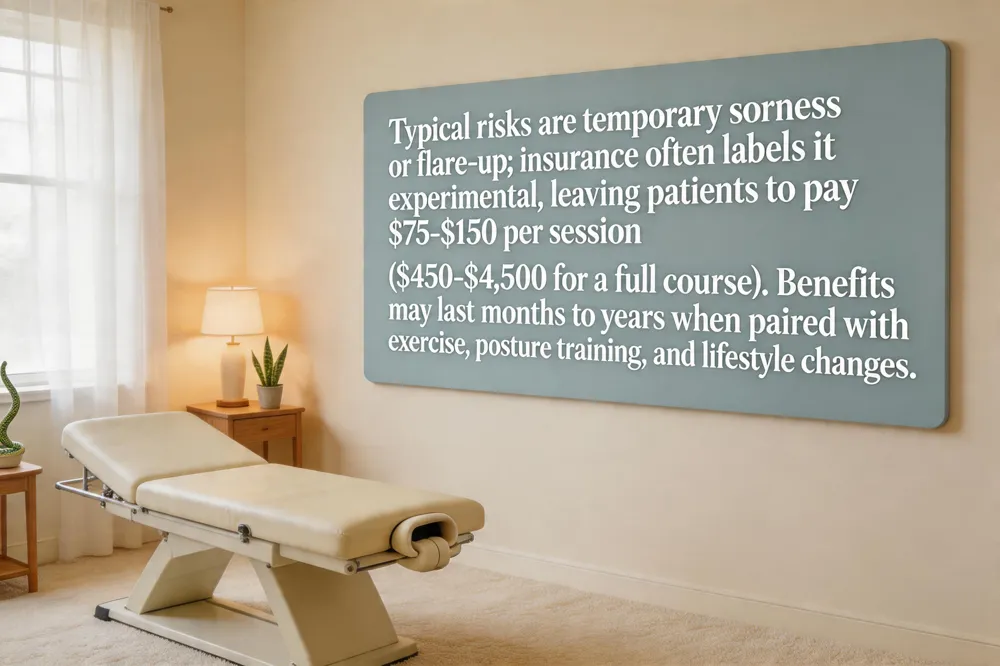 Spinal decompression is generally safe, but patients may experience temporary soreness, muscle fatigue, or a brief increase in pain. Rarely, improper case selection can lead to nerve irritation, worsening numbness, or a short‑term flare‑up of symptoms. In contrast, Surgical decompression carries higher risks, including infection, bleeding, blood‑clots, dural tears, and possible spinal instability. Insurance coverage is limited: many carriers label mechanical decompression as experimental, so automatic reimbursement is uncommon. Some plans may reimburse manual traction or chiropractic manipulation when billed under standard CPT codes and documented as medically necessary, but Medicare and Medicaid typically do not cover stand‑alone decompression. Patients usually pay out‑of‑pocket, with per‑session fees ranging from $75 to $150. A typical 6‑session series costs $450‑$900, while a 12‑session course runs $900‑$1,800; larger clinics using advanced equipment may charge $150 per session for 20‑30 sessions, totaling $3,000‑$4,500. Relief can last months to a few years, especially when combined with corrective exercises, posture training, and lifestyle changes. The therapy does not reverse underlying disc degeneration, so ongoing maintenance and at‑home rehabilitation are essential to sustain benefits.
Non‑Surgical Alternatives and Home Strategies for Back Pain
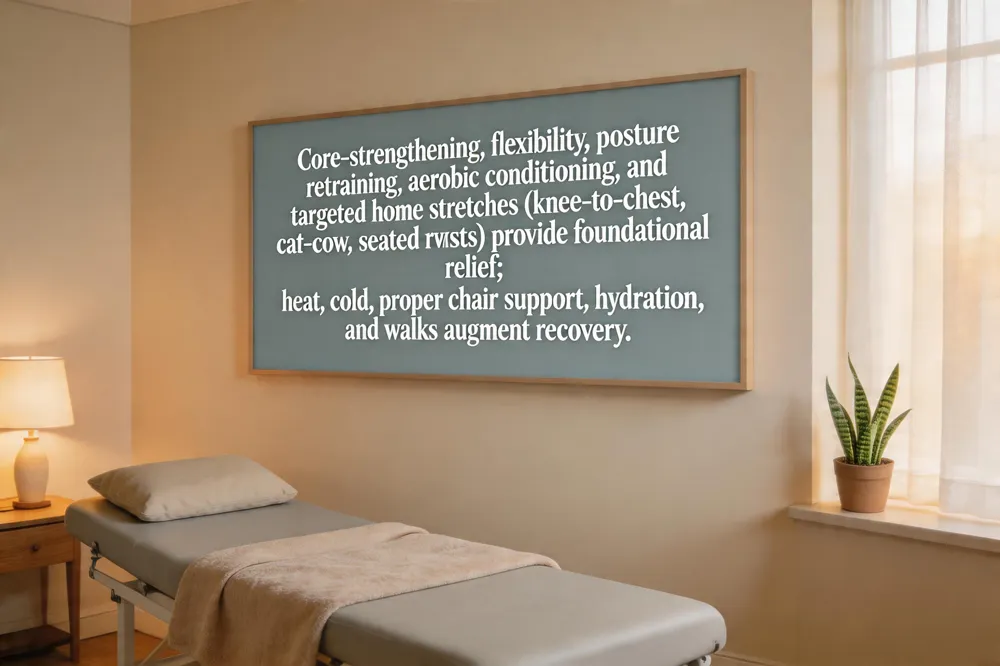 A physical‑therapy‑centric approach remains the cornerstone of non‑surgical back‑pain care. Structured PT programs combine core‑strengthening, flexibility, posture retraining, and gradual aerobic conditioning to restore spinal stability and reduce pain. Therapists guide patients through personalized home‑exercise regimens that reinforce proper alignment and muscle balance, making the therapy more effective than occasional sessions alone.
Quick home relief for women – Gentle stretches such as knee‑to‑chest, cat‑cow, and seated twists can loosen tight muscles within minutes. A warm compress for 15‑20 minutes relaxes spasms, while a cold pack during the first 24 hours curbs inflammation. Maintaining upright posture with a supportive chair and eye‑level screens prevents additional strain. Simple core‑strengthening moves like bridges or abdominal bracing activate supporting muscles, and short frequent walks paired with adequate hydration further promote circulation and recovery without medication.
Activities that aggravate L5‑S1 compression – Heavy deadlifts, deep squats, high‑impact running, jumping, and deep twisting movements (e.g., Russian twists) impose excessive shear forces on the L5‑S1 segment. Extreme forward bending or prolonged sitting in poor lumbar support also worsens compression at this level.
Complementary Exercises and Lifestyle Tweaks to Boost Decompression
 Therapeutic stretches and yoga poses such as Child’s Pose, Knees‑to‑Chest, Cat‑Cow, and a Prone Pillow Decompression Stretch gently elongate the spine and promote fluid exchange within the discs between Sp gravity‑assisted techniques—controlled inversion tables, exercise‑ball extensions, or simply lying on a firm surface with a pillow under the pelvis—provide low‑force traction that reinforces the negative pressure created by the decompression table.
What are effective spinal decompression exercises patients complement therapy? Effective complementary exercises include: • Child’s Pose – torso lowers toward thighs, arms extended forward. • Knees‑to‑Chest – pulling each knee toward the chest while lying on the back. • Cat‑Cow – alternating spinal flexion and extension on hands‑and‑knees. • Prone Pillow Decompression Stretch – pillow under pelvis, allowing gravity to gently separate vertebrae. • Inversion Table or Exercise‑Ball Extension – controlled gravity‑assisted decompression between sessions.
How much height can a person temporarily gain after a spinal decompression session? Patients may notice a temporary increase of about ½ to 1 inch as the discs re‑hydrate and expand; this is not a permanent height gain.
Maintaining disc height after treatment involves staying hydrated, avoiding heavy lifting, and continuing gentle core‑strengthening and posture‑focused exercises to support the renewed disc space.
Putting It All Together: A Stepped‑Care Roadmap
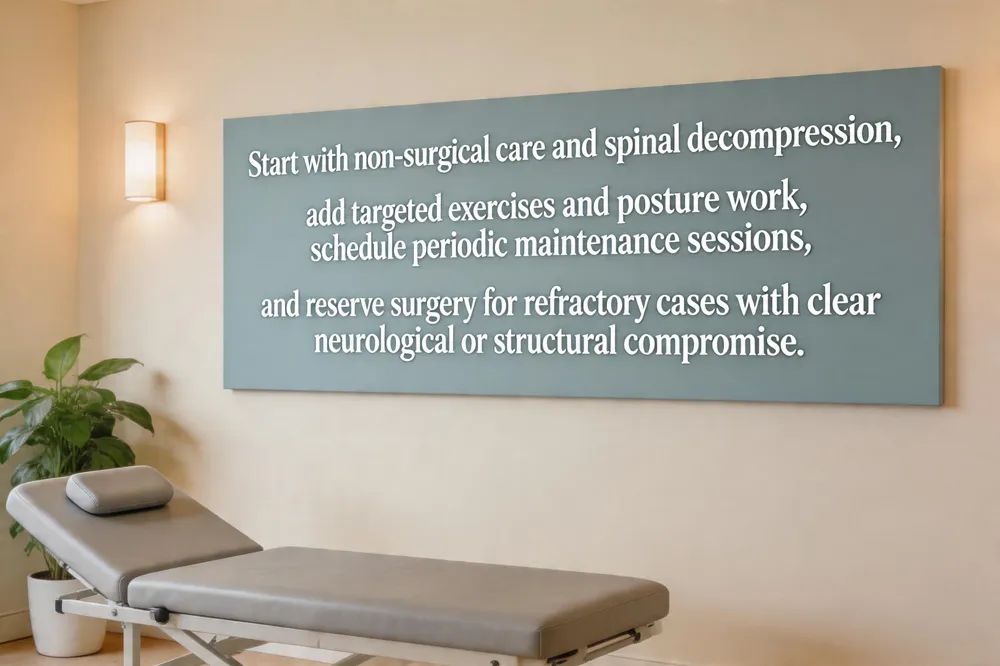 When pain remains refractory, or when neurological deficits progress (e.g., worsening weakness, bowel/bladder dysfunction), surgical decompression (laminectomy, discectomy, or fusion) is considered. Surgery is reserved for patients who have failed conservative care and exhibit clear structural compromise.
Long‑term maintenance focuses on core‑strengthening, posture education, and lifestyle changes to preserve disc health. Periodic “maintenance” decompression sessions can be scheduled every few months to sustain the negative pressure benefits.
Is spinal decompression a permanent fix for back pain? Spinal decompression can provide lasting relief for months to years when combined with corrective exercise, posture education, and lifestyle changes. It does not reverse degenerative disc disease, so it is not a guaranteed permanent cure. Ongoing maintenance sessions and at‑home programs help preserve benefits.
What are the pros and cons of spinal decompression? Pros: non‑invasive, drug‑free, reduces disc pressure, improves mobility, may avoid surgery. Cons: requires multiple sessions, variable outcomes, not suitable for severe osteoporosis, fractures, implants, or instability, and insurance coverage is inconsistent.
Making an Informed Choice at Ross Chiropractic
Before beginning spinal decompression at Ross Chiropractic, patients should undergo a thorough clinical evaluation that includes a detailed history, physical exam, and imaging (MRI, CT, or X‑ray) to confirm disc pathology such as a bulging or herniated disc, degenerative disc disease, sciatica, or spinal stenosis. The chiropractor will screen for absolute contraindications—pregnancy, severe osteoporosis, fractures, tumors, infections, recent spinal fusion, or implanted hardware—to ensure safety. Once deemed suitable, decompression is blended with a holistic plan that may feature chiropractic adjustments, myofascial release, corrective exercises, posture education, and lifestyle counseling, creating a multimodal approach that supports disc rehydration and functional recovery. The next step is to schedule an initial trial of 12–18 sessions, monitor pain scores and mobility, and adjust the protocol or consider alternative therapies if improvement is insufficient.