Understanding Traditional Chiropractic Care
Overview of Chiropractic Care as a Natural, Non-Invasive Treatment
Chiropractic care is a natural healing approach designed to improve musculoskeletal health without surgery or drugs. It primarily involves manual techniques to adjust the spine and other joints, aiming to restore proper alignment, improve joint function, and relieve pain. This non-invasive practice supports the body's innate ability to heal itself by promoting better nervous system function.
Historical Background Including Dr. D.D. Palmer and the Palmer College of Chiropractic
The foundation of chiropractic care dates back to 1895 with Dr. Daniel David Palmer, who developed spinal adjustment techniques focusing on correcting misalignments called subluxations. Dr. Palmer also established the Palmer College of Chiropractic in Davenport, Iowa, which remains a respected institution for chiropractic education. This history underscores chiropractic's long-standing role in alternative healthcare.
Core Principles of Spinal Alignment and Nervous System Health
Central to chiropractic philosophy is the belief that spinal misalignments interfere with nerve signals, impacting overall health. By correcting these misalignments through precise adjustments, chiropractors aim to improve nerve function, reduce inflammation, and enhance physical wellbeing. This connection between spinal alignment and the nervous system is the cornerstone of traditional chiropractic care, emphasizing personalized, patient-centered treatment.
Main Methods of Chiropractic Adjustment
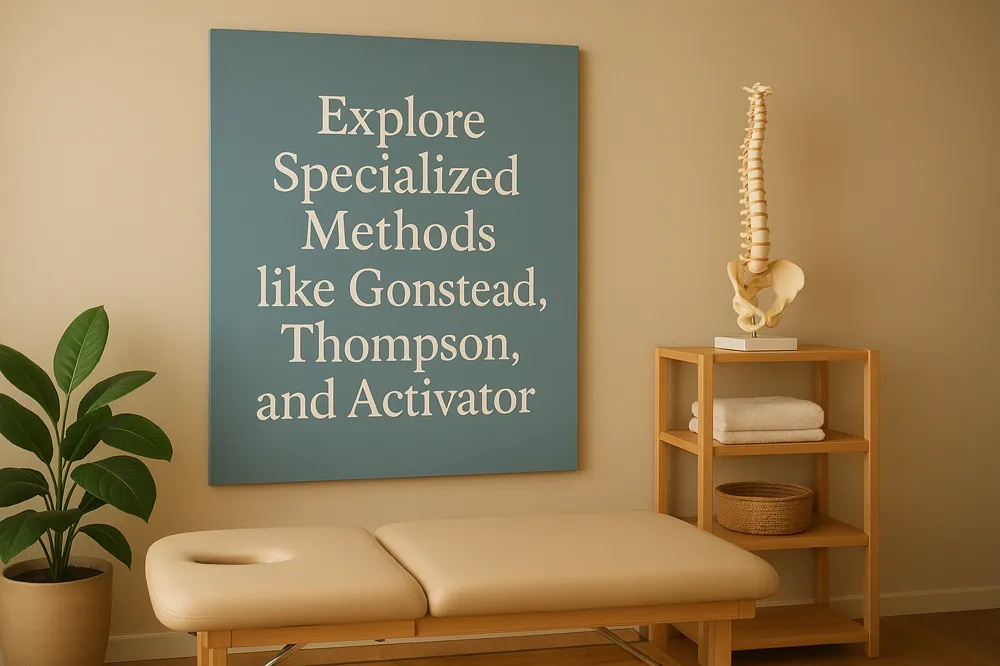
What are the main methods of chiropractic adjustment?
Chiropractic care offers a variety of Chiropractic care techniques aimed at improving spinal and joint function through manual or instrument-assisted adjustments. These methods focus on restoring proper alignment, relieving pain, and enhancing mobility.
Diversified Technique and Its Widespread Use
The Diversified Technique is the most commonly used chiropractic method globally. It involves High-Velocity Low-Amplitude Thrusts manually applied to specific vertebrae or joints to correct misalignments known as subluxations. This approach is tailored individually, often producing an audible 'pop' that signals joint cavitation.
Gonstead Technique: Precision Through Detailed Analysis
The Gonstead Technique emphasizes accuracy by employing detailed spinal analysis, including X-rays and palpation. This method targets specific vertebrae or joints for Precise Spinal Adjustments, with particular attention to the Pelvic Girdle and Spinal Health.
Activator Method: Gentle, Low-Force Instrumentation
For patients who prefer or require gentler treatments, the Activator technique in chiropractic uses a spring-loaded handheld instrument to deliver controlled, low-force impulses. This technique is effective for people sensitive to manual adjustments, including children and seniors.
Thompson Drop Technique and Specialized Tables
This method uses a unique drop table segmented into parts that drop slightly as the chiropractor applies force. The table’s design helps reduce the force needed for adjustments, making it a gentler option that can still produce effective spinal realignment. The Thompson Technique is well-known for this specialized drop table.
Sacro Occipital Technique (SOT): Focusing on the Sacrum-Occiput Connection
Sacro Occipital Technique (SOT) involves a comprehensive assessment of body function, emphasizing the relationship between the sacrum and occiput. It integrates spinal, cranial, and organ support techniques to address structural and soft tissue dysfunctions.
Additional Methods: Cox Flexion/Distraction and Extremity Manipulation
Gentle spinal decompression is achieved using the Cox Flexion/Distraction technique, which stretches the spine on a specialized table to relieve disc pressure. Furthermore, chiropractors often manipulate joints outside the spine, including shoulders, hips, and knees, addressing broader musculoskeletal issues.
These varied Chiropractic care techniques allow for personalized treatment plans tailored to individual patient needs, offering both manual and instrument-assisted options that emphasize safety, precision, and patient comfort.
The Gonstead Technique: Precision and Effectiveness
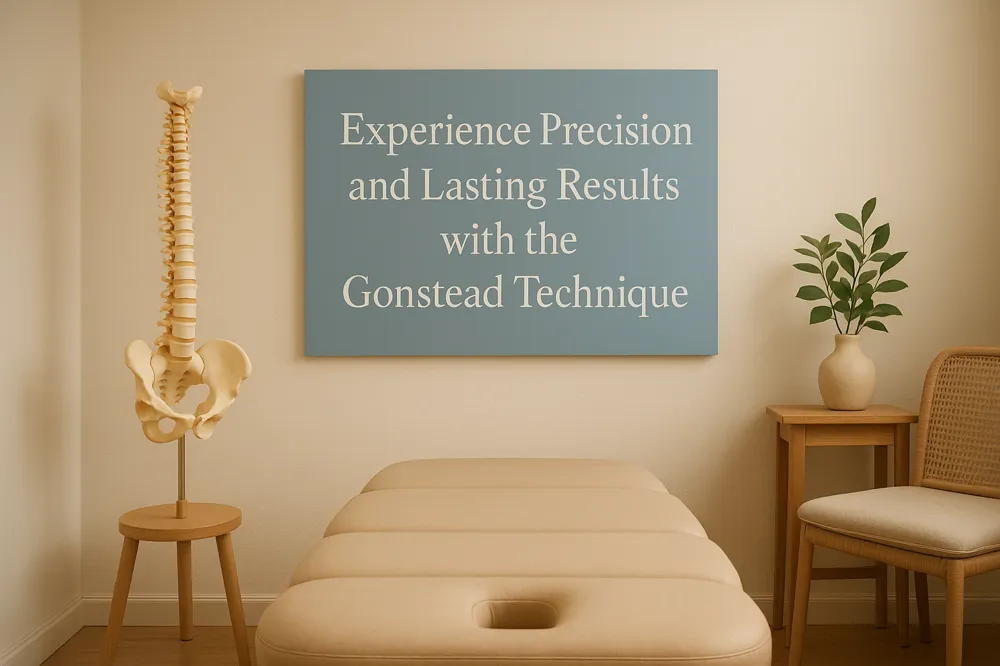
What is the Gonstead technique, and why is it considered effective?
The Gonstead Technique, developed by Dr. Clarence Gonstead, is a specialized Chiropractic Techniques method that stands out for its precision and thoroughness. It focuses on accurately identifying spinal misalignments, known as Subluxations Correction, through detailed patient assessments. These assessments often include the use of X-ray and Palpation Analysis of the spine to pinpoint the exact location and nature of the problem.
How do detailed patient assessments work in the Gonstead technique?
Chiropractors employing the Gonstead Technique perform a comprehensive analysis before any adjustment. This includes:
- X-ray and Palpation Analysis: To visualize the vertebrae and surrounding structures in detail, helping to confirm the presence and extent of misalignments.
- Palpation: Hands-on examination to feel for abnormal positioning, muscle tension, or joint restrictions.
- Postural evaluation: Checking body alignment and movement patterns to understand how the spine affects overall function.
How are targeted manual adjustments performed?
Once the specific Subluxations Correction is identified, the chiropractor applies precise, Manual Spine Adjustments directed exactly where needed. This exact targeting aims to:
- Realign vertebrae precisely
- Reduce nerve interference
- Restore proper joint movement
Often, these adjustments are delivered with controlled force and follow patient-specific positioning, enhancing safety and efficacy.
What patient benefits are associated with the Gonstead method?
Because of its detailed evaluation and precise corrections, the Gonstead Technique can provide:
- Effective pain relief, particularly for back and neck discomfort
- Improved spinal health and function
- Enhanced nerve performance leading to better overall well-being
Its reputation is built on long-lasting results through restoring natural alignment and facilitating the body's own healing processes.
Chiropractic Approaches to Back Pain Relief

What are three common methods chiropractors use to treat back pain?
Chiropractors primarily use Chiropractic adjustments or Chiropractic adjustment to realign the spine and improve joint movement, aiming to relieve back pain. This involves precise, controlled force applied to spinal joints to restore proper alignment and function.
Soft tissue therapies complement these adjustments by targeting muscles, tendons, and ligaments. Techniques such as trigger point therapy and instrument-assisted methods (like the Graston Technique) help relax tight muscles, reduce inflammation, and promote tissue healing.
Manual therapies, including joint mobilization and myofascial release, further aid in pain relief and functional improvement by increasing flexibility and reducing stiffness.
How does exercise therapy fit into chiropractic care?
Exercise therapy is frequently prescribed alongside adjustments. It focuses on strengthening muscles, improving posture, and enhancing flexibility through targeted stretches and strengthening routines. These exercises aid in maintaining spinal health and prevent the recurrence of pain.
What makes chiropractic treatment a non-invasive, drug-free option?
Chiropractic care employs Natural healing in chiropractic care, non-surgical methods to address musculoskeletal issues without relying on medications. Treatments are personalized based on individual assessments, ensuring tailored care that promotes healing while minimizing risks.
This holistic approach integrates hands-on adjustments, soft tissue care, and therapeutic exercises, offering a comprehensive strategy to manage and alleviate back pain effectively.
Chiropractic Care’s Role in Overall Wellness

How can chiropractic care contribute to overall wellness?
Chiropractic care plays a significant role in enhancing overall wellness by improving posture and spinal alignment. By carefully performing chiropractic adjustments, chiropractors help reduce misalignments that can cause discomfort and impair bodily functions.
This careful realignment can relieve conditions such as headaches, sciatica, and joint pain. These symptoms often result from nerve pressure or inflammation caused by spinal Subluxations Correction. Correcting these issues helps restore normal nerve function and reduces pain.
Therapies commonly used alongside adjustments include spinal decompression therapy to gently stretch and relieve pressure on spinal discs, and corrective exercises aimed at strengthening muscles and improving flexibility. These therapies support rehabilitation and long-term spinal health.
The benefits extend beyond immediate pain relief. Patients often experience improved mobility and posture, which can prevent future injuries and enhance daily function.
Chiropractic care offers a drug-free, holistic approach that emphasizes patient education and wellness. It focuses on maintaining Natural healing in chiropractic care to promote a better quality of life without invasive treatments.
| Aspect | Description | Benefit |
|---|---|---|
| Posture and Alignment | Manual Spine Adjustments to correct misalignments | Reduces pain and improves body mechanics |
| Relief of Symptoms | Treats headaches, sciatica, and joint discomfort | Enhances nerve function and reduces inflammation |
| Supportive Therapies | Spinal decompression, corrective exercises | Strengthens spine and maintains mobility |
| Long-Term Wellness | Injury prevention, improved movement | Enhances overall quality of life |
| Holistic and Drug-Free Approach | Emphasis on natural healing and patient education | Minimizes side effects, suits diverse patients |
Natural Remedies and Supportive Practices in Chiropractic Care
What are some natural remedies for muscle pain and inflammation?
Natural strategies for easing muscle pain include Epsom salt baths for muscle relaxation and warm compresses, which relax muscles and enhance circulation, aiding recovery. Turmeric for reducing muscle inflammation, rich in curcumin, is a potent anti-inflammatory food commonly used to reduce joint and muscle pain. Mind-body practices like meditation and Tai chi and yoga for arthritis help lower pain perception by reducing stress and promoting muscle relaxation.
What natural supplements can help with muscle soreness and joint pain?
Turmeric and omega-3 fatty acids are among the top natural supplements for muscle and joint relief. Curcumin's anti-inflammatory effects in turmeric reduces inflammation and oxidative stress. Pairing turmeric with black pepper boosts absorption significantly. Omega-3s from fish oils support joint health by decreasing inflammation. Always consult a healthcare provider before starting supplements to prevent interactions.
What beverages support joint lubrication and overall joint health?
Hydration with water is fundamental, while green tea offers antioxidants that protect joints by slowing cartilage breakdown. Extra virgin olive oil contains compounds like oleocanthal that provide anti-inflammatory benefits. Eating fruits such as berries and cherries, high in antioxidants and vitamin C, supports joint tissue repair and reduces inflammation.
What are effective ways to relieve pain without using medication?
Chiropractic adjustments realign the spine and ease pain naturally, often combined with therapies like Spinal decompression therapy and massage. Mind-body techniques — for example meditation and biofeedback — decrease muscle tension and stress, aiding pain relief. Acupuncture and electrical stimulation such as TENS also provide drug-free options to manage and alleviate pain.
These natural and supportive practices complement Chiropractic treatment care by addressing muscle pain and inflammation holistically and promoting long-term joint health.