Why Prenatal Chiropractic Matters
Pregnancy hormones such as relaxin loosen ligaments and increase pelvic mobility, while the growing belly shifts the center of gravity, accentuating lumbar lordosis and pelvic tilt. These postural shifts often create misalignments that cause low‑back, neck, and pelvic pain. Prenatal chiropractic uses gentle, low‑force adjustments—often side‑lying or with the Webster Technique—to restore spinal and pelvic balance without medication, reducing pain, nausea, and sciatica. Because it is drug‑free, it offers a safe, non‑pharmacologic option for comfort. Chiropractors work closely with obstetric providers, sharing obstetric history, obtaining clearance, and prescribing pregnancy‑appropriate stretches and ergonomic advice, creating a coordinated prenatal wellness plan that supports both mother and baby. Visits help maintain pelvic space, lowering the chance of breech presentation and shortening labor duration.
Starting Chiropractic Care Early in Pregnancy
 When to start chiropractic care during pregnancy – Most women can begin gentle prenatal chiropractic care as soon as they discover they are pregnant, often during the first trimester, after getting clearance from their OB‑GYN. Early treatment addresses hormonal‑related nausea, back and pelvic discomfort, and postural changes before they become severe. Regular adjustments in the second trimester support the shifting center of gravity, reduce hip and sciatica pain, and keep the pelvis aligned for a smoother third trimester. In the final months, care can ease swelling, improve sleep, and use the Webster Technique to promote optimal pelvic positioning for labor.
Chiropractor while pregnant 1st trimester – Yes, chiropractic care is safe in the first trimester when performed by a practitioner trained in prenatal techniques. The chiropractor uses low‑force adjustments, side‑lying or semi‑reclined adjustments to avoid abdominal pressure. Early‑pregnancy visits relieve low‑back pain, pelvic discomfort, nausea, and postural strain caused by relaxin‑induced ligament laxity. Maintaining proper spinal and pelvic alignment supports nervous‑system function and may improve fetal positioning later. At Ross Chiropractic, Dr. Allison Ross, DC, provides personalized, drug‑free care on specialized tables, ensuring comfort and safety for both mother and baby.
The Webster Technique: Pelvic Balance for Labor
 The Webster Technique is a gentle, low‑force chiropractic adjustment specifically designed for pregnant patients. By targeting the sacroiliac joints, uterosacral ligaments, and round ligaments, it aims to correct sacral subluxations, improve pelvic balance, and enhance nervous‑system function. Certified practitioners—often holding DACCP, CACCP, or Webster certifications—use side‑lying or seated positioning on specially padded tables to avoid abdominal pressure. Research published in the Journal of Manipulative and Physiological Therapeutics (2002) reported an 82 % success rate in turning breech babies when the technique was applied in the eighth month, suggesting a role in optimizing fetal positioning and potentially shortening labor.
During the third trimester, a prenatal chiropractor focuses on maintaining lumbar and pelvic alignment while the uterus expands and the center of gravity shifts forward. Adjustments are performed in a side‑lying or semi‑reclined position, employing the Webster Technique to relieve low back, hip, and sciatica pain and to reduce intrauterine constraint. Complementary soft‑tissue therapies, cold‑laser treatment, and personalized core‑strengthening exercises are often added to support posture and mobility. Regular visits throughout the final weeks can ease discomfort, promote optimal fetal positioning, and contribute to a smoother, drug‑free delivery.
Benefits and Potential Drawbacks
 Pros and cons of chiropractic care during pregnancy
Pros: Chiropractic care is a drug‑free, non‑invasive option that often relieves back, neck, and joint pain within a few days of treatment. Gentle, low‑force adjustments improve spinal alignment and pelvic balance, which can reduce intrauterine constraint, promote optimal fetal positioning, and shorten labor by 25‑31 %. Many women also experience reduced sciatica, nausea, and improved posture, and continued care supports postpartum recovery and breastfeeding comfort.
Cons: While generally safe, a small minority may feel mild soreness after an adjustment. Care must be avoided in high‑risk situations such as unexplained vaginal bleeding, pre‑eclampsia, placenta previa, or imminent labor. The benefits outweigh these minimal risks when treatment is provided by a chiropractor with prenatal training (e.g., DACCP, CACCP, Webster Certified).
Is chiropractic safe during pregnancy?
Yes. Research and professional guidelines (American Pregnancy Association, International Chiropractic Pediatric Association affirm that chiropractic care is safe throughout all trimesters when performed by a practitioner trained in prenatal techniques. Specialized tables and side‑lying positions eliminate abdominal pressure, and gentle adjustments avoid high‑velocity thrusts. No known contraindications exist for uncomplicated pregnancies, making chiropractic a safe adjunct to obstetric care when coordinated with the patient’s OB‑GYN.
Second Trimester: Managing Growing Discomfort
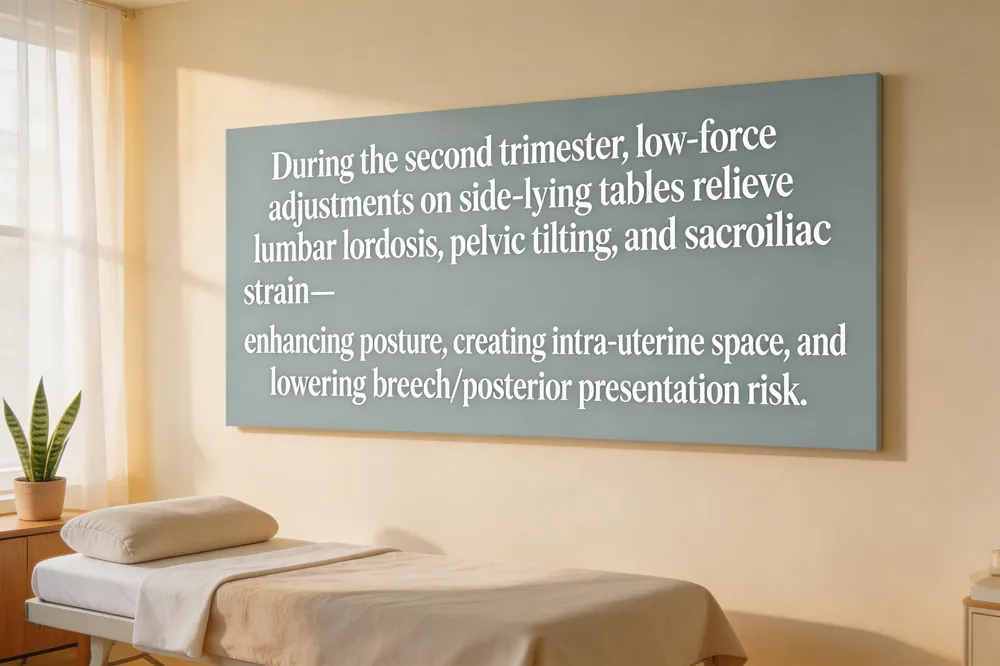 The second trimester is often the most comfortable period for prenatal chiropractic care, and it remains safe when the chiropractor is trained in pregnancy‑specific techniques such as DACCP, CACCP, or Webster Certification. Using a specially designed, side‑lying table or a drop‑piece, the practitioner delivers low‑force, gentle adjustments that respect the growing abdomen. These adjustments target the increased lumbar lordosis, pelvic tilting, and sacroiliac strain that commonly arise as the uterus expands. By restoring spinal and pelvic alignment, the chiropractor reduces back, neck, and joint pain, improves posture, and creates more intrauterine space. The Webster Technique or similar pelvic‑balancing methods are frequently employed to relieve uterine tension, promote optimal fetal positioning, and lower the risk of breech or posterior presentations. Regular visits—typically once a month or as needed—allow ongoing monitoring, safe stretching, and core‑strengthening exercises that support maternal mobility and may shorten labor duration.
Practical Guidance for Expecting Parents
 What to avoid at a chiropractor when pregnant?
Choose a chiropractor who holds prenatal designations such as DACCP, CACCP, or Webster Certified. Do not receive deep‑pressure or high‑velocity thrusts that target the abdomen or uterus. Avoid lying flat on your back on a standard table after the first trimester; request a side‑lying or pregnancy‑adjusted table. Skip techniques that place excessive strain on the pelvis or ligamentous structures, and refrain from untested modalities that lack safety data for pregnancy.
ACOG chiropractor during pregnancy
The American College of Obstetricians and Gynecologists (ACOG) lists chiropractic care as a safe, non‑pharmacologic option when delivered by a practitioner trained in prenatal techniques. ACOG encourages open communication between obstetricians and chiropractors, ensuring adjustments are appropriate for the trimester and any specific medical conditions. The organization highlights that gentle spinal and pelvic adjustments can reduce back pain, improve posture, and lower intrauterine constraint, thus supporting overall maternal comfort without medication.
Prenatal chiropractor near me
For personalized prenatal care in San Jose, CA, see Dr. Allison Ross, DC. She uses low‑force, side‑lying adjustments, the Webster Technique, myofascial release, cold‑laser therapy, and custom orthotics to relieve back and pelvic pain, improve posture, and prepare the body for labor. Her practice also provides safe exercise prescriptions and ergonomic education, making it a drug‑free option for expectant mothers seeking relief.
Coordinated Care and Postpartum Transition
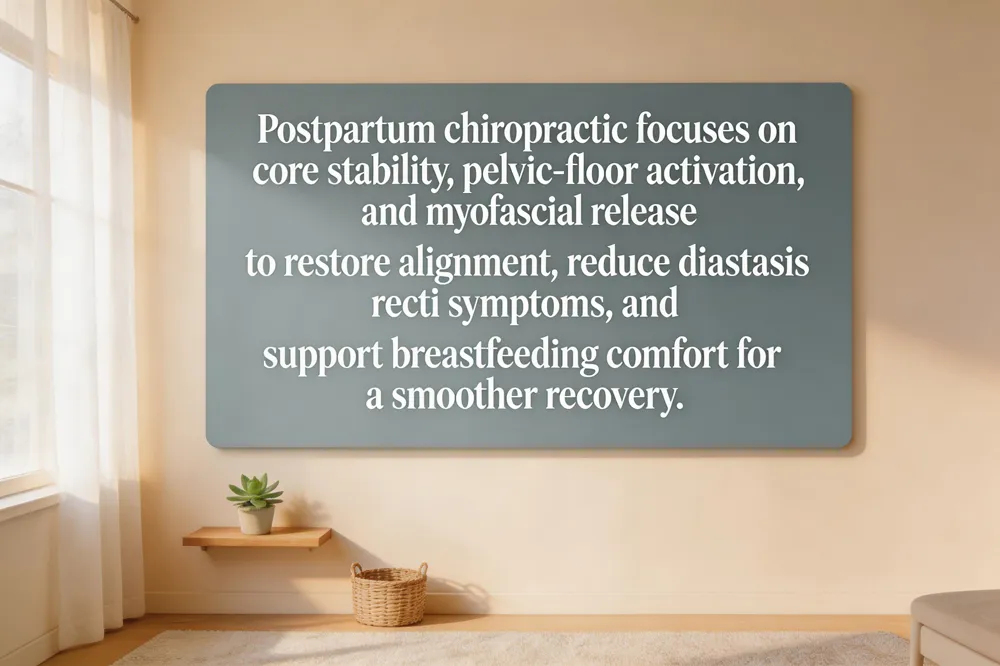 Postpartum chiropractic care continues the focus on alignment, but the goals shift to recovery from labor, re‑establishing core stability, and relieving lingering pelvic or back pain. Gentle, low‑force adjustments combined with myofascial release, supportive orthotics, and prescribed exercises help restore spinal biomechanics, reduce diastasis recti symptoms, and improve breastfeeding posture. Research indicates that women who receive regular postpartum visits experience faster return to normal mobility and lower rates of chronic low‑back pain.
Patient education is woven throughout both prenatal and postpartum phases. Expectant mothers are taught safe stretching, core‑strengthening routines, ergonomics for daily activities, and hydration strategies to support lymphatic drainage after adjustments. After delivery, education expands to include pelvic‑floor activation, proper infant‑handling techniques, and gradual progression of activity levels.
Answer to common questions:
Do I need to tell my chiropractor I’m 6 weeks pregnant? Yes. Early disclosure allows Dr. Allison Ross to select a side‑lying or semi‑reclined position, use a pregnancy‑specific table, and avoid abdominal pressure. She can then apply gentle, spinal‑based adjustments and prescribe pregnancy‑appropriate exercises that relieve discomfort while protecting the fetus.
Benefits of chiropractic care during pregnancy: Regular, low‑force adjustments alleviate back, neck, pelvic, and joint pain by correcting misalignments and reducing nerve irritation. Maintaining pelvic balance increases intra‑uterine space, promotes optimal fetal positioning, and lowers the risk of breech presentations and cesarean delivery. Studies report shorter labor durations (25‑30 % reduction) and reduced nausea, all without medication. The overall effect is a healthier, more comfortable pregnancy and a smoother transition into the postpartum period.
A Safe Path to a Healthy Birth
Prenatal chiropractic care integrates seamlessly with obstetric guidance to create a holistic wellness plan for expectant mothers. By using low‑force, side‑lying adjustments and the Webster Technique, chiropractors support pelvic balance and optimal fetal positioning while eliminating the need for medication. Specialized tables and gentle stretches keep the abdomen safe, allowing the nervous system to function efficiently and reduce nausea, back pain, and joint strain. Consistent visits throughout pregnancy lay the foundation for long‑term musculoskeletal health, easing the transition to postpartum recovery and reducing future back or pelvic issues. The drug‑free, patient‑focused approach empowers women to stay active, maintain proper posture, and experience a smoother labor and delivery. They also receive exercise plans that reinforce core stability and promote daily activities.