Why Early Detection Matters
Sciatica affects roughly 40 % of adults at some point, making it one of the most common causes of leg and lower‑back pain. When the condition is identified early, conservative therapies such as stretching, core strengthening, and chiropractic adjustments can relieve nerve irritation within the typical four‑to‑six‑week recovery window. Delayed treatment, however, allows compression to persist, increasing the risk of muscle weakness, loss of bladder or bowel control, and chronic pain that may ultimately require surgery. This article aims to highlight the early warning signs, explain why prompt evaluation is essential, and guide readers toward evidence‑based, non‑invasive strategies that prevent progression and reduce the need for invasive procedures. Early detection also supports patients in maintaining activities and avoiding bed rest, which can aggravate spinal health.
Understanding the Early Stages of Sciatica
 The first stage of sciatica begins with irritation of the sciatic nerve at its lumbar roots. Early symptoms are usually low‑grade: a dull ache or burning sensation in the lower back, buttock, or hip that may radiate down the back of the thigh. Tingling, pins‑and‑needles, or occasional numbness often accompany the pain, which worsens with prolonged sitting, coughing, sneezing, or bending. Some patients notice a sudden onset—triggered by a rapid disc herniation, heavy lifting, or a fall—producing sharp, electric‑shock‑like pain that shoots down the leg. Others develop symptoms gradually as a herniated disc or bone spur slowly compresses the nerve. Early pain is typically unilateral, mild, and confined to the upper leg, unlike later stages where it can extend to the calf, foot, and cause muscle weakness or loss of bladder/bowel control. Recognizing these early signs enables prompt, non‑invasive interventions such as gentle chiropractic adjustments, spinal decompression, and core‑strengthening exercises before the condition progresses.
Differentiating Sciatica from Look‑Alikes
 Sciatica is most often caused by compression of the sciatic nerve root—typically a herniated lumbar disc, spinal stenosis, or bone spurs—while muscle‑related problems such as piriformis syndrome or sacroiliac joint dysfunction can mimic its radiating pain. Distinguishing features include a straight‑leg raise test that reproduces pain, unilateral burning or electric‑shock sensations that worsen with coughing, sneezing, or bending, and accompanying numbness and tingling in the affected leg; true sciatica often worsens with coughing, sneezing, or bending, whereas hip osteoarthritis and peripheral vascular disease lack these nerve‑specific signs. Accurate diagnosis matters because red‑flag symptoms (muscle weakness, loss of bladder or bowel control) signal urgent conditions like cauda equina syndrome and dictate prompt imaging or surgical referral. Vitamin deficiencies—especially B12, B6, B1, and vitamin D—can exacerbate nerve irritation and may be addressed alongside physical therapy and chiropractic adjustments and core‑strengthening exercises to relieve early sciatica pain.
Red‑Flag Symptoms and When to Seek Immediate Care
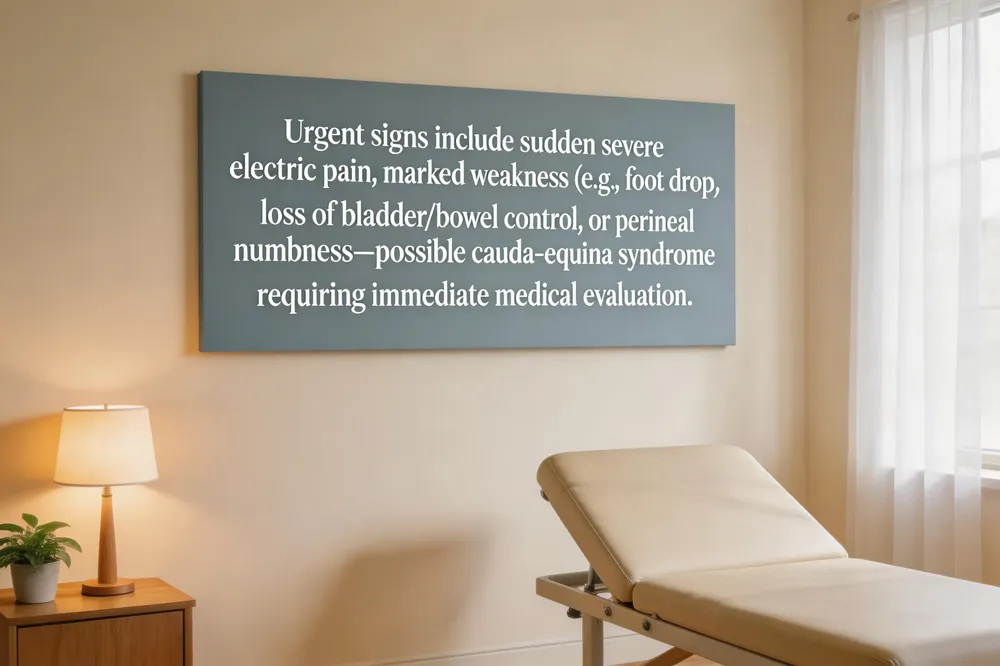 Severe Nerve Compression Signs – Sudden, burning or electric‑shock pain that radiates down the leg, accompanied by marked numbness, tingling, or muscle weakness (e.g., foot drop), indicates significant sciatic nerve irritation.
Cauda‑equina Syndrome Warning Signs – Loss of bladder or bowel control, severe perineal numbness, or sudden weakness in both legs are red‑flag symptoms that may signal cauda‑equina syndrome, a medical emergency requiring immediate surgical evaluation.
Impact of Delayed Treatment – Postponing care can allow permanent sensory loss, chronic pain, and progressive nerve damage, increasing the likelihood of surgery and reducing recovery chances. Early non‑invasive interventions (spinal decompression, myofascial release, corrective exercises) are far more effective when initiated promptly.
Last stages of sciatica – In the final stages, pain becomes constant and debilitating, extending from the lower back and buttocks down the entire leg, often with persistent nerve compression leading to permanent sensory loss, weakness, and risk of cauda‑equina syndrome. Conservative care alone is insufficient; intensive therapies and evaluation for possible surgery are needed.
Sciatica pain so bad can’t walk – Severe Sciatica pain may make standing or walking impossible due to sharp pain and weakness. Initial care includes short‑term rest, ice for 48 hours, then heat, followed by chiropractic assessment and targeted spinal decompression, myofascial release, and corrective exercises to restore mobility.
Quick Home‑Care Relief and Targeted Stretches
 Cold‑heat therapy begins with a 15‑20‑minute cold pack on the painful buttock or lower‑back for the first two days, then switches to a warm compress for 10‑15 minutes to increase blood flow and ease muscle spasm. Over‑the‑counter NSAIDs such as ibuprofen can be taken as directed for additional anti‑inflammatory effect.
For a rapid 10‑minute nerve‑flossing routine, sit upright, straighten the affected leg while flexing the ankle, hold five seconds, then bend the knee; repeat 10‑15 times. Follow with a seated piriformis stretch (ankle over opposite knee, gently pull thigh toward chest) and a reclining pigeon pose, each held 30 seconds. Finish with diaphragmatic breathing and a brief warm lumbar compress.
Core‑focused stretches that bring immediate comfort include a supine knee‑to‑chest (8‑10 repetitions per side), a seated hamstring stretch (20‑30 seconds each leg), and a glute bridge (5‑30 seconds, 8‑10 reps). Maintaining a neutral spine and avoiding prolonged sitting while these moves decompress the sciatic nerve and promote relief.
If symptoms persist beyond a few days, professional evaluation—including a straight‑leg raise test and imaging when indicated—can confirm nerve involvement. Non‑invasive chiropractic care, such as spinal decompression and myofascial release, often accelerates recovery and reduces the likelihood of chronic flare‑ups.
Comprehensive Non‑Surgical Treatment at Ross Chiropractic
 At Dr. Allison Ross, DC, sciatica is treated with a drug‑free, multimodal approach that begins with precise spinal adjustments to realign vertebrae and relieve pressure on the sciatic nerve. Targeted spinal decompression gently stretches herniated or bulging discs, reducing nerve compression. Soft‑tissue work—including myofascial release, trigger‑point therapy, and cold‑laser therapy—relaxes tight muscles in the lower back, hips, and glutes while diminishing inflammation. Personalized corrective exercises strengthen the core, glutes, and hamstrings, improve posture, and promote long‑term spinal stability; custom orthotics correct biomechanical imbalances that can irritate the nerve.
Fastest relief comes from an immediate chiropractic adjustment combined with a brief decompression session, followed by alternating ice/heat packs and nerve‑specific stretches (e.g., seated piriformis stretch, glute bridge). Over‑the‑counter NSAIDs can add temporary pain control.
Permanent cure is achieved by eliminating mechanical irritation through the comprehensive program above and maintaining healthy habits: regular low‑impact exercise, weight management, ergonomic posture, and proper lifting technique.
Prevention includes daily core‑strengthening, frequent breaks from prolonged sitting, and early intervention when back pain appears.
Medication: First‑line treatment is an OTC NSAID (ibuprofen or naproxen). If needed, prescription muscle relaxants, low‑dose antidepressants, anti‑seizure drugs, short‑course oral steroids, or targeted steroid injections may be added, always in conjunction with the non‑surgical therapies outlined.
Monitoring Progress and Ensuring Long‑Term Wellness
 Confirming sciatica starts with recognizing classic symptoms—sharp, shooting pain that runs from the lower back or buttock down the thigh and calf, often with tingling, numbness or weakness. A focused physical exam checks muscle strength, reflexes and nerve tension using maneuvers such as the straight‑leg‑raise, toe‑walk, heel‑walk and squat‑rise. If pain persists beyond a few weeks, worsens, or red‑flag signs appear, imaging (X‑ray, MRI or CT) and sometimes EMG are ordered to reveal disc herniation, spinal stenosis or nerve‑root injury.
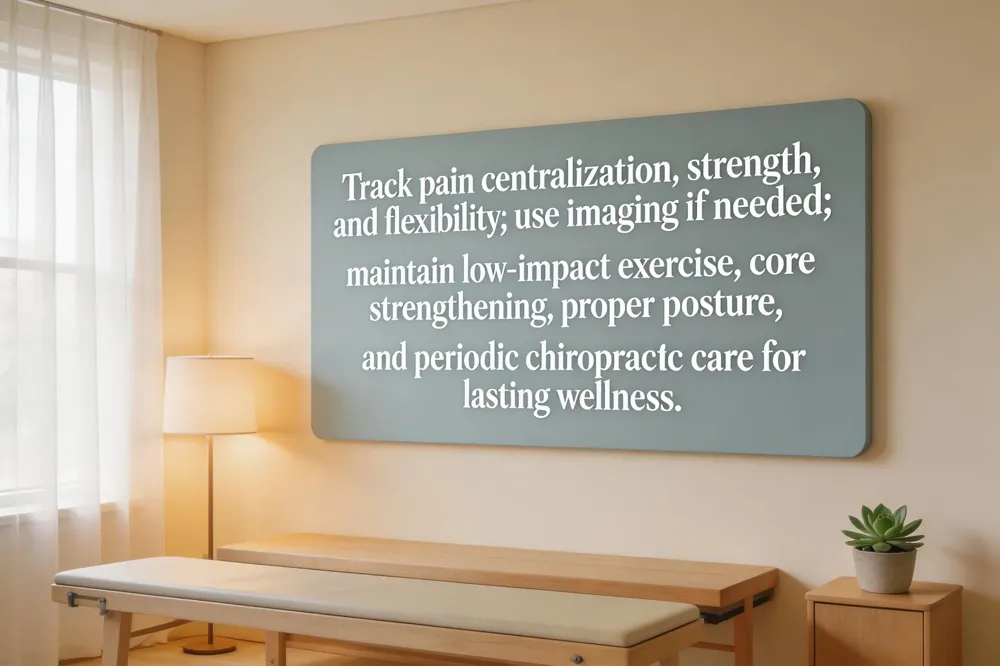
Improvement is evident when pain centralizes toward the lower back, intensity and frequency of shooting sensations drop, and muscle spasms subside. Leg strength and flexibility increase, allowing smoother gait and daily tasks with less reliance on medication.
Long‑term wellness hinges on ongoing maintenance: regular low‑impact exercise (walking, swimming), core‑strengthening and hamstring/hip‑flexor stretching, weight management, proper posture and ergonomics, and periodic chiropractic adjustments or spinal decompression to keep spinal alignment and reduce nerve irritation.
Take Action Today for a Pain‑Free Future
Recognizing early warning signs of sciatica—such as radiating burning pain, numbness, tingling, or sudden leg weakness—allows you to act before the nerve becomes severely compressed. When these symptoms appear, seeking a professional chiropractic evaluation is crucial; a qualified chiropractor can perform a straight‑leg raise test, assess spinal alignment, and identify the exact source of irritation. Early, non‑invasive interventions—spinal adjustments, decompression therapy, myofascial release, and corrective exercises—relieve pressure on the sciatic nerve, reduce inflammation, and restore proper core stability. Consistently integrating these therapies not only speeds recovery but also prevents future flare‑ups, promotes long‑term spinal health, and minimizes the need for medication or surgery. By committing to visits and a exercise‑program, you maintain benefits and safeguard mobility for years to come.