Why Prenatal Chiropractic Matters
Pregnancy brings hormonal and mechanical shifts—relaxin loosens pelvic ligaments, a growing abdomen increases lumbar lordosis, and pelvic rotation creates misalignments that stress the spine, sacroiliac joints, and surrounding muscles. Chiropractic care offers a non‑drug, non‑invasive solution: gentle, low‑force adjustments performed on pregnancy‑adjusted tables or side‑lying positions avoid abdominal pressure while restoring spinal and pelvic balance. By correcting subluxations, chiropractors reduce back, neck, and pelvic pain, lessen nausea, and improve functional mobility without medication. Specialized techniques such as the Webster Technique target pelvic alignment, expanding intra‑uterine space and helping turn breech babies to a vertex position; studies report success rates of 82‑92 % and associated reductions in labor duration of up to 31 %. When coordinated with obstetric care, prenatal chiropractic supports maternal comfort, optimal fetal positioning, and a smoother, safer delivery.
First Trimester Care – Gentle Beginnings
| ** Point | ** Details |
|---|---|
| Techniques Used | Low‑force adjustments, side‑lying position, Activator® instrument, Webster Technique |
| Certifications | DACCP, CACCP, Webster‑Certified; use of padded, adjustable tables |
| Safety | No high‑velocity thrusts; abdomen kept pressure‑free |
| Benefits | Relief of low‑back, neck, pelvic pain; improved pelvic balance; may aid later fetal positioning |
| When to Start | As soon as pregnancy‑related discomfort appears, often in the first trimester |
| Coordination | Obtain OB‑GYN clearance; integrate with prenatal care plan |
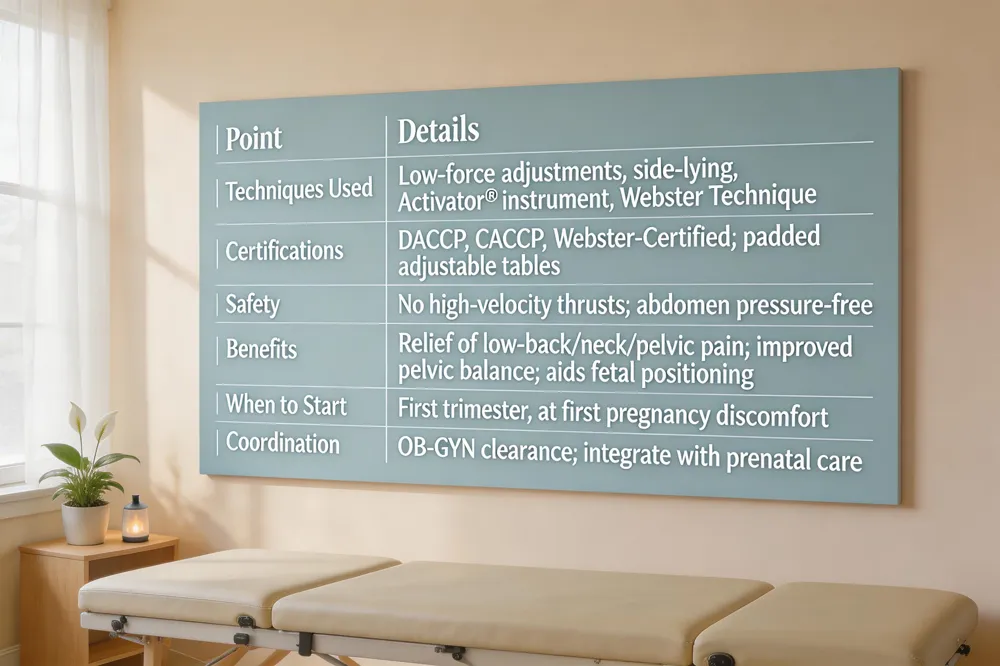 Prenatal chiropractors use low‑force, pregnancy‑specific techniques—such as side‑lying adjustments, Activator® instrument, and the Webster Technique—avoid pressure on the abdomen while gently restoring spinal and pelvic alignment. Practitioners who hold certifications like DACCP (Diplomate of the International Chiropractic Pediatric Association), CACCP (Certified Advanced Chiropractic Care for Pregnancy), or are Webster‑Certified have completed specialized training that includes the use of padded, adjustable tables and safe positioning devices.
Chiropractor while pregnant 1st trimester – Yes. A qualified, prenatal‑trained chiropractor can safely treat you in the first trimester by employing gentle, low‑force adjustments and avoiding high‑velocity thrusts. Early care relieves low‑back, neck, and pelvic discomfort caused by hormonal ligament laxity and postural shifts, and it promotes proper pelvic balance that may improve fetal positioning later in pregnancy.
When to start chiropractic care during pregnancy – Women may begin as soon as pregnancy‑related discomfort appears, often in the first trimester. Early visits help manage morning sickness, back pain, and posture before the belly enlarges. Many clinicians recommend establishing a regular schedule in the second trimester and increasing frequency in the third to support pelvic alignment and a smoother labor. Coordination with an OB‑GYN is essential for safe, drug‑free care.
Second Trimester Management – Balancing Comfort and Alignment
| ** Point | Description |
|---|---|
| Equipment | Pregnancy‑adjusted tables with cut‑outs; side‑lying or left‑lateral decubitus positioning |
| Adjustment Focus | Restore lumbar lordosis, sacroiliac balance, cervical alignment |
| Reported Outcomes | 84‑75 % report reduced back, neck, joint pain; 25‑31 % reduction in labor duration |
| Risks | Minimal when contraindications (e.g., vaginal bleeding, placenta previa, severe toxemia) are screened out |
| Pros | Non‑drug pain relief, potential shorter labor, better fetal positioning |
| Cons | Limited high‑quality evidence for some claims; requires specialized training |
| Coordination | Essential OB‑GYN collaboration for high‑risk pregnancies |
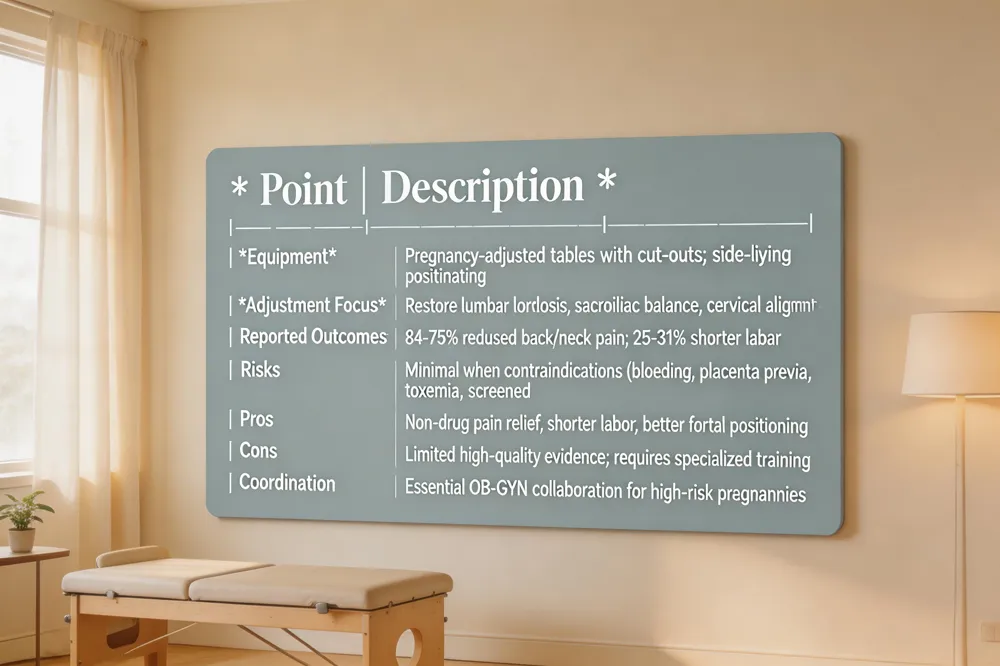 Use of pregnancy‑adjusted tables and side‑lying positioning
Prenatal chiropractors employ specialized tables with cut‑out or padded sections and side‑lying or left‑lateral decubitus positions to keep the abdomen free of pressure. This approach maintains optimal venous return and avoids supine hypotension, making adjustments safe after the uterus expands in the second trimester.
Gentle adjustments to address low‑back, neck, and pelvic pain
Low‑force, pregnancy‑specific techniques—often certified as DACCP, CACCP, or Webster Certified—focus on restoring lumbar lordosis, sacroiliac balance, and cervical alignment. Women commonly report relief within a few days, with 84‑75 % noting reduced back, neck, and joint pain in chart reviews.
Risks and benefits of care at this stage
Benefits include decreased musculoskeletal pain, reduced intrauterine constraint, and a lower chance of breech presentation, which may shorten labor by 25‑31 %. Risks are minimal when contraindications (e.g., vaginal bleeding, placenta previa, severe toxemia) are screened out; occasional mild soreness may occur.
Chiropractor while pregnant 2nd trimester
The second trimester is ideal for prenatal chiropractic because the uterus is still manageable for comfortable positioning. Skilled chiropractors use gentle, abdomen‑free adjustments and supportive exercises, helping maintain spinal alignment, pelvic balance, and optimal fetal positioning while reducing pain.
Pros and cons of chiropractic care during pregnancy
Pros: non‑drug pain relief, potential shorter labor, improved fetal positioning, reduced nausea, and postpartum recovery support. Cons: limited high‑quality evidence for some claims, need for specialized training, and contraindications in high‑risk pregnancies. Coordination with an obstetrician is essential.
Third Trimester Strategies – Preparing for Delivery
| ** Point | Description |
|---|---|
| Primary Technique | Webster Technique (sacroiliac adjustment) to reduce uterine tension and improve fetal positioning |
| Common Complaints Addressed | Sciatica, shoulder‑hand syndrome, pregnancy‑related headaches |
| Adjustment Approach | Low‑force, abdomen‑free adjustments on side‑lying tables; avoid supine position and high‑velocity thrusts |
| Typical Results | Relief within a few sessions; improved posture, reduced pain, smoother transition into labor |
| Safety | Coordinated with obstetrician; no deep tissue work on abdomen |
| Additional Benefits | Increased intra‑uterine space, lower chance of breech or posterior presentation |
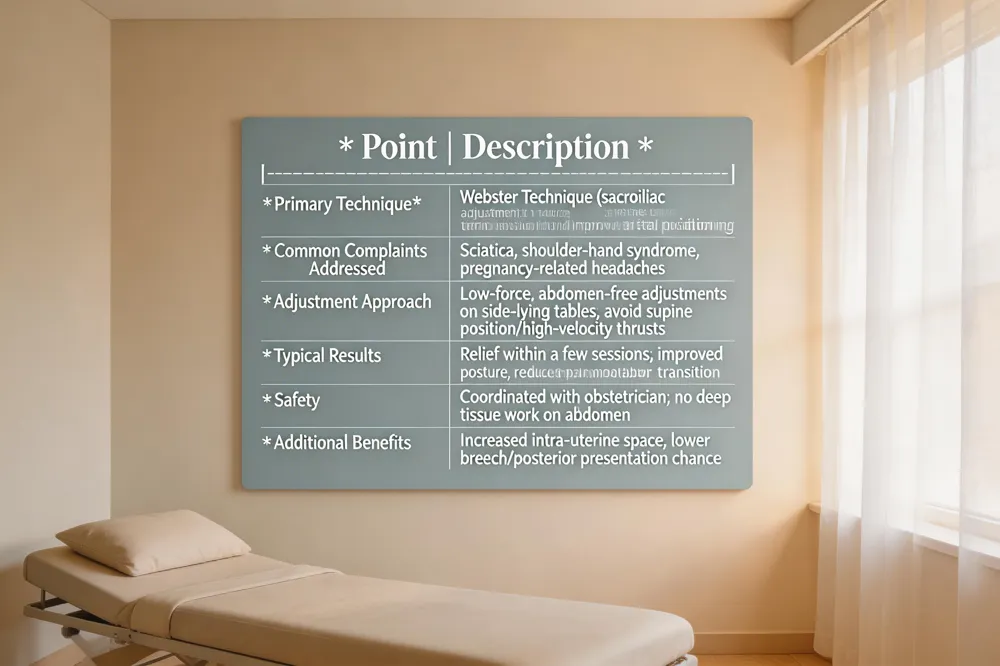 In the third trimester a chiropractor focuses on gentle, low‑force work that protects the abdomen while relieving the added strain on the lower back, hips, and pelvis. Adjustments are performed on pregnancy‑adjusted tables or with side‑lying bolsters, avoiding supine positioning and high‑velocity thrusts. The Webster Technique, a targeted sacroiliac adjustment, is a cornerstone of prenatal care. By soft‑tissue releasing the gluteal, piriformis and round‑ligament muscles and then aligning the sacrum, the technique reduces uterine tension, increases intra‑uterine space, and promotes optimal fetal positioning. This can lower the likelihood of breech presentation and ease the passage through the birth canal.
Low‑force spinal and pelvic work also addresses common third‑trimester complaints such as sciatica, shoulder‑hand syndrome, and pregnancy‑related headaches. Restoring proper alignment eases nerve compression, improves circulation, and supports the nervous system, allowing the mother to stay mobile and comfortable as labor approaches. Patients typically notice relief within a few sessions and report better posture, reduced pain, and a smoother transition into delivery. All treatments are coordinated with the obstetrician to ensure safety for both mother and baby.
General Safety, Contraindications and Professional Guidelines
| ** Point | Details |
|---|---|
| Red‑Flag Contraindications | Active vaginal bleeding, placenta previa, placental abruption, ectopic pregnancy, severe preeclampsia |
| Technique Restrictions | No high‑velocity, low‑amplitude lumbar/pelvic thrusts; avoid deep tissue on abdomen; no prolonged supine after 2nd trimester |
| Prohibited Modalities | Electrical modalities, ultrasound, radiographic imaging |
| Equipment Adaptations | Pregnancy‑adjusted tables with cut‑outs/bolsters, side‑lying supports, abdominal/knee pillows |
| Guideline Compliance | Certified practitioners (DACCP, CACCP, Webster‑Certified) follow ICPA standards and obtain OB clearance |
| Documention | Maintain detailed screening notes and communication with obstetrician |
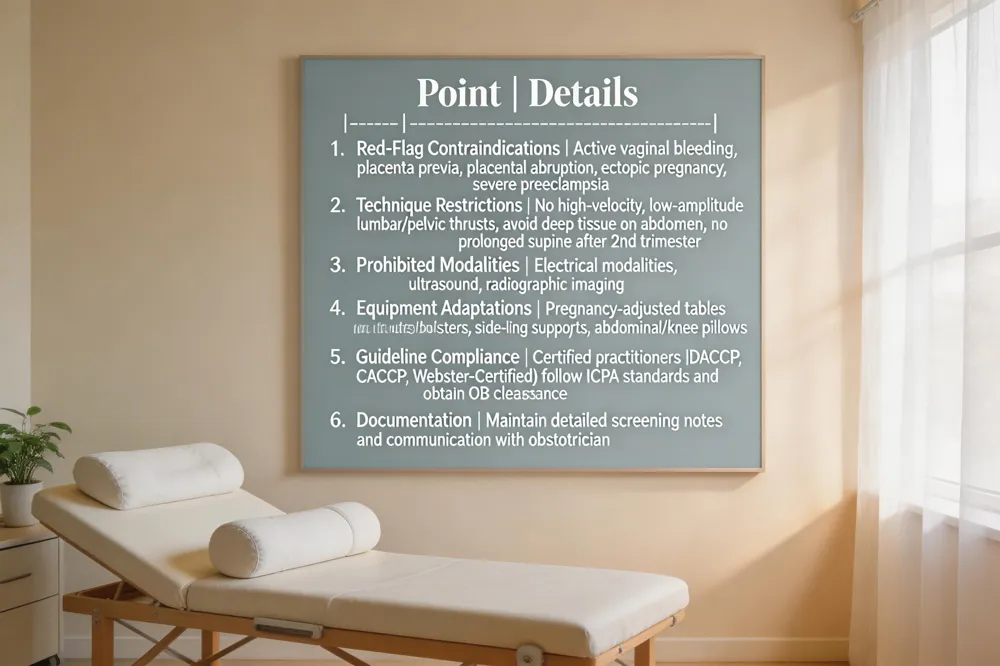 Screening for red‑flag conditions is essential. Contraindications include active vaginal bleeding, placenta previa, placental abruption, ectopic pregnancy, severe preeclampsia, and any situation where the obstetrician advises against manual therapy. Chiropractors should also avoid high‑velocity, low‑amplitude thrusts in the lumbar and pelvic regions, deep tissue work directly on the abdomen, and prolonged supine positioning after the second trimester. Electrical modalities, ultrasound, and radiographic imaging are contraindicated.
Equipment and positioning are adapted to protect the uterus: pregnancy‑adjusted tables with cut‑outs or bolsters, side‑lying or left lateral decubitus placements, and supportive pillows for the abdomen and knees. These measures, combined with gentle low‑force adjustments and patient‑specific exercises, enable safe, drug‑free management of musculoskeletal symptoms throughout gestation.
Benefits of Prenatal Chiropractic Care
| ** Benefit | Evidence / Effect |
|---|---|
| Pain Relief | Low‑force adjustments reduce low‑back, neck, joint pain and improve posture |
| Fetal Positioning | Increased intra‑uterine space; lower incidence of breech/posterior presentations |
| Labor Outcomes | 25‑31 % reduction in labor duration; modest decrease in cesarean‑section rates |
| Other Maternal Benefits | Reduced nausea, better sleep, enhanced nervous‑system function |
| Postpartum Recovery | Rebalance spine/pelvis, address diastasis recti, support pelvic‑floor health, reduce need for analgesics |
| Overall Wellness | Supports mobility, functional activity, and long‑term maternal health |
 Prenatal chiropractic care is recognized as a safe, drug‑free option for managing the musculoskeletal challenges of pregnancy. By applying low‑force, pelvic‑specific adjustments—often using the Webster Technique—practitioners restore proper spinal and pelvic alignment. This reduces low‑back, neck, and joint pain, improves posture, and enhances mobility, allowing expectant mothers to move more comfortably throughout the day.
Because a well‑aligned pelvis creates more intra‑uterine space, adjustments can promote optimal fetal positioning and lower the incidence of breech or posterior presentations. Clinical observations indicate that women who receive regular prenatal care experience a 25‑31 % reduction in labor duration and a modest decrease in cesarean‑section rates. The technique can also ease pregnancy‑related nausea, improve sleep, and support nervous‑system function, contributing to overall maternal well‑being.
After delivery, continued chiropractic care helps rebalance the spine and pelvis, addressing lingering back, sacroiliac, and neck discomfort that can arise from breastfeeding, infant care, and postural changes. This post‑partum support aids recovery, reduces the need for analgesic medication, and encourages a quicker return to normal functional activity.
Finding a Prenatal Chiropractor Near You
| ** Criterion | Details |
|---|---|
| Key Certifications | DACCP, CACCP, Webster‑Certified, ICPA membership |
| Local Example | Dr. Allison Ross, DC – Ross Chiropractic (San Jose) – uses pregnancy‑specific tables, side‑lying supports, offers myofascial release and orthotics |
| Integration Steps | Obtain OB clearance, share treatment updates, coordinate care schedule across trimesters |
| Search Tip | Look for “prenatal chiropractor” + certification keywords; verify credentials before booking |
| Contact | Phone/online booking; confirm certification and table adjustments prior to visit |
 Key certifications: DACCP, CACCP, or Webster Certified and membership in ICPA indicate prenatal training and safe, low‑force techniques.
Local availability in San Jose: Dr. Allison Ross, DC at Ross Chiropractic uses pregnancy‑specific tables and side‑lying supports, offering adjustments, myofascial release, and orthotics.
Integrating with obstetric care: Obtain OB clearance, share updates, and coordinate to keep adjustments safe across trimesters.
Prenatal chiropractor near me: If you’re looking for a prenatal chiropractor in San Jose, choose a practitioner certified in the Webster technique and a member of the ICPA. Dr. Allison Ross, DC at Ross Chiropractic provides low‑force spinal adjustments, myofascial release, and pregnancy‑specific orthotics to relieve back, pelvic, and sciatica pain. She also offers corrective exercises and ergonomic advice for a smoother labor. Call the office or book online to confirm credentials and schedule a visit.
Postpartum Chiropractic Support and Long‑Term Wellness
| ** Focus Area | Intervention |
|---|---|
| Spinal Realignment | Gentle low‑force adjustments to lumbar, sacrum, thoracic spine |
| Pelvic‑Floor & Diastasis | Soft‑tissue techniques, targeted adjustments, core‑strengthening exercises |
| Neuromuscular Support | Nerve function improvement, reduced lingering pain |
| Ergonomic Advice | Infant‑care positioning, nursing ergonomics, household task safety |
| Long‑Term Goals | Prevent chronic musculoskeletal issues, promote functional activity, maintain overall wellness |
| Follow‑Up | Regular sessions integrated with post‑delivery recovery plan, coordinated with OB if needed |
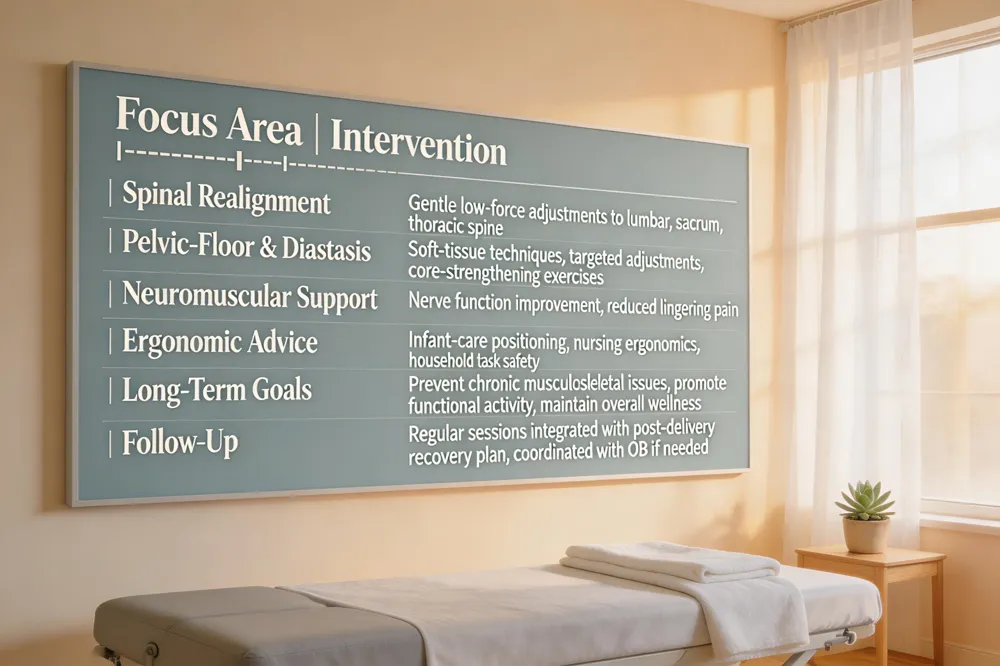 After delivery, a chiropractor focuses on restoring spinal biomechanics that were altered by pregnancy‑related lordosis, weight gain, and labor strain. Gentle, low‑force adjustments help realign the lumbar spine, sacrum, and thoracic segments, reducing lingering back pain and improving nerve function. The practitioner also evaluates pelvic‑floor integrity and diastasis recti, using soft‑tissue techniques and targeted adjustments to support tissue healing and reduce abdominal separation. Complementary exercise programs—core‑strengthening, pelvic‑floor activation, and safe stretching—are prescribed, along with ergonomics advice for infant care, nursing, and household tasks. This integrated approach promotes faster recovery, prevents chronic musculoskeletal issues, and supports long‑term maternal wellness.
Putting It All Together – A Safe, Collaborative Path Forward
A truly effective prenatal chiropractic program hinges on a partnership with the woman’s obstetric team. Before any adjustment, the chiropractor obtains written clearance from the OB‑GYN or midwife and shares a concise health summary, ensuring that conditions such as vaginal bleeding, placenta previa, or severe pre‑eclampsia are flagged and avoided. Throughout pregnancy, the practitioner conducts brief, symptom‑focused re‑evaluations at each visit, adjusting frequency and technique based on the mother’s comfort, fetal growth stage, and any emerging red‑flags. Gentle, low‑force methods—side‑lying positioning, pregnancy‑adjusted tables, and the Webster Technique when indicated—are employed to protect the abdomen while restoring spinal and pelvic balance. Education is woven into every session: women receive personalized posture cues, safe‑exercise handouts, and guidance on ergonomics, empowering them to manage daily stresses and recognize warning signs. This collaborative, evidence‑based approach not only alleviates back, neck, and pelvic pain but also supports optimal fetal positioning, shorter labor, and a smoother postpartum recovery.