Why Spinal Health Matters After Birth
During pregnancy the pelvis expands and the center of gravity shifts forward, forcing the spine into increased lumbar lordosis and altering shoulder and hip alignment. After delivery, the hormone relaxin often remains elevated for weeks, leaving ligaments lax and joints less stable, which can perpetuate mis‑alignments. Consequently, many new mothers experience pelvic misalignment, diastasis recti (abdominal separation), and persistent pain in the lower back, neck, and shoulders. Sciatica and sacroiliac discomfort are also common as the pelvis and spine readapt to the post‑partum body mechanics. Restoring proper spinal and pelvic alignment through gentle chiropractic adjustments, soft‑tissue therapies, and targeted core‑strengthening exercises helps reduce nerve irritation, improves posture, and accelerates overall recovery.
Understanding Post‑partum Spinal Changes
Key Post‑partum Spinal Factors
| Factor | Effect on Spine/Pelvis | Typical Duration |
|---|---|---|
| Pelvic rotation/tilt | Low‑back, hip, sacroiliac discomfort as spinal compensates | Can persist weeks‑to‑months postpartum |
| Relaxin hormone (peaks 3rd trimester) | Ligament laxity → increased joint instability | Effects linger weeks‑to‑months after delivery |
| Diastasis recti (abdominal separation) | Weakens deep core → reduced lumbar support | Often improves by 12‑16 weeks with targeted rehab |
| “Mom posture” (exaggerated lordosis, rounded shoulders, forward head) | Strain on neck, shoulders, upper back; worsens during feeding & lifting | Common 6‑12 weeks; may persist >6 months without intervention |
| Nerve irritation from misalignment | Altered nerve signaling → pain, tingling | May resolve with chiropractic adjustments, otherwise chronic |
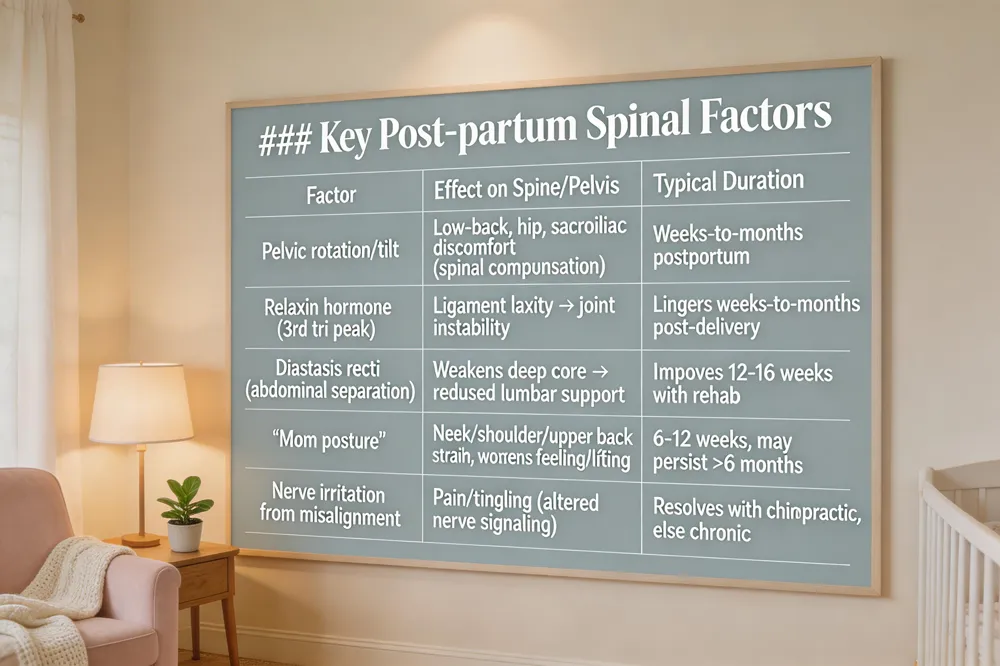 During pregnancy the pelvis expands to accommodate a growing baby, and after delivery the pelvis often remains slightly rotated or tilted. This misalignment can cause low‑back, hip, and sacroiliac discomfort as the spine tries to compensate. The hormone relaxin, which peaks in the third trimester, softens ligaments and joint capsules to allow the pelvis to open for birth. Relaxin’s effects linger for weeks to months postpartum, leaving the spine and pelvis more lax and prone to instability. At the same time, the abdominal wall is stretched and the central muscles separate—a condition known as diastasis recti. This separation weakens the deep core, reducing support for the lumbar spine and pelvis. Consequently, many new mothers develop a characteristic “mom posture”: an exaggerated lumbar lordosis, rounded shoulders, and a forward‑head position. These postural patterns increase strain on the neck, shoulders, and upper back, especially during feeding, carrying, and diaper changes. Recognizing these changes is the first step toward targeted chiropractic care, soft‑tissue therapy, and core‑rehabilitation exercises that restore alignment, improve nerve function, and promote a healthier, pain‑free recovery.
Home Posture Strategies and Corrections
Daily Home‑Posture Routine
| Strategy | Key Steps | Primary Benefits |
|---|---|---|
| Neutral‑spine reset (morning) | Hand on belly, diaphragmatic inhale, engage transverse abdominals, scapular retraction | Stable core, eliminates rib flare |
| Wall angels | Stand with back to wall, slide arms up/down keeping elbows & wrists in contact | Improves upper‑back alignment, opens chest |
| Cat‑cow mobilization | On hands‑and‑knees, alternate arching and rounding spine | Enhances thoracic mobility, reduces tension |
| Quadruped extensions (bird‑dog) | Extend opposite arm & leg, keep spine neutral | Activates core, glutes, improves balance |
| Rhomboid push‑ups | Push‑up motion focusing on squeezing shoulder blades together | Strengthens mid‑back, counters rounded shoulders |
| Safe baby‑lifting technique | Hips under shoulders, bend knees, keep baby close, use arm strength | Protects core & pelvic floor, reduces lumbar strain |
| Posture‑corrector brace (optional) | Soft breathable brace worn under guidance | Provides proprioceptive cue, not a stand‑alone fix |
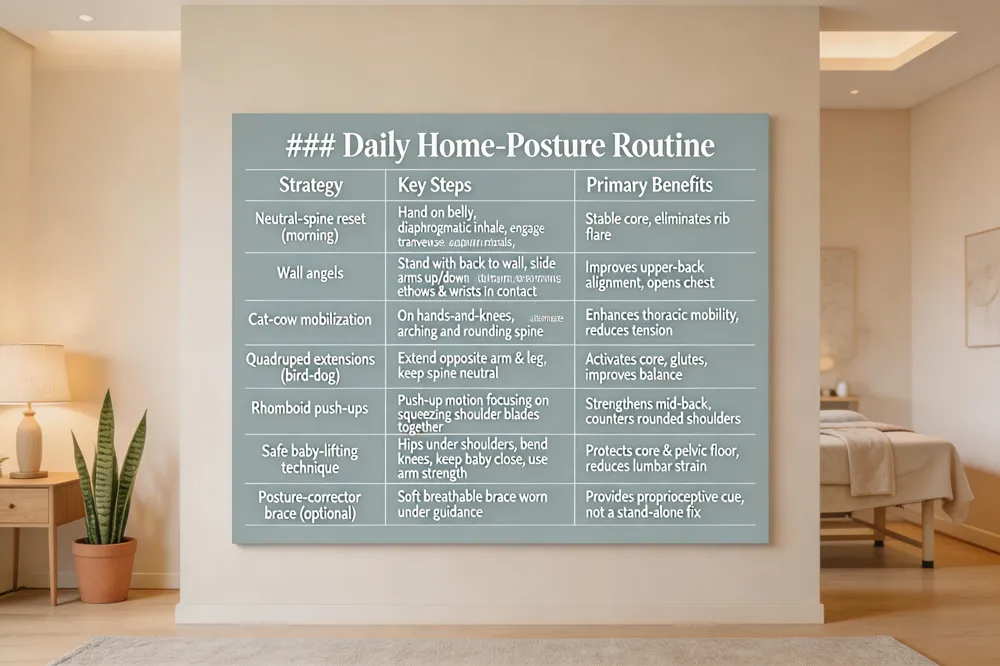 Postpartum posture correction at home starts with a neutral‑spine reset each morning. Place a hand on the belly, inhale deeply into the diaphragm, engage the transverse abdominals, and gently pull the shoulder blades together so the ribcage stacks over the pelvis. This diaphragmatic‑breathing cue creates a stable core and eliminates rib flare. Follow the reset with low‑impact drills: wall angels promote upper‑back alignment, cat‑cow mobilizes the thoracic spine, quadruped (hands‑and‑knees) extensions activate the core, and rhomboid push‑ups strengthen the mid‑back. When lifting or carrying a baby, keep the hips under the shoulders, bend at the knees, keep the baby close to the torso, and use arm strength to protect the core and pelvic floor. A brief evaluation by Dr. Allison Ross, DC can identify lingering subluxations and tailor a home‑care routine that complements in adjustments, myofascial release, and corrective exercises.
Posture‑corrector devices can serve as a reminder to engage weak muscles, but they are not a stand‑alone solution. Dr. Ross advises using a soft, breathable brace only under professional guidance, as an ill‑fitted device may exacerbate pelvic or lumbar imbalances. Integrating occasional brace wear with targeted chiropractic care, myofascial release, custom orthotics, and individualized strengthening exercises creates a holistic, drug‑free rehabilitation plan that trains the body to maintain alignment without dependence on the device.
The best approach to postpartum posture correction begins with a comprehensive chiropractic assessment to locate spinal misalignments or pelvic‑tilt issues. Gentle adjustments, spinal decompression, and myofascial release restore alignment and reduce tissue tension. A personalized corrective‑exercise program then focuses on core activation, pelvic‑floor strengthening, upper‑back mobility, and safe breastfeeding and infant‑lifting mechanics. Ergonomic education—supportive seating, mindful posture during baby care, and gradual return to activity—ensures lasting gains. Regular follow‑up visits every 2–4 weeks allow the practitioner to monitor progress, modify the plan, and solidify long‑term posture health without surgery or medication.
Gentle Stretching Suite for Recovery
Recommended Stretching Sequence
| Stretch | Position | Hold Time | Repetitions |
|---|---|---|---|
| Chest‑opener (door frame) | Stand, forearms on frame, step forward | 20‑30 s | 2‑3 times |
| Child’s Pose with bolster | Kneeling, torso on bolster, arms extended forward | 20‑30 s | 2‑3 times |
| Supine knee‑to‑chest | Lying on back, pull one knee to chest, switch sides | 20‑30 s each side | 2‑3 times |
| Seated spinal twist | Sit, cross‑leg, twist torso opposite side, hand on knee | 20‑30 s each side | 2‑3 times |
| Cat‑Cow flow | Hands‑and‑knees, fluid arch/round cycle | 5‑10 cycles | 2‑3 sets |
Avoid deep forward bends until core strength returns.
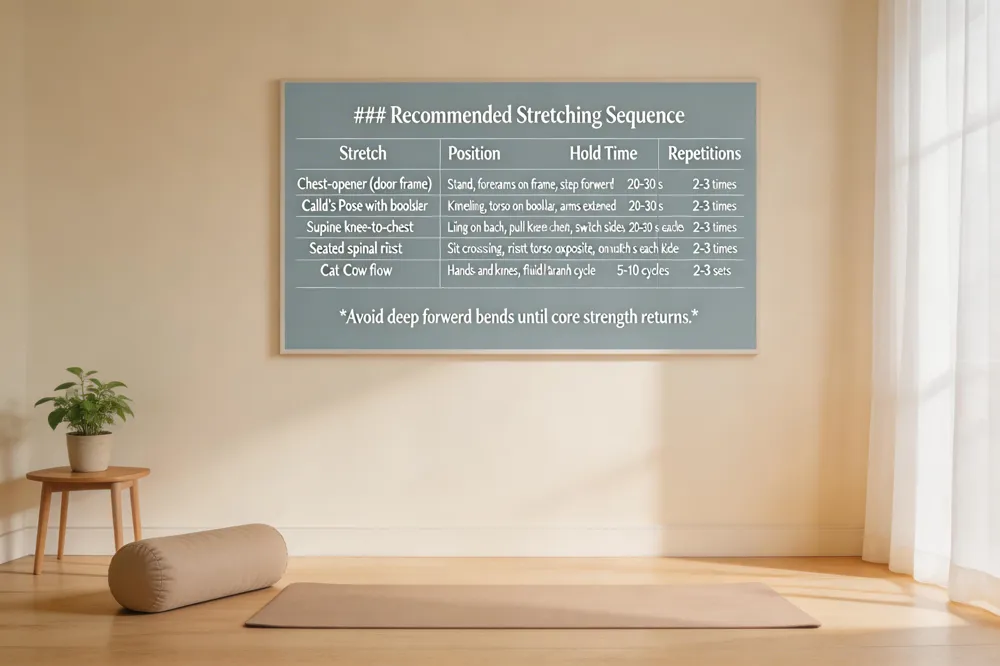 Postpartum recovery benefits from gentle, low‑impact stretches that ease back, pelvic, and abdominal tension. Safe options include a chest‑opener against a door frame, Child’s Pose with a bolster for lumbar release, a supine knee‑to‑chest stretch, seated spinal twists, and the Cat‑Cow yoga flow for spinal mobilization. Hold each position for 20‑30 seconds while breathing deeply, and repeat 2‑3 times as comfort allows. Avoid deep forward bends until core strength returns, and listen to your body to prevent over‑stretching. Dr. Allison Ross can demonstrate these stretches during a visit and tailor a personalized plan to support your healing and long‑term wellness. Incorporating these four targeted movements—Chest‑opener, Child’s Pose with bolster, Supine knee‑to‑chest/ seated twist, and Cat‑Cow—helps restore alignment, reduce muscle tension, and promote circulation, accelerating recovery after birth.
Upper‑Back Pain Management & Breastfeeding Ergonomics
Upper‑Back Care & Feeding Ergonomics
| Issue | Intervention | Frequency |
|---|---|---|
| Upper Cross Syndrome (tight chest/neck, weak lower traps) | Myofascial release, band pull‑aparts, open‑book stretch, thread‑the‑needle | 3‑5 times/week |
| Thoracic stiffness | Spinal decompression, low‑level laser therapy | 1‑2 sessions/week (laser), as needed (decompression) |
| Nursing posture | Use nursing pillow, sit upright with lumbar support, shoulder‑blade squeezes | Adjust every 15 min during feedings |
| Foot pronation contributing to shoulder strain | Custom orthotics | Wear during daily activities |
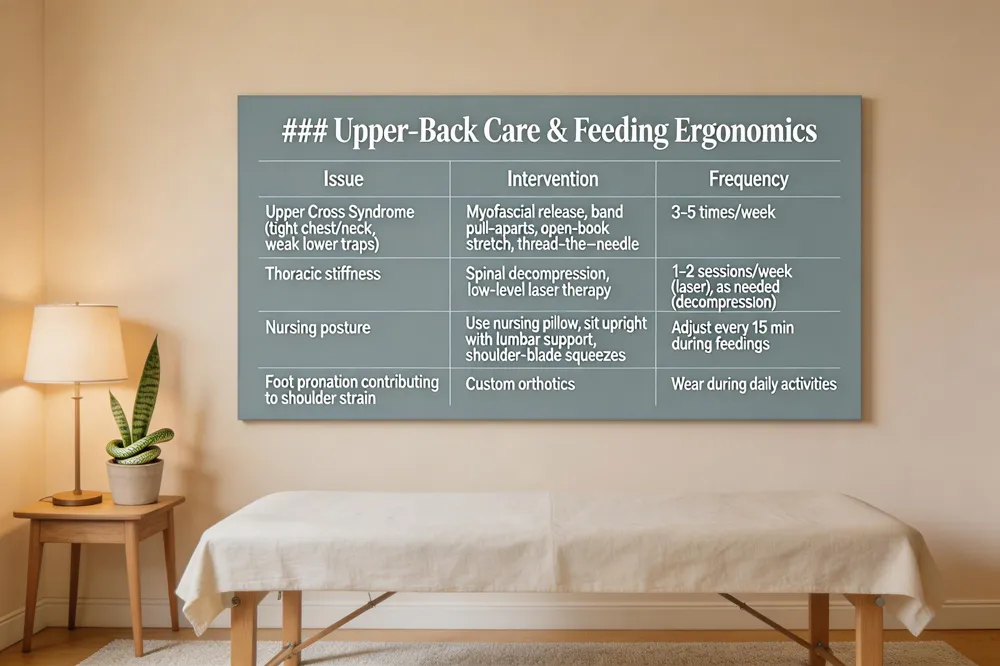 Postpartum upper‑back discomfort often stems from the classic "mom posture" created during nursing, baby‑carrying, and frequent forward‑bending. The resulting Upper Cross Syndrome—tight chest and neck muscles, weakened lower trapezius and serratus—produces a rounded‑shoulder, forward‑head alignment that strains the thoracic spine and creates pain between the shoulder blades.
At Ross Chiropractic, Dr. Allison Ross addresses this imbalance with a multimodal approach. Gentle myofascial release targets tight fascia in the upper back, while low‑level laser therapy reduces inflammation and accelerates tissue healing. Spinal decompression gently stretches the thoracic joints, restoring mobility and relieving nerve irritation.
A personalized corrective‑exercise program follows. Scapular‑retraction drills (e.g., band pull‑aparts) and thoracic‑extension moves (open‑book stretch, thread‑the‑needle) strengthen rhomboids, trapezius, and core muscles, re‑educating proper posture. Supporting a neutral spine during feeding is essential: use a nursing pillow to bring the baby to chest level, sit upright with lumbar support, and perform brief shoulder‑blade squeezes and upper‑trap stretches every 15 minutes. Custom orthotics may further align the shoulders and reduce strain.
Combining these hands‑on therapies with consistent home exercises provides lasting relief, improves posture, and helps new mothers enjoy comfortable, ergonomic breastfeeding sessions.
Core and Back Strengthening for Long‑Term Recovery
Core & Back Strengthening Progression
| Exercise | Sets × Reps | Progression Tips |
|---|---|---|
| Pelvic tilts | 2 × 10 | Increase range of motion, add cue deep breathing |
| Bird‑dog extensions | 2 × 8 each side | Add light ankle/ wrist weights after 2 weeks |
| Side‑lying leg lifts | 2 × 10 each side | Raise leg higher gradually |
| Thoracic rotations (T‑spine twists) | 2 × 10 each side | Use a foam roller for deeper stretch |
| Thread‑the‑needle stretch | 2 × 30 s each side | Add gentle hold after 3 weeks |
| Hip‑flexor/hamstring flexibility (seated hip rolls, standing stretch) | 2 × 30 s each side | Increase hold by 5 s weekly |
Perform daily; pain notice persistent pain beyond 6 months, seek chiropractic evaluation.
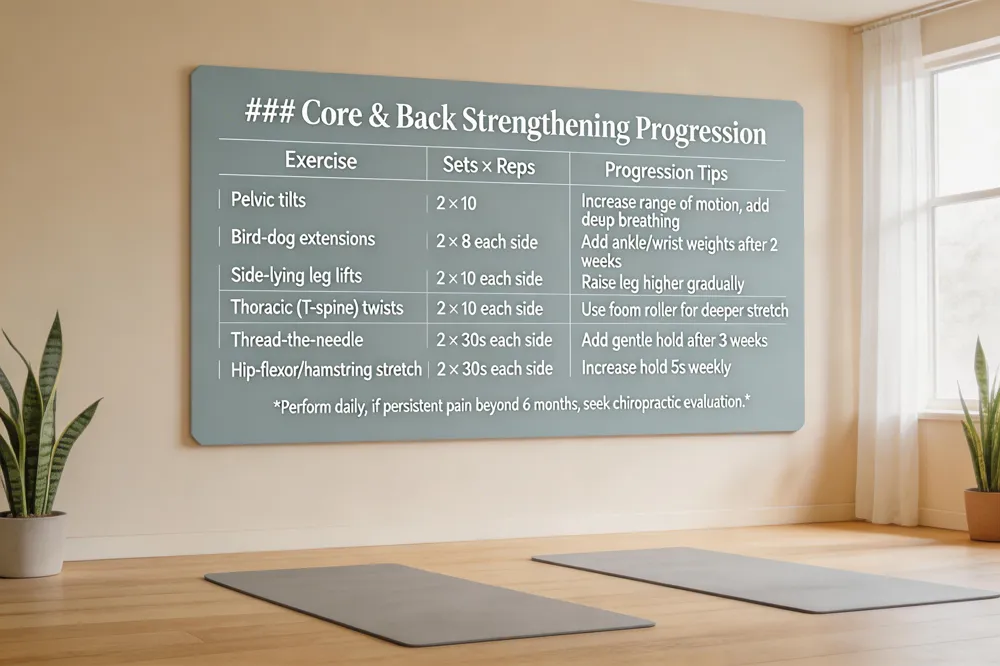 Gentle, pregnancy‑safe moves such as pelvic tilts, bird‑dog extensions, and side‑lying leg lifts re‑engage deep core muscles while protecting the healing pelvis. Adding thoracic rotations (T‑spine twists) and the thread‑the‑needle stretch improves upper‑back mobility and eases tension from breastfeeding. Hip‑flexor and hamstring flexibility—through seated hip rolls on a ball or standing hamstring stretches—supports lower‑back alignment and reduces compensatory strain. Perform 1–2 sets of 8–10 repetitions daily, progressing slowly as strength returns. Most women notice lower‑back discomfort for the first 6‑12 weeks after delivery, with many feeling normal by three months; up to 20 % may have pain for 3‑6 months and a smaller group up to a year if core weakness persists. Persistent pain beyond six months, worsening symptoms, or radiating numbness warrants a chiropractic evaluation. Early, personalized care—adjustments, core‑strengthening exercises, myofascial release, and custom orthotics—can shorten recovery time and promote long‑term spinal health.
Finding and Working with a Post‑partum Chiropractor
Choosing the Right Post‑partum Chiropractor
| Selection Criterion | Details |
|---|---|
| Certified training | Prenatal/post‑partum certifications (e.g., International Chiropractic Pediatric Association) |
| Gentle technique | Low‑force adjustments, safe for pelvic floor & diastasis recti |
| Experience with core & pelvic issues | Proven track record treating diastasis, pelvic tilt, breastfeeding ergonomics |
| Additional services | Myofascial release, cold laser, custom orthotics, virtual consultations |
| Patient education | Provides home‑exercise programs, posture coaching, and ergonomic advice |
| Reputation & reviews | Positive testimonials, clear safety record |
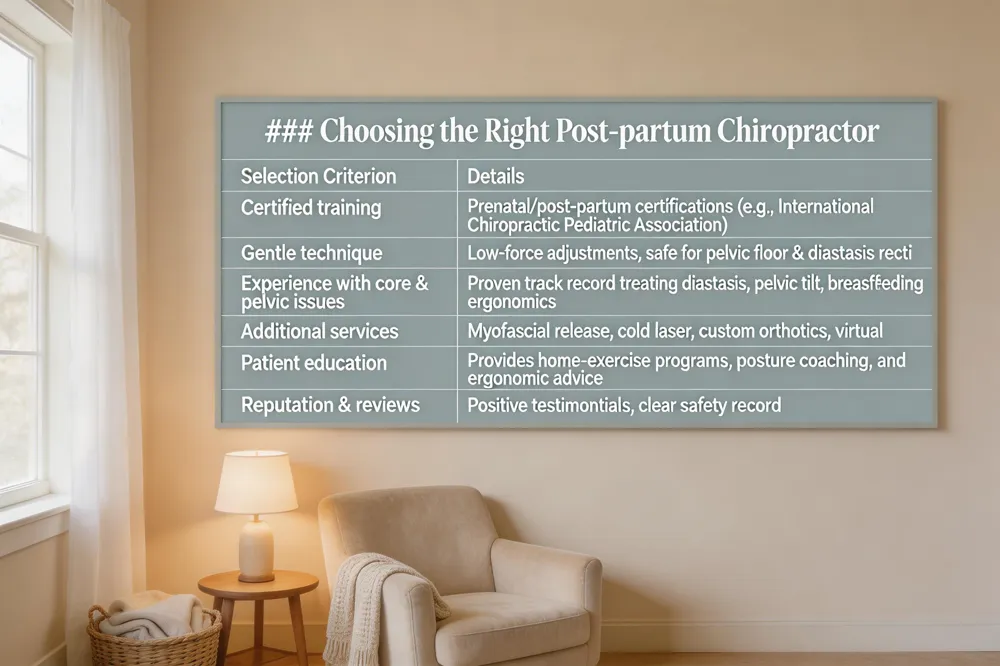 When searching for a postpartum chiropractor, prioritize practitioners with recognized prenatal/post‑partum certifications (e.g., International Chiropractic Pediatric Association) and a clear safety record—gentle, low‑force adjustments are essential for new mothers. In San Jose, CA, Dr. Allison Ross, DC, leads Ross Chiropractic, offering spinal adjustments, myofascial release, cold laser therapy, spinal decompression, corrective exercises, and custom orthotics tailored to post‑delivery recovery. She also provides virtual consultations and can refer patients nationwide to vetted colleagues. Key selection factors include: evidence‑based techniques, experience with diastasis recti, pelvic alignment, and breastfeeding ergonomics, and a commitment to education on posture and core‑strengthening. A quick search for “postpartum chiropractor near me” combined with review checks and verification of these credentials will guide you to the right provider.
Eradicating Mom Hunchback & Managing Kyphosis
Kyphosis & Hunchback Management Plan
| Technique | Target Area | Frequency |
|---|---|---|
| Foam‑roller thoracic extensions | Mid‑thoracic spine | 3 times/week, 1‑2 min per session |
| Band pull‑aparts & rows | Upper back, rhomboids, lower traps | 3 times/week, 2 sets × 12‑15 reps |
| Scapular‑retraction drills | Shoulder blades, posture | 2‑3 times/day, 10‑15 squeezes |
| Custom orthotics | Foot pronation, overall alignment | Wear during all weight‑bearing activities |
| Spinal adjustments | Vertebral alignment, kyphosis reduction | 1‑2 sessions/week initially, then as needed |
| Cold‑laser therapy | Inflammation, tissue healing | 1‑2 sessions/week for acute pain |
| Diaphragmatic breathing & pelvic‑floor activation | Core stability, posture support | Daily, 5‑10 min sessions |
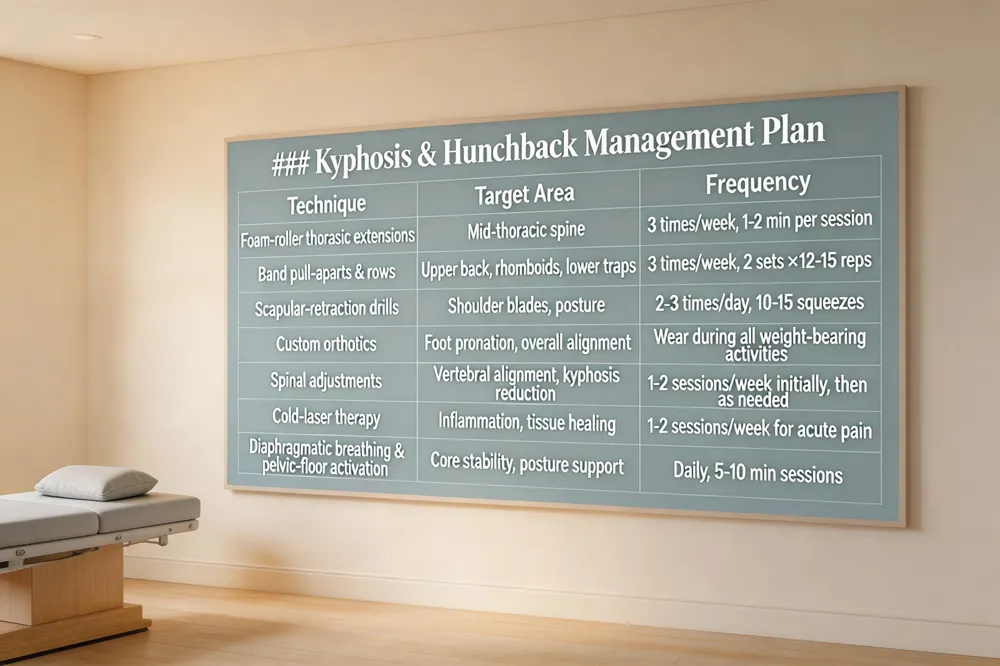 Postpartum "mom posture" arises from forward‑leaning shoulders, a rounded thoracic spine, and a weakened core caused by ligament laxity and abdominal separation. Gentle spinal adjustments by Dr. Allison Ross realign vertebrae and release tension, while myofascial release eases tightened fascia. Daily thoracic‑extension work—foam‑roller rolls, band pull‑aparts, rows, and scapular‑retraction drills—opens the rib cage and strengthens upper‑back muscles. Custom orthotics correct foot pronation that can aggravate pelvic tilt, supporting overall alignment. For kyphosis after pregnancy, a combination of spinal adjustments, targeted extension exercises (superman lifts, thoracic extensions), and cold‑laser therapy reduces curvature and pain. Pair these modalities with diaphragmatic breathing and pelvic‑floor activation to restore a stacked, neutral posture, relieve discomfort, and promote long‑term spinal health.
Embracing a Holistic, Drug‑Free Recovery
Restoring spinal alignment after birth does more than ease back pain; it creates a foundation for better sleep, steadier mood, and smoother breastfeeding. When the nervous system functions without irritation, hormone balance improves, reducing stress and allowing deeper, uninterrupted rest. Proper vertebral and pelvic positioning also optimizes nerve signals that support milk flow, which can lessen latch difficulties and mastitis. At Ross Chiropractic, Dr. Allison Ross blends gentle adjustments with myofascial release, cold‑laser therapy, targeted corrective exercises, and ergonomic education. This multidisciplinary approach re‑establishes core stability, corrects “mom posture,” and empowers mothers to move confidently. Schedule a personalized evaluation today and begin a drug‑free path to lasting wellness. Your body will thank you daily always.