Why Pelvic Balance Matters
Pregnancy triggers a surge of relaxin, a hormone that softens pelvic ligaments and increases joint laxity. This hormonal loosening, while necessary for childbirth, can destabilize the pelvis and allow misalignment of the sacroiliac joints and pubic symphysis. As the pelvis shifts, the growing uterus pushes the center of gravity forward, forcing the lumbar spine into greater lordosis and altering the natural curvature of the back. The resulting spinal tilt creates nerve irritation, muscle fatigue, and reduced biomechanical efficiency, which together heighten lower‑back, hip, and sacroiliac discomfort. Maintaining pelvic balance through gentle chiropractic adjustments, targeted exercises, and supportive ergonomics helps restore proper alignment, eases nerve interference, and promotes overall comfort throughout pregnancy.
Understanding Pelvic Mechanics in Pregnancy
Pelvic Mechanics Overview
| Factor | Effect on Pelvis | Countermeasure |
|---|---|---|
| Relaxin (hormone) | Softens ligaments → pelvis widens, sacroiliac joints lax | Prenatal chiropractic adjustments, myofascial release |
| Anterior pelvic tilt (gravity shift) | Increases lumbar lordosis, loads low back, hip flexors, pelvic floor | Core‑strengthening (transverse abdominis activation), hip‑flexor stretches, glute bridges, quadruped pelvic‑tilt |
| Shortened abdominals & stretched hamstrings | Low‑back pain, pelvic girdle pain, altered fetal positioning | Gentle stretching, posture education, supportive footwear |
| Pelvic instability (clicking, grinding) | Pain radiating to thighs/buttocks, “giving‑way” sensation, urinary leakage | Targeted myofascial release, corrective exercises, orthotics |
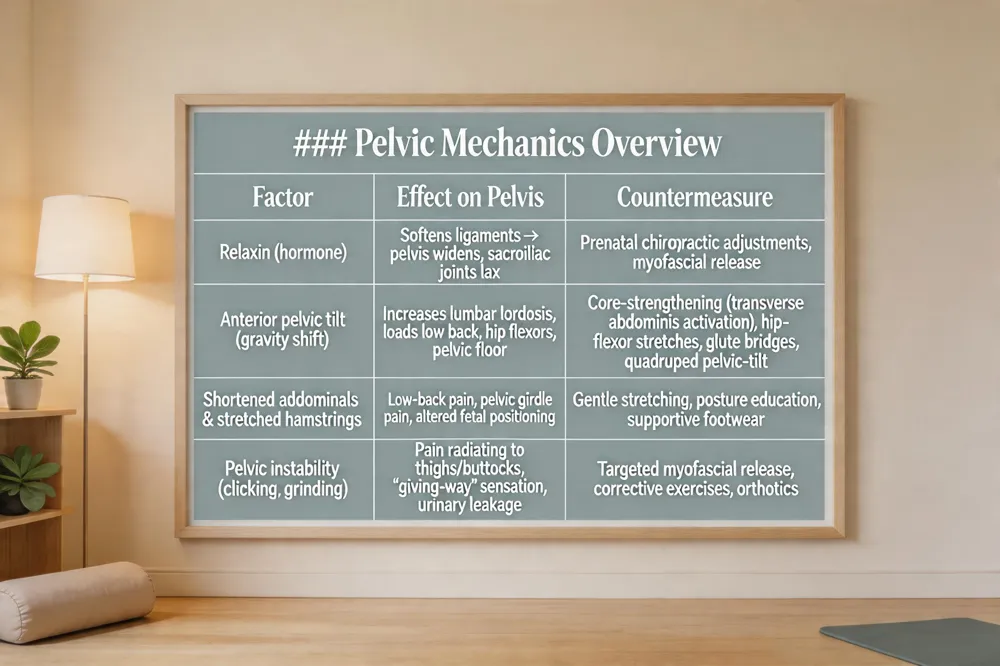 Relaxin softens pelvic ligaments, allowing the pelvis to widen and the sacroiliac joints to become more lax. As the uterus grows, the center of gravity shifts forward, producing an anterior pelvic tilt that exaggerates lumbar lordosis and places extra load on the low back, hip flexors, and pelvic floor. This tilt shortens the abdominal muscles, stretches the hamstrings, and can trigger low‑back pain, pelvic girdle pain, and reduced fetal positioning. Countermeasures include gentle core‑strengthening (transverse abdominis activation), hip‑flexor stretches, glute bridges, and quadruped pelvic‑tilt exercises, as well as prenatal chiropractic adjustments and myofascial release to restore a neutral pelvis.
Common signs of pelvic instability are audible or palpable clicking, grinding, or locking in the sacroiliac or pubic joints, sharp or dull ache in the front or back of the pelvis, pain radiating to the thighs or buttocks, a “giving‑way” sensation when weight shifts, heaviness in the lower abdomen, and occasional urinary leakage. Symptoms worsen with prolonged standing, walking, or transitions from sitting to standing.
Strengthening the Pelvic Floor
Pelvic Floor Exercise Guide by Trimester
| Trimester | Exercise | Description / Goal |
|---|---|---|
| First | Gentle Kegel squeezes (5‑10 s) + seated pelvic tilts or quadruped cat‑cow | Build baseline activation without abdominal pressure |
| Second | Diaphragmatic breathing, side‑lying hip bridges, seated pelvic rocks | Strengthen glutes & lower back, enhance core stability |
| Third | Kegels (seated or side‑lying), supported chair/wall squats, relaxed forward‑bend stretch | Maintain pelvic floor endurance, aid labor positioning |
| All | “Quick‑pump” sets (8 rapid squeezes) + slow holds (up to 10 s) – three times daily | Boost fast‑twitch and endurance fibers, improve bladder control |
 Why is it important to strengthen your pelvic floor during pregnancy? The pelvic floor acts as the diaphragm of the pelvis, supporting the uterus, bladder, and bowel as the baby grows. A well‑conditioned floor improves bladder and bowel control, reduces lower‑back and pelvic‑pain discomfort, and helps maintain proper posture and core stability. Strong muscles also facilitate gentle pushing techniques, lower the risk of perineal tearing, prolapse, and prolonged labor, and contribute to a smoother postpartum recovery.
What are safe pelvic floor exercises for each trimester of pregnancy?
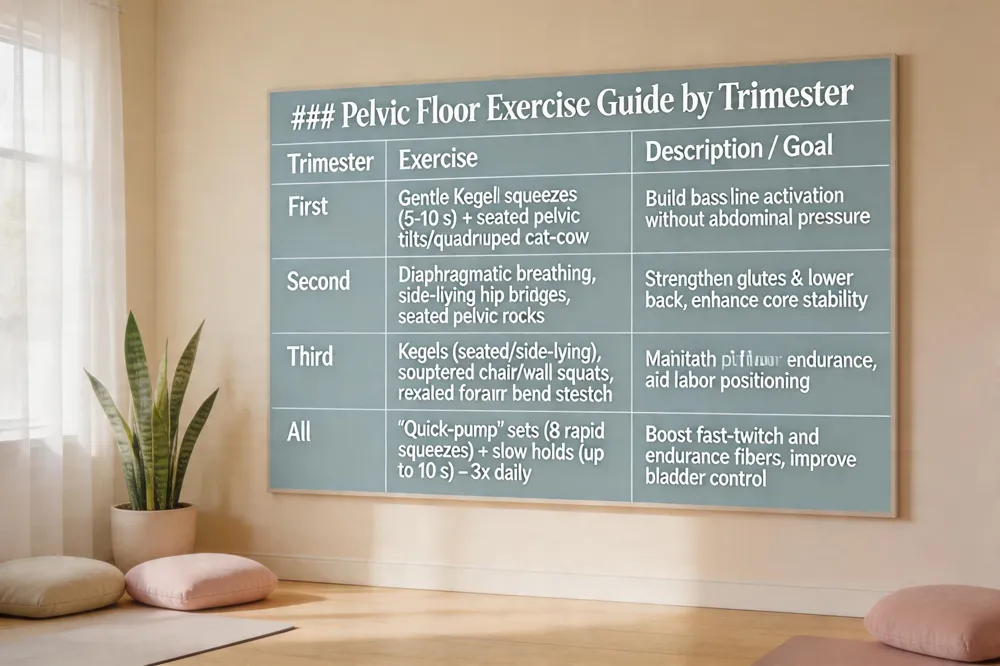
• First trimester: gentle Kegel squeezes (5‑10 seconds) paired with seated pelvic tilts or quadruped cat‑cow for awareness without abdominal pressure.
• Second trimester: add diaphragmatic breathing, side‑lying hip bridges, and seated pelvic rocks to strengthen glutes and lower back.
• Third trimester: continue Kegel (seated or side‑lying), supported squats using a chair or wall, and pelvic‑floor stretches such as a relaxed forward bend. Throughout all trimesters, practice “quick‑pump” sets (8 rapid squeezes) and slow holds (up to 10 seconds) three times daily, breathing normally and stopping if pain occurs.
When should a pregnant woman start pelvic floor exercises? Gentle Kegel practice can begin as soon as pregnancy is confirmed, typically in the first trimester, after clearance from an obstetrician or midwife. Early initiation builds endurance, reduces stress incontinence, and supports pelvic stability for the entire gestation and postpartum period. Learning proper technique from a qualified provider and performing three daily sets maximizes benefits, regardless of delivery method.
Chiropractic Care for Pelvic Alignment
Chiropractic Modalities & Their Roles
| Modality | Purpose | Typical Frequency |
|---|---|---|
| Low‑force side‑lying spinal & pelvic adjustments | Restore vertebral & sacroiliac alignment, reduce nerve irritation | 1‑2 times per month during pregnancy |
| Myofascial release (soft‑tissue work) | Relax tight hip flexors, glutes, piriformis; improve muscle balance | 1‑2 sessions per month, as needed |
| Custom orthotics | Correct foot pronation/supination, lessen compensatory hip/pelvic stress | Evaluated each trimester, updated postpartum |
| Corrective exercises (pelvic tilts, quadruped cat‑cow) | Reinforce deep core & pelvic‑floor activation after adjustments | Daily home program, 5‑10 min per session |
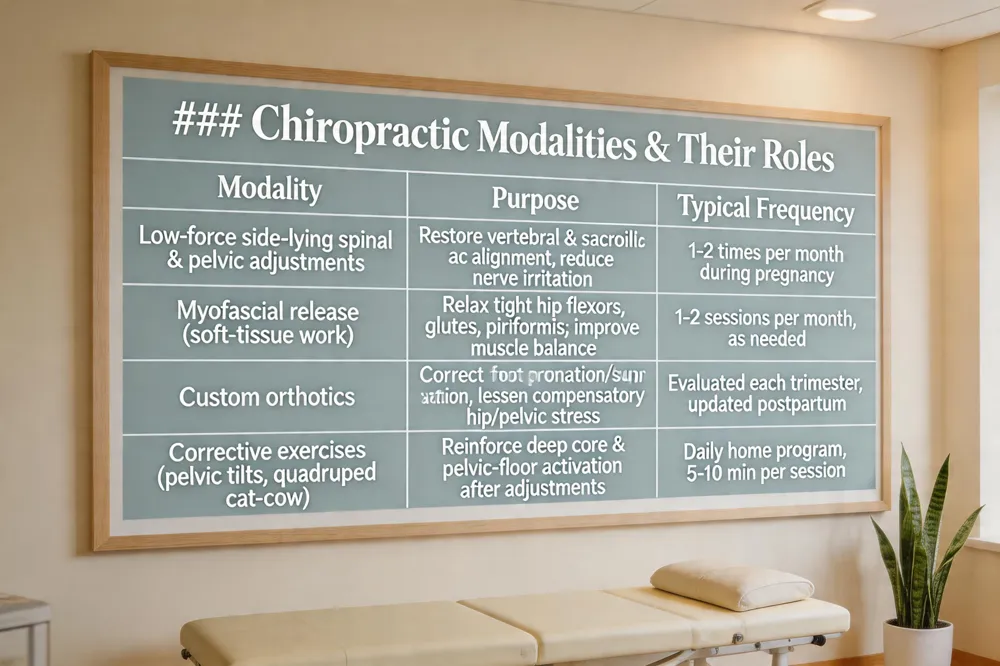 Gentle spinal adjustments and pelvic adjustments are the cornerstone of prenatal chiropractic care. By using low‑force, side‑lying techniques, the chiropractor restores proper vertebral and sacroiliac alignment, easing nerve irritation and allowing the pelvis to settle into a neutral position. This realignment reduces lumbar lordosis and pelvic tilt, which in turn eases pressure on the pelvic floor and improves its strength.
Myofascial release and corrective exercises complement the adjustments. Targeted soft‑tissue work relaxes tight hip flexors, gluteals, and piriformis muscles, while exercises such as pelvic tilts , Kegels, and quadruped cat‑cow reinforce deep core and pelvic‑floor activation. These therapies promote balanced muscle tone and enhance communication between the nervous system and the musculoskeletal structures.
Custom orthotics provide an additional layer of support. By correcting foot pronation or supination, they lessen compensatory stress on the hips and pelvis, helping to maintain alignment as the uterus shifts the center of gravity forward. Orthotics improve gait stability, reduce low‑back and pelvic pain, and can be adjusted throughout pregnancy and postpartum to sustain pelvic health.
Lifestyle and Comfort Strategies for the Third Trimester
Comfort Strategies for Late Pregnancy
| Strategy | Benefit | Implementation Tips |
|---|---|---|
| Left‑side sleeping with pillow between knees or full‑body pregnancy pillow | Keeps pelvis neutral, relieves lumbar/hip pressure | Use a firm pillow; switch sides only briefly if needed |
| Low‑heeled supportive shoes & maternity belt | Reduces joint strain, improves gait stability | Choose shoes with good arch support; wear belt during prolonged standing |
| Hydration & small, frequent meals | Decreases heartburn, improves digestion | Aim for 2‑3 L water daily; avoid large meals before bedtime |
| Gentle movements (cat‑cow, seated hamstring stretch, short walks) | Maintains core stability, reduces low‑back pain | 5‑10 min every 1‑2 hours; keep movement light and pain‑free |
| 3‑2‑1 labor rule awareness | Helps monitor active labor progress, supports pelvic opening | Track contraction timing; inform care provider when pattern meets criteria |
 Pregnant women in their third trimester benefit from a left‑side sleeping position with a pillow between the knees or a full‑body pregnancy pillow to keep the pelvis neutral and relieve lumbar and hip pressure. Supportive low‑heeled shoes, maternity belts or compression stockings reduce joint strain and swelling, while staying well‑hydrated and eating small, frequent meals lessen heartburn and improve digestion. Gentle prenatal‑friendly movements such as cat‑cow, seated hamstring stretches, short walks, and pelvic‑tilt exercises maintain core stability and decrease lower‑back pain.
3‑2‑1 rule for labor: True active labor is marked by contractions every three minutes, lasting at least one minute, persisting for two hours. This steady rhythm allows the pelvis to open gradually, keeping the sacroiliac joints aligned and the pelvic floor muscles able to relax without excessive strain, which supports a smoother delivery and reduces postpartum discomfort.
Partner support: Encourage daily pelvic‑floor Keg squeezes, join her for short stretching or breathing sessions, and provide lumbar‑support cushions to maintain proper posture. Remind her to hydrate, take regular movement breaks, and offer gentle lower‑back massage or counter‑pressure when needed. Assisting with safe lifting techniques and positioning during everyday tasks helps protect pelvic alignment throughout the day.
Integrating Exercise and Therapy for Ongoing Pelvic Health
Integrated Exercise & Therapy Program
| Activity | Target Area | Frequency / Duration |
|---|---|---|
| Prenatal yoga (gentle flow) | Whole‑body alignment, pelvic mobility | 2‑3 sessions per week, 30‑45 min |
| Pelvic‑friendly cardio (low‑impact walking, stationary bike) | Hip & sacroiliac joints, cardiovascular health | 20‑30 min, most days of the week |
| Myofascial release (hip flexors, piriformis, glutes) | Muscle balance, sciatic‑like symptom relief | 5‑10 min per session, 3‑4 times per week |
| Webster Technique or side‑lying adjustments | Sacroiliac & lumbar alignment, fetal positioning | Prenatal visits every 4‑6 weeks, as recommended |
| Diaphragmatic breathing & posture coaching | Core engagement, pelvic floor support | Daily practice, 5‑10 min each session |
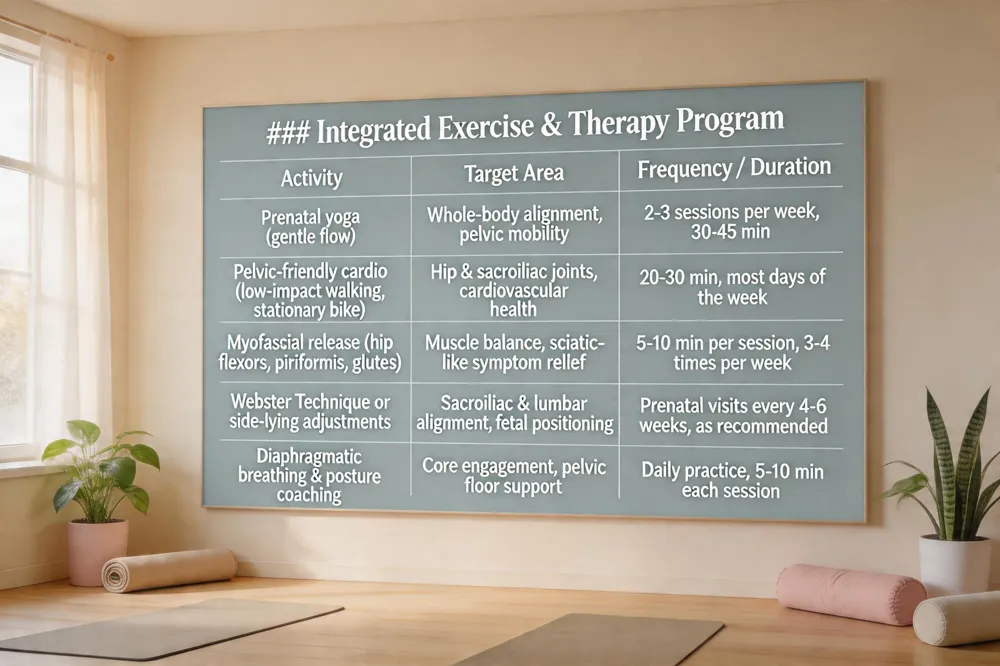 Prenatal yoga and pelvic‑friendly activities such as gentle pelvic tilts, cat‑cow stretches, birth‑ball rocking, and low‑impact walking keep the pelvis mobile while encouraging a neutral lumbar curve. These movements counter the forward shift of the center of gravity forward and the increased lumbar lordosis caused by the growing uterus, helping to reduce lower‑back, hip, and sacroiliac discomfort.
Myofascial release, soft‑tissue work, and corrective chiropractic exercises—often delivered with the Webster Technique or side‑lying low‑force adjustments—restore sacroiliac and lumbar alignment, decrease nerve interference, and increase intra‑uterine space for optimal fetal positioning.
Targeted myofascial release of tight hip flexors, piriformis, and gluteal muscles further balances pelvic symmetry and eases sciatica‑like symptoms.
Education and self‑care complete the program: pregnant women are coached on upright posture, supportive maternity belts or orthotics, and diaphragmatic breathing to engage the core and pelvic floor.
Regular Kegel and reverse‑Kegel practice, hydrated skin and staggered hydration, and using pillows to keep the pelvis aligned while sleeping empower patients to maintain pelvic stability, lessen urinary urgency, and promote a smoother labor and postpartum recovery.
Postpartum Recovery and Continuing Pelvic Support
Postpartum Pelvic Support Roadmap
| Intervention | Goal | Recommended Timing |
|---|---|---|
| Low‑force chiropractic adjustments (sacroiliac, lumbar, pelvic floor) | Restore alignment, relieve residual pain, improve breastfeeding posture | Initiate within 2‑4 weeks postpartum; repeat every 4‑6 weeks as needed |
| Myofascial release & custom orthotics | Balance pelvis, prevent compensatory back strain | Start after initial chiropractic assessment; adjust every 2‑3 months |
| Pelvic‑floor rehab (Kegels, reverse‑Kegels, seated bracing, cat‑cow) | Strengthen diaphragm‑like floor, reduce urinary urgency, support core stability | 3‑4 times daily, 5‑10 min per session, continue for 3‑6 months |
| Education on posture, supportive belts, and safe lifting | Prevent recurrent pelvic strain, aid daily infant care | Ongoing counseling during each visit |
| Gradual re‑introduction of core‑strengthening (e.g., modified planks) | Build long‑term stability, reduce risk of prolapse | Begin after 6‑8 weeks if cleared, progress slowly |
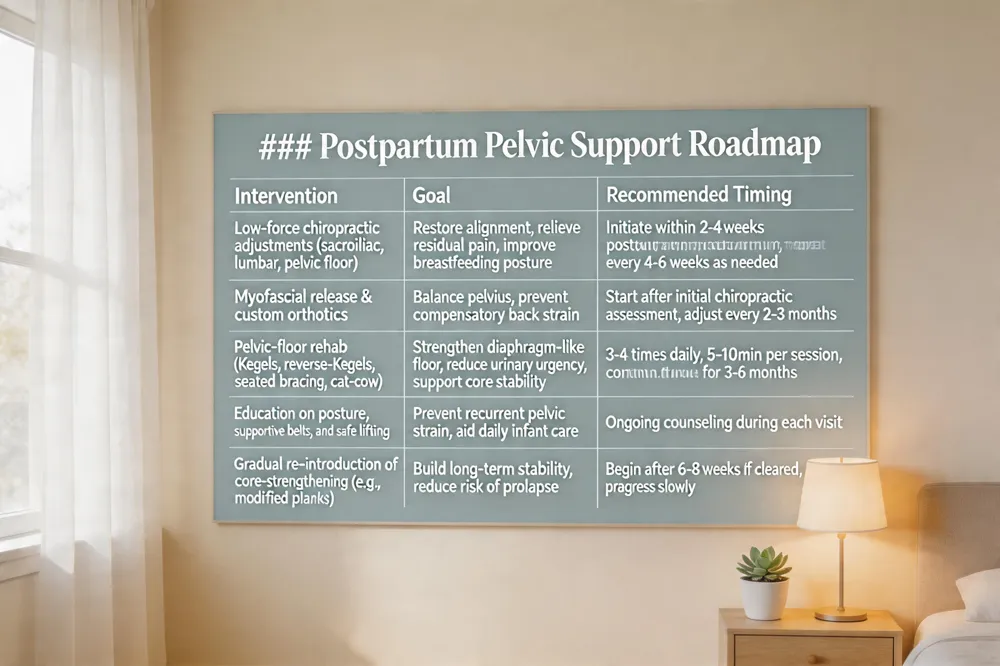 After delivery the pelvis often remains widened and anteriorly tilted, and ligaments may still be lax from relaxin. Low‑force chiropractic adjustments that target the sacroiliac joints, lumbar spine, and pelvic floor can restore proper vertebral alignment, relieve residual low‑back and hip pain, and improve breastfeeding posture. Complementary myofascial release and custom orthotics help balance the pelvis and prevent compensatory strain on the lower back. Pelvic‑floor rehabilitation—guided Kegels, reverse Kegels, seated abdominal bracing, and gentle pelvic‑tilt or cat‑cow exercises—strengthens the diaphragm‑like floor, reduces urinary urgency, and supports core stability for daily activities and infant care. When combined, these interventions have been linked to faster postpartum recovery, lower incidence of chronic pelvic pain, reduced risk of pelvic organ prolapse, and improved overall musculoskeletal health for months and years after birth. Ongoing monitoring of pelvic alignment and a continued program of gentle exercises and periodic chiropractic visits ensure lasting comfort and functional strength.
Key Takeaways for Expectant Mothers
Begin pelvic care in the first trimester so the spine and pelvis can adapt gradually to relaxin‑induced ligament laxity and the shifting center of gravity. Low‑force chiropractic adjustments, the Webster Technique, and myofascial release safely restore alignment without abdominal pressure. Complement these visits with daily low‑impact movement—walking, pelvic tilts, cat‑cow stretches, gentle Kegels, and diaphragmatic breathing—to keep the core stable and the pelvic floor strong. When pain persists, posture worsens, or you notice signs of intrauterine constraint, consult a qualified chiropractor, obstetrician, or pelvic‑health therapist promptly to receive individualized care and prevent chronic discomfort throughout your pregnancy and postpartum recovery.