Why Nutrition Matters for Bone and Muscle Health
Good nutrition is the foundation of musculoskeletal wellness because the bones and muscles rely on the same nutrients to grow, repair, and function. Calcium, vitamin D, magnesium, vitamin K, protein, and omega‑3 fatty acids each play roles: calcium and vitamin D enable bone mineralization, magnesium supports calcium metabolism and muscle relaxation, vitamin K directs calcium to the skeleton, protein supplies the amino acids for muscle fibers and bone matrix, and omega‑3s reduce inflammation that can weaken tissue. Chiropractic care complements these dietary strategies by improving spinal alignment, reducing nerve irritation, and enhancing circulation, which optimizes nutrient delivery to bones and muscles. When a patient follows a diet while receiving adjustments, the combined effect promotes stronger bones, better muscle function, and a risk of fractures.
Protein Foundations for Beginners
Quick Reference: Protein Sources for Beginners
| Food (≈1 serving) | Protein (g) | Key Nutrients | Notes |
|---|---|---|---|
| Whey protein isolate (30 g) | 25‑30 | Complete AA, high leucine | Fast‑digesting, post‑workout |
| Whey concentrate (30 g) | 20‑24 | Complete AA | More affordable |
| Pea‑faba‑pumpkin blend (30 g) | 20‑25 | Complete AA, plant‑based | Good for vegans |
| Chicken breast (100 g) | 31 | B‑vitamins, low‑fat | Lean meat |
| Salmon (wild, 100 g) | 22 | Omega‑3, vitamin D | Bone‑health boost |
| Eggs (2 large) | 12 | Vitamin D, choline | Whole‑food protein |
| Greek yogurt (200 g) | 20 | Calcium, probiotics | Snack or breakfast |
| Cottage cheese (200 g) | 22 | Calcium, casein | Slow‑digesting |
| Tofu (firm, 150 g) | 18 | Calcium, iron | Plant‑based |
| Lentils (cooked, 1 cup) | 18 | Fiber, iron | Vegetarian |
| Quinoa (cooked, 1 cup) | 8 | Complete carbs, magnesium | Whole grain |
Takeaway: Aim for 1.2‑1.6 g protein/kg body weight daily, spread across 3‑5 meals. Include a protein‑rich snack within 30‑60 min post‑training for optimal muscle repair.
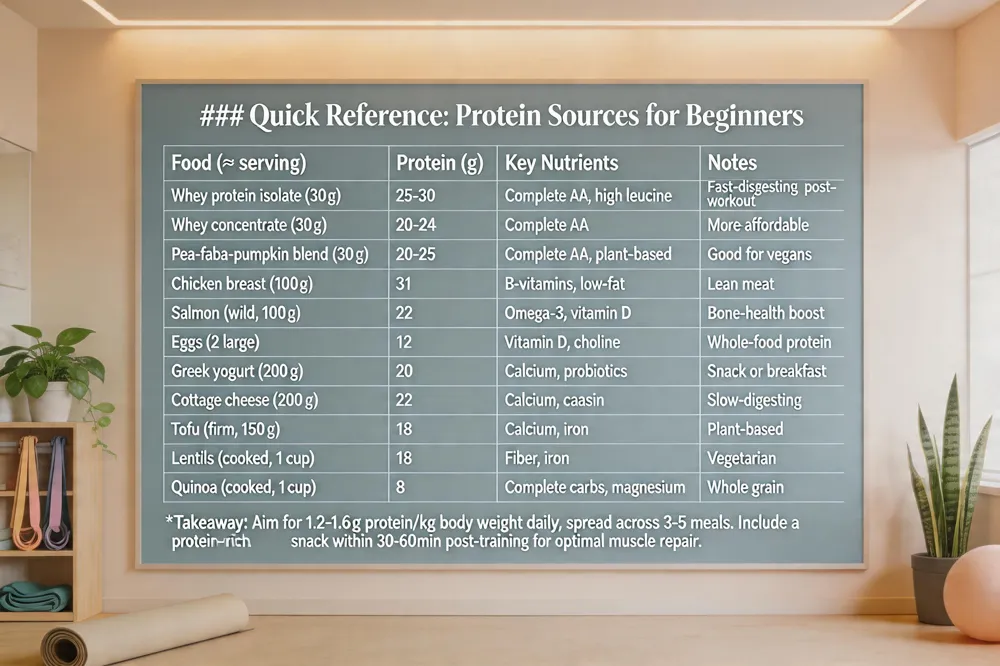 Beginners aiming to add muscle should prioritize high‑quality protein that supplies all essential amino acids. Fast‑digesting whey protein isolate is often the most effective supplement because it delivers a complete amino‑acid profile, especially leucine, which triggers muscle‑protein synthesis. Affordable whey concentrates also work well for those new to supplementation. For vegans or individuals with dairy sensitivities, plant‑based blends—such as pea, faba bean and pumpkin seed isolates—provide a complete profile and are a solid alternative. Whole‑food sources remain essential: lean meats (chicken, turkey, salmon), eggs, Greek yogurt, cottage cheese, tofu, tempeh, lentils, and quinoa each supply 20–30 g of protein per serving and support both muscle repair and bone health. Protein intake should be spread across meals, targeting roughly 1.2–1.6 g per kilogram of body weight (or 0.8–1.0 g per pound) per day. Consuming a protein‑rich snack or shake within 30–60 minutes after resistance training maximizes recovery and muscle growth.
Structured 7‑Day Meal Plan for Muscle Growth
7‑Day Muscle‑Gain Meal Overview (≈2,400 kcal/day)
| Day | Breakfast (Protein g) | Lunch (Protein g) | Dinner (Protein g) | Snacks (Protein g) | Total Protein (g) |
|---|---|---|---|---|---|
| Mon | Oatmeal + peanut butter + hemp seeds (20) | Tuna melt on whole‑wheat (≈ ( ( | Chicken quesadilla (30) | Greek yogurt + berries (15) + protein shake (25) | 110 |
| Tue | Scrambled eggs + spinach (20) | Grilled chicken salad (25) | Beef stir‑fry with brown rice (35) | Cottage cheese (15) + apple + almond butter (10) | 105 |
| Wed | Protein smoothie (whey + banana) (25) | Turkey wrap (20) | Salmon + quinoa (35) | Handful almonds (6) + protein bar (20) | 106 |
| Thu | Greek yogurt parfait (20) | Chickpea & veggie bowl (20) | Pork tenderloin + sweet potato (35) | Hard‑boiled eggs (12) + fruit (5) | 92 |
| Fri | Egg white omelet + feta (20) | Shrimp tacos (25) | Beef chili (30) | Protein shake (25) + carrot sticks (2) | 102 |
| Sat | Pancakes with whey (20) | Chicken Caesar salad (25) | Baked cod + wild rice (30) | Greek yogurt (15) + nuts (8) | 98 |
| Sun | Cottage cheese & pineapple (20) | Lentil soup with turkey meatballs (25) | Veggie stir‑fry with tofu (30) | Protein bar (20) + orange (1) | 96 |
Macronutrient Targets: 1.6‑2.2 g protein/kg, 3.5‑5 g carbs/kg, 0.5‑1.5 g healthy fats/kg. Adjust portion sizes to stay within 2,200‑2,600 kcal.
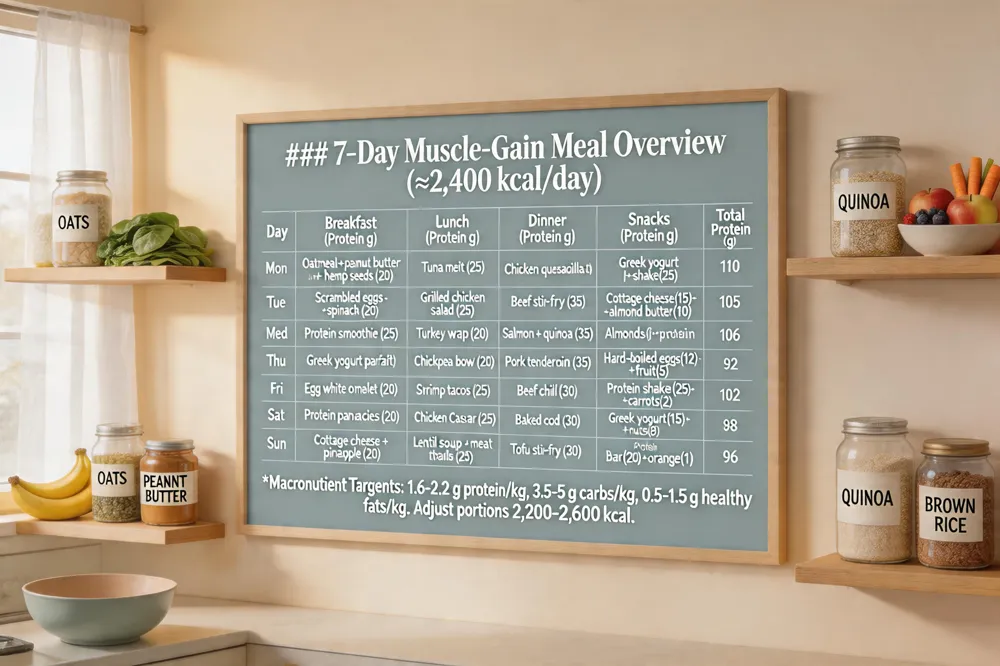 7‑day meal plan for muscle gain
A solid 7‑day muscle‑gain plan should provide a 10–20 % calorie surplus over maintenance, with each day split into three main meals and two‑to‑three protein‑rich snacks spaced every 3–4 hours. Aim for 1.6–2.2 g of protein per kg body weight (≈110‑150 g for most adults), 3.5–5 g of carbs per kg to fuel workouts, and 0.5–1.5 g of healthy fats for hormone support. Sample meals include oatmeal with peanut butter and hemp seeds for breakfast; a tuna melt on whole‑wheat bread with avocado for lunch; and a chicken quesadilla with salsa for dinner. Snacks might be Greek yogurt with berries, a protein shake, or apple slices with almond butter. Hydrate with 9‑13 cups of water daily and include a post‑workout snack of 20‑30 g protein plus moderate carbs within an hour of training. Adjust portion sizes to meet a target of 2,200‑2,600 kcal, and prep dishes in advance to stay consistent throughout the week.
Nutrition Essentials for Strong Bones and Muscles
Key Nutrients & Food Sources for Bone & Muscle Health
| Nutrient | Recommended Daily Intake* | Top Food Sources |
|---|---|---|
| Calcium | 1,000‑1,200 mg | Low‑fat dairy, fortified plant milks, kale, broccoli, sardines (with bones) |
| Vitamin D | 600‑800 IU (≈15‑20 µg) | Sunlight, fortified milk, fatty fish (salmon, mackerel), egg yolks |
| Protein | 1.2‑2.0 g/kg body weight | Lean meats, Greek yogurt, tofu, legumes, whey/pea protein |
| Magnesium | 310‑420 mg | Almonds, pumpkin seeds, whole grains, prunes, raisins |
| Vitamin K | 90‑120 µg | Leafy greens (kale, broccoli, Brussels sprouts) |
| Vitamin C | 75‑90 mg | Citrus, berries, bell peppers, tomatoes |
| Omega‑3 (EPA/DHA) | 250‑500 mg | Fatty fish, flaxseed oil, walnuts |
*Intakes are for average adults; individual needs may vary.
Tip: Pair calcium‑rich foods with vitamin D and vitamin K sources to maximize absorption and bone mineralization.
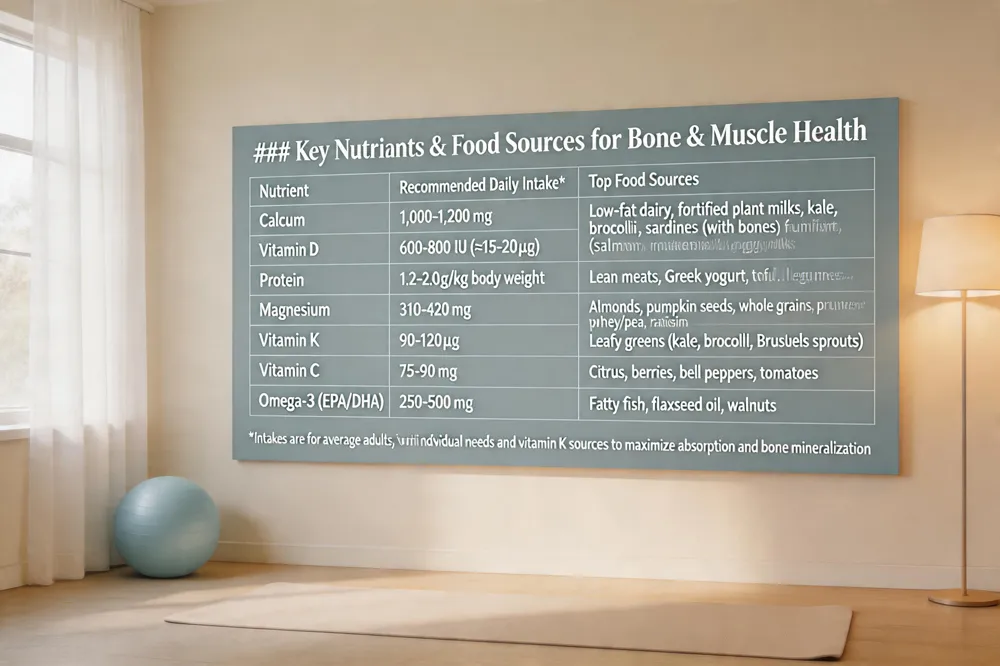 Food for strong bones and muscles
Strong bones and muscles need calcium, Vitamin D, and protein. Include dairy or fortified plant milks, leafy greens like kale and broccoli, and calcium‑rich fish with bones (sardines, salmon) to meet calcium needs. Vitamin D comes from sunlight, fortified foods, or oily fish. Protein—lean meats, soaked beans, tofu, Greek yogurt—supports repair and bone density. Add magnesium‑rich nuts, seeds, dried fruits (prunes, raisins) and vitamin C‑rich produce for collagen.
Food for strong bones and muscles
Strong bones and muscles need calcium, Vitamin D, and protein. Include dairy or fortified plant milks, leafy greens like kale and broccoli, and calcium‑rich fish with bones (sardines, salmon) to meet calcium needs. Vitamin D comes from sunlight, fortified foods, or oily fish. Protein—lean meats, soaked beans, tofu, Greek yogurt—supports repair and bone density. Add magnesium‑rich nuts, seeds, dried fruits (prunes, raisins) and vitamin C‑rich produce for collagen.
Vitamins for strong bones and joints Vitamin D enhances calcium uptake; vitamin K directs calcium into bone; vitamin C is essential for collagen in bone and cartilage. Vitamin A and E reduce oxidative stress and aid joint health. Together with calcium, magnesium, and omega‑3s they preserve bone strength and mobility.
Top 10 bone‑building foods
- Dairy (milk, yogurt, cheese)
- Fortified plant milks
- Fatty fish with bones (salmon, sardines)
- Egg yolks[https://www.guthrie.org/blog/7-best-foods-increase-bone-density]
- Kale, broccoli
- Sesame seeds/tahini
- Prunes, raisins, figs
- Almonds
- Calcium‑fortified orange juice
- Whole‑grain cereals with calcium
A balanced diet with weight‑bearing exercise maximizes bone health without drugs or surgery.
Maintaining Bone Density Throughout Life
Age‑Based Bone‑Health Focus
| Life Stage | Bone‑Mass Trend | Core Nutritional Priorities | Exercise Highlights |
|---|---|---|---|
| Childhood‑Adolescence (0‑25 yr) | Rapid accrual, peak bone mass | Calcium 1,000 mg, vitamin D 600 IU, high‑quality protein | Weight‑bearing play, resistance training |
| Early Adulthood (25‑45 yr) | Maintenance | Same as above + magnesium 300‑400 mg | Moderate cardio + strength 2‑3 ×/wk |
| Mid‑life (45‑65 yr) | Slow loss, especially post‑menopause (women) | Calcium 1,200 mg, vitamin D 800 IU, vitamin K2, protein 1.2‑1.5 g/kg | Weight‑bearing, balance drills, resistance |
| Older Adults (65+ yr) | Accelerated resorption | Calcium 1,200 mg, vitamin D 800‑1,000 IU, protein 1.2‑1.5 g/kg, magnesium | Low‑impact cardio, resistance, flexibility, fall‑prevention training |
General Advice: Keep calcium doses ≤500 mg per serving and separate from high‑phytate foods by ~2 h to improve absorption.
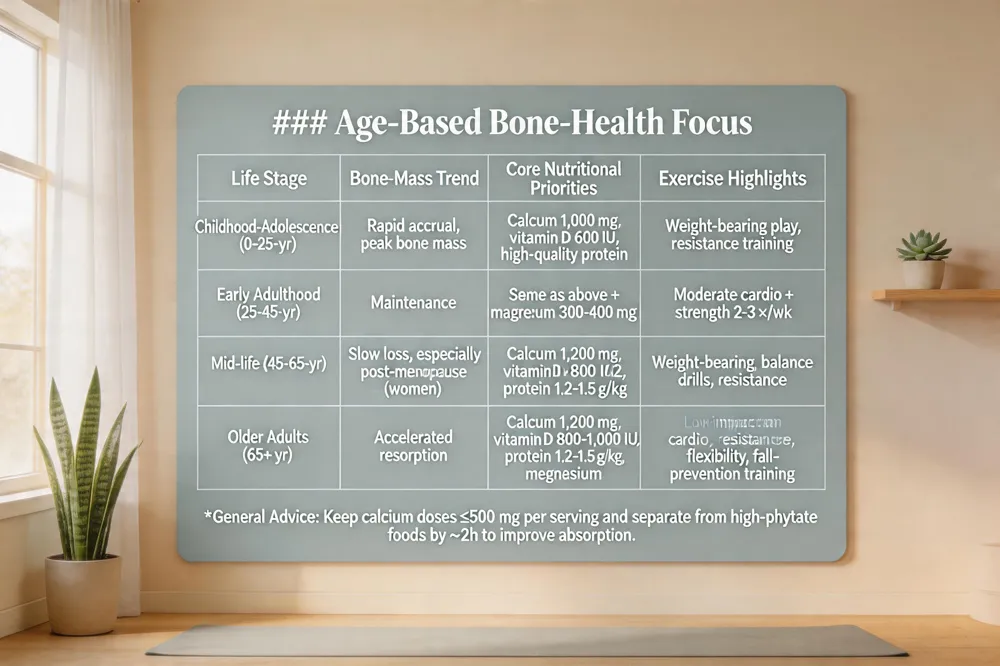 Bone mass builds rapidly in childhood and peaks around age 25‑30, when formation exceeds resorption. After this window the balance shifts; post‑menopause the inevitable accelerates, making rapid gains harder but not impossible. Weight‑bearing activities (walking, jogging, resistance training) and adequate calcium (≈1,000‑1,200 mg/day) plus vitamin D (600‑800 IU) remain effective at any age, preserving or modestly increasing density.
How to strengthen bones and joints naturally – Fill the plate with low‑fat dairy, fortified plant milks, canned salmon with bones, leafy greens, and a daily handful of prunes or raisins for magnesium and potassium. Pair nutrition with regular low‑impact cardio and strength work, quit smoking, limit alcohol, and ensure sunlight or a vitamin D supplement. Add corrective posture drills, core‑strengthening, and occasional chiropractic adjustments to improve joint mobility.
6 ways to keep bones and muscles strong – 1) Eat calcium‑ and‑D‑rich foods; 2) Consume high‑quality protein (eggs, Greek yogurt, lean meat, soy); 3) Perform weight‑bearing and resistance exercises; 4) Maintain a healthy weight and avoid extreme calorie restriction; 5) Secure adequate vitamin D and consider vitamin K2 or collagen if needed; 6) Avoid smoking, limit alcohol and practice balance‑training and stretching to reduce fall risk and support joint flexibility.
Targeted Foods for Osteoporosis Prevention and Recovery
7 Super‑Foods for Osteoporosis (Key Nutrients)
| Food | Primary Bone‑Health Nutrient(s) | Typical Amount & Content |
|---|---|---|
| Dairy (milk, yogurt, cheese) | Calcium, vitamin D, protein | 1 cup milk ≈300 mg Ca |
| 100 IU D | ||
| Dark leafy greens (kale, collard) | Calcium, vitamin K | 1 cup cooked kale ≈180 mg Ca, 500 µg K |
| Fatty fish (salmon, mackerel, sardines) | Vitamin D, omega‑3 | 100 g salmon ≈450 IU D, 2 g EPA/DHA |
| Fortified tofu (calcium‑set) | Calcium, isoflavones | ½ block ≈250 mg Ca |
| Almonds | Calcium, magnesium, protein | ¼ cup ≈75 mg Ca, 80 mg Mg |
| Fortified plant milks | Calcium, vitamin D | 1 cup ≈300 mg Ca, 100 IU D |
| Prunes | Vitamin K, potassium, antioxidants | 5 prunes ≈70 µg K, 300 mg K |
Avoid: Excess salt, high caffeine, cola drinks, alcohol, heavily processed foods, and oxalate‑rich vegetables (spinach, rhubarb) which can hinder calcium absorption.
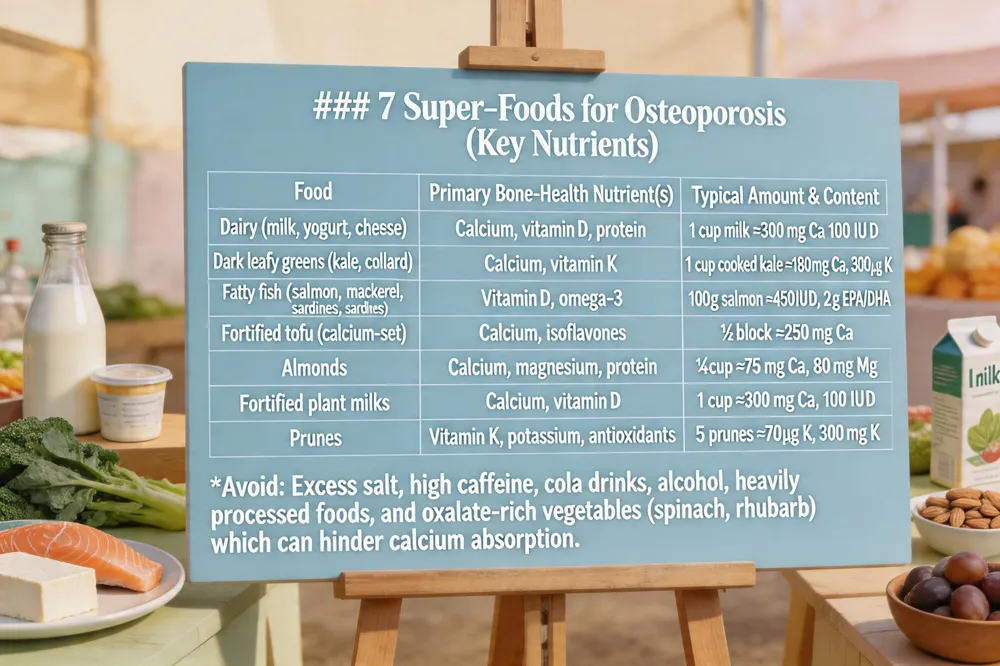 List of foods for osteoporosis
A bone‑healthy diet should include calcium‑rich foods such as low‑fat dairy (milk, yogurt, cheese), fortified plant milks, calcium‑enriched orange juice, leafy greens (kale, bok choy, collard greens), calcium‑set tofu, almonds, chia seeds, and white beans. Vitamin D sources—fatty fish (salmon, mackerel, sardines with bones), egg yolks, fortified cereals, and UV‑exposed mushrooms—boost calcium absorption. Vitamin K foods (broccoli, Brussels sprouts, green beans) aid mineralization, while magnesium‑rich nuts, seeds, and whole grains support bone density. Prunes and other dried fruits add antioxidants and anti‑inflammatory compounds.
What are 7 super foods for osteoporosis?
- Dairy (milk, cheese, yogurt) – calcium, vitamin D, protein.
- Dark leafy greens (kale, spinach, collard greens) – calcium, vitamin K.
- Fatty fish (salmon, mackerel, sardines) – vitamin D, omega‑3s.
- Calcium‑rich tofu (fortified) – calcium, isoflavones.
- Almonds – calcium, magnesium, protein.
- Fortified plant milks – calcium, vitamin D.
- Prunes – vitamin K, potassium, antioxidants.
What are the seven worst foods for osteoporosis?
Excessive salt, high caffeine, cola‑type soft drinks, alcohol, very high‑protein diets lacking vegetables, heavily processed foods, and oxalate‑rich foods (spinach, rhubarb, beet greens) each increase calcium loss or impede absorption.
What foods heal bones fast?
Prioritize calcium and phosphorus (dairy, fortified milks, leafy greens, vitamin D (fatty fish, fortified foods, vitamin K (broccoli, Brussels sprouts, vitamin C (citrus, berries, bell peppers), high‑quality protein (lean meats, eggs, Greek yogurt, and iron‑rich sources (lean red meat, legumes). Limit alcohol, sodium, and caffeine to support rapid bone repair.
Putting It All Together: Actionable Steps for Patients
Daily Action Plan for Bone & Muscle Strength
| Goal | Target | Practical Tips |
|---|---|---|
| Calcium | 1,000‑1,200 mg | 2‑3 servings dairy or fortified plant milk; add a handful of almonds or a serving of leafy greens each meal |
| Vitamin D | 600‑800 IU (or 1,000 IU if limited sun) | 10‑15 min midday sun 3‑4 ×/wk; take a supplement if needed |
| Protein | 1.2‑2.0 g/kg body weight | Spread 20‑30 g per meal; include a post‑workout shake (20‑30 g) |
| Magnesium | 320‑420 mg | Snack on pumpkin seeds, nuts, or a serving of whole‑grain cereal |
| Vitamin K | 90‑120 µg | Include kale, broccoli, or Brussels sprouts daily |
| Hydration | 2‑3 L water | Carry a water bottle; sip throughout the day |
| Sleep | 7‑9 h | Consistent bedtime routine, limit screens before sleep |
| Lifestyle | Quit smoking, limit alcohol (<2 drinks/day) | Use stress‑reduction techniques, stay active |
| Exercise | Weight‑bearing + resistance 3‑5 ×/wk | Combine walking/jogging, squats, deadlifts, and balance drills |
| Supplemental Support | Vitamin K2, collagen (optional) | Discuss with healthcare provider if diet is insufficient |
Implementation: Schedule meals/snacks every 3‑4 h, set reminders for water and supplement intake, and plan a 30‑minute workout + 10‑minute stretch routine each day.
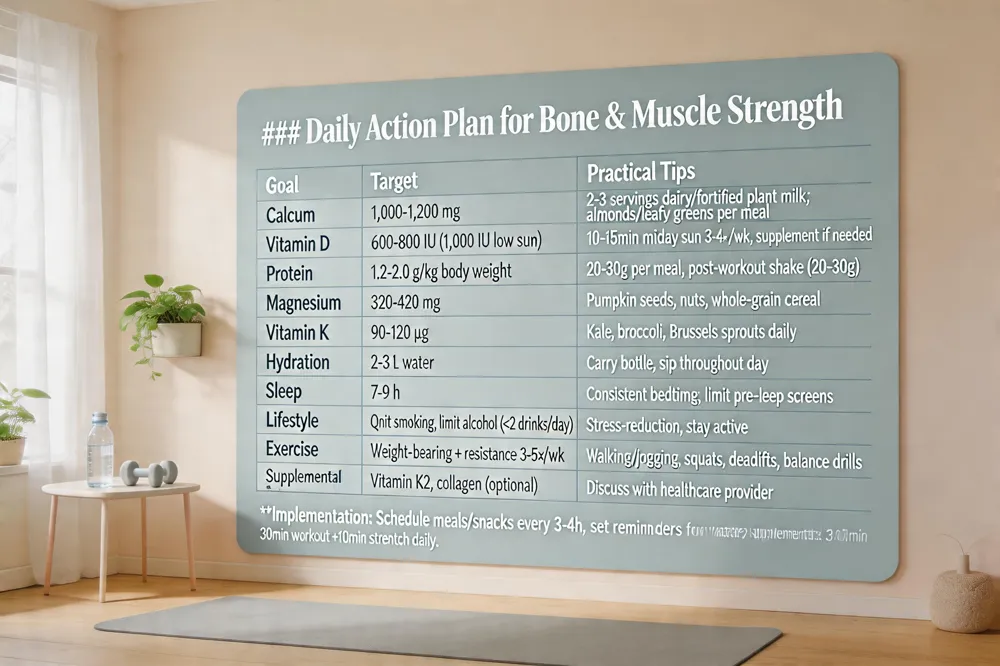 Patients should aim for 1,000‑1,200 mg of calcium each day, 600‑800 IU of vitamin D, 1.2‑2.0 g of protein per kilogram of body weight, and 320‑420 mg of magnesium. Add potassium‑rich fruits, vitamin‑K leafy greens, and vitamin‑C vegetables to support collagen and mineral binding. Space calcium doses (≤500 mg) two hours apart from high‑phytate foods and limit sodium, excess caffeine, and alcohol. Pair this nutrition plan with regular weight‑bearing activity and chiropractic care that improves spinal alignment, reduces nerve irritation, and enhances muscle activation. Simple daily habits—drink water, choose fortified plant milks, snack on prunes or almonds, soak beans, and schedule a brief stretch or adjustment before bed—ensure lasting bone density and muscle strength. Aim for 2‑3 L of water daily and 7‑9 hours of sleep to optimize tissue repair and nutrient transport.
Key Takeaways for Strong Bones and Healthy Muscles
Strong bones and healthy muscles depend on a balanced mix of nutrients and active habits. Aim for 1,000–1,200 mg of calcium daily from low‑fat dairy, fortified plant milks, canned sardines or salmon with bones, and leafy greens. Pair calcium with 600–800 IU of vitamin D (fatty fish, fortified foods, safe sun) to boost absorption. Include magnesium‑rich foods (nuts, seeds, whole grains, beans) and potassium‑laden fruits and vegetables to reduce calcium loss. Vitamin K from dark leafy greens, vitamin C for collagen, and omega‑3 fatty acids help bone mineralization and curb inflammation. Consume 1.2–2.0 g protein per kg body weight, spread across meals, and stay hydrated. Limit sodium, excess caffeine, alcohol, and sugary sodas. Perform weight‑bearing and resistance exercise most days, and schedule chiropractic check‑ins to maintain alignment, improve posture, and support musculoskeletal recovery.