First Steps After the Accident
Early chiropractic care, ideally within the first 48‑72 hours, helps capture hidden soft‑tissue damage before inflammation turns into chronic pain and provides objective medical evidence for insurance claims. Bring accident reports, police documentation, medical records, any prior imaging, and your insurance information to the first visit so the chiropractor can verify the timeline, rule out fractures with X‑rays if needed, and submit a detailed treatment plan to the insurer. Recovery varies: most patients feel reduced pain and increased mobility within a few weeks, but more severe whiplash or disc irritation may require several months of adjustments, exercises, and modalities. Setting realistic expectations—gradual improvement, regular home‑exercise compliance, and ongoing progress notes—helps keep the healing process on track. Keeping a recovery journal of pain levels, range of motion, activity tolerance guides clinician care.
Initial Evaluation & Diagnostic Process
 Review medical history, accident details, and current symptoms at the first chiropractic appointment after a car accident. You should describe the crash’s speed, direction, seat‑belt use, point of impact, and any immediate sensations such as neck pain, headache, dizziness, or tingling. Also note delayed symptoms, previous injuries, surgeries, chronic conditions, and current medications. This narrative guides the Physical examination assesses posture, range of motion, and pain points using palpation and medical tests, which evaluates posture, range‑of‑motion (ROM), muscle strength, and joint mobility while the chiropractor palpates tender points and performs orthopedic and neurological tests. The exam often reveals subtle misalignments, muscle spasms, or nerve irritation that are not visible on X‑ray. When the findings suggest fractures, disc injury, or persistent pain, Diagnostic imaging such as X‑rays or MRI scans may be recommended to view spinal structures and soft tissues. Early evaluation, ideally within 48‑72 hours, is recommended because it uncovers hidden soft‑tissue trauma, allows gentle adjustments, myofascial release, and modalities such as cold‑laser therapy to reduce inflammation, improve ROM, and prevent chronicity. Prompt care also creates a documented timeline that strengthens personal‑injury claims.
Treatment Plan & Techniques
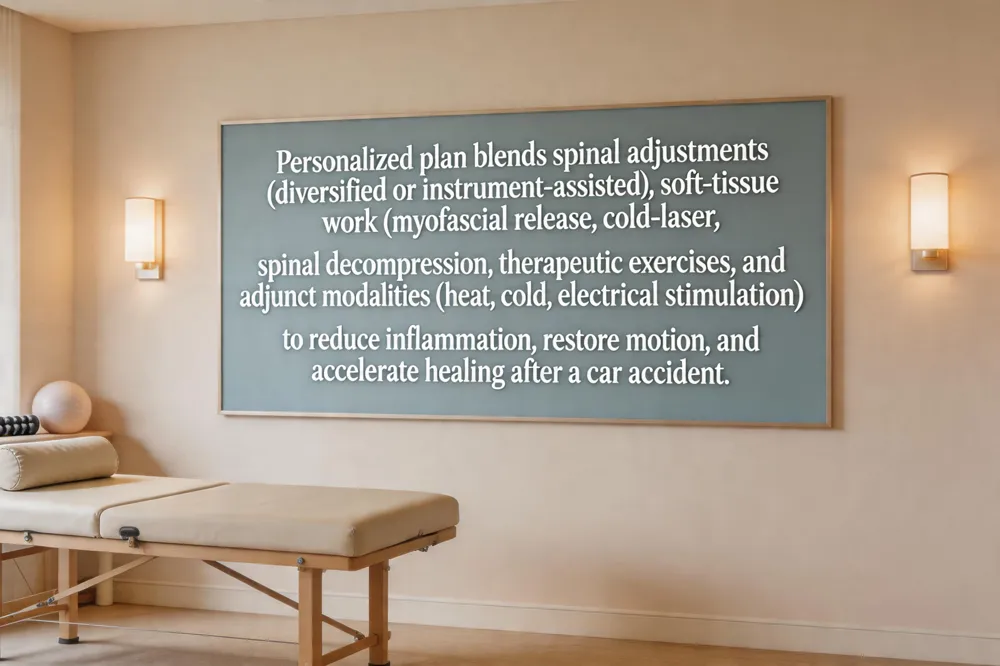 After a car accident, a chiropractor creates a personalized treatment plan that blends several evidence‑based techniques. Spinal adjustments—whether traditional diversified thrusts or instrument‑assisted methods—target misaligned vertebrae caused by whiplash and sudden impact, restoring joint motion and easing nerve irritation. Soft‑tissue therapies such as myofascial release and cold‑laser treatment address micro‑tears, inflammation, and scar tissue in muscles and ligaments, promoting blood flow and reducing pain. Spinal decompression gently unloads the cervical and lumbar discs, relieving pressure on intervertebral discs and nerve roots, while therapeutic exercises focus on core stability, flexibility, and posture correction to support long‑term healing. These modalities are integrated to manage pain effectively, often supplemented with heat/cold therapy or electrical stimulation for immediate relief.
Is chiropractic care beneficial after a car accident? Yes. Gentle adjustments and soft‑tissue work realign the spine, diminish inflammation, and improve nervous‑system function, helping to recovery neck and back pain, prevent chronic stiffness, and accelerate natural healing without drugs or surgery.
What are the 3 T’s in chiropractic? Trauma, Toxins, and Thoughts—the three primary sources of nerve interference identified by D.D. Palmer. Trauma includes accident‑related injuries; toxins refer to chemical stressors that affect tissue health; thoughts encompass emotional stress that can cause chronic muscle tension. Addressing all three supports optimal recovery after an auto‑accident.
Frequency, Duration, and Recovery Timeline
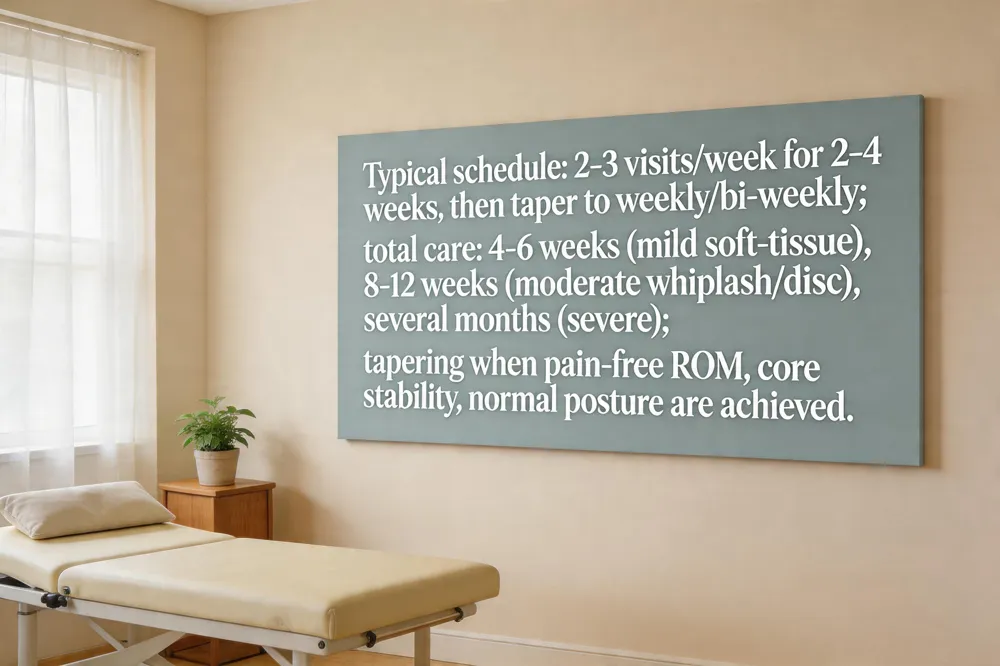 After a car accident most patients start with 2‑3 chiropractic visits per week for the first 2‑4 weeks, then taper to once‑weekly or bi‑weekly sessions as pain eases and spinal alignment improves. The exact schedule depends on injury severity (whiplash, neck or back strain, disc irritation), patient age, delayed presentation, and how quickly inflammation resolves. Factors that extend treatment include persistent headache or low‑back pain, older age, and any nerve‑compression symptoms. Recovery signs that indicate it’s time to taper care are a pain‑free range of motion, restored core stability, normalized posture, and the ability to perform daily activities without discomfort. Patients should also notice a steady decline in pain scores on their recovery journal and no new neurologic symptoms. Early mobilization—ideally within 24‑72 hours—helps shorten the overall timeline. Mild soft‑tissue injuries often resolve in 4‑6 weeks; more complex whiplash or disc issues may require 8‑12 weeks, and severe cases can need several months. Once functional mobility, strength, and stability are fully restored, the chiropractor can transition the patient to a maintenance program or conclude care.
Insurance, Billing, and Financial Considerations
 Auto‑insurance policies are the primary source of payment for chiropractic care after a car accident. The at‑fault driver’s liability insurance will usually cover the first tier of expenses. If you carry Personal Injury Protection (PIP) or Medical Payments (MedPay) on your own policy, those benefits pay the bills regardless of fault, up to the policy limits. Health‑insurance plans may also provide chiropractic benefits, but you will likely need to meet deductibles or co‑pays and later submit a claim to be reimbursed from any settlement.
Many chiropractors work on a medical lien, meaning they defer payment until a personal‑injury settlement is reached. Once the claim is resolved, the settlement or judgment is used to reimburse the chiropractor for all documented services. To protect your right to reimbursement, bring accident reports, police documentation, prior medical records, and imaging to your first visit, and keep a detailed recovery journal.
When filing a claim, submit treatment notes, invoices, and a physician’s statement linking the chiropractic care to the crash. Verify the limits of your PIP, MedPay and health‑insurance coverage to avoid unexpected out‑of‑pocket costs.
Finding the Right Practitioner in San Jose
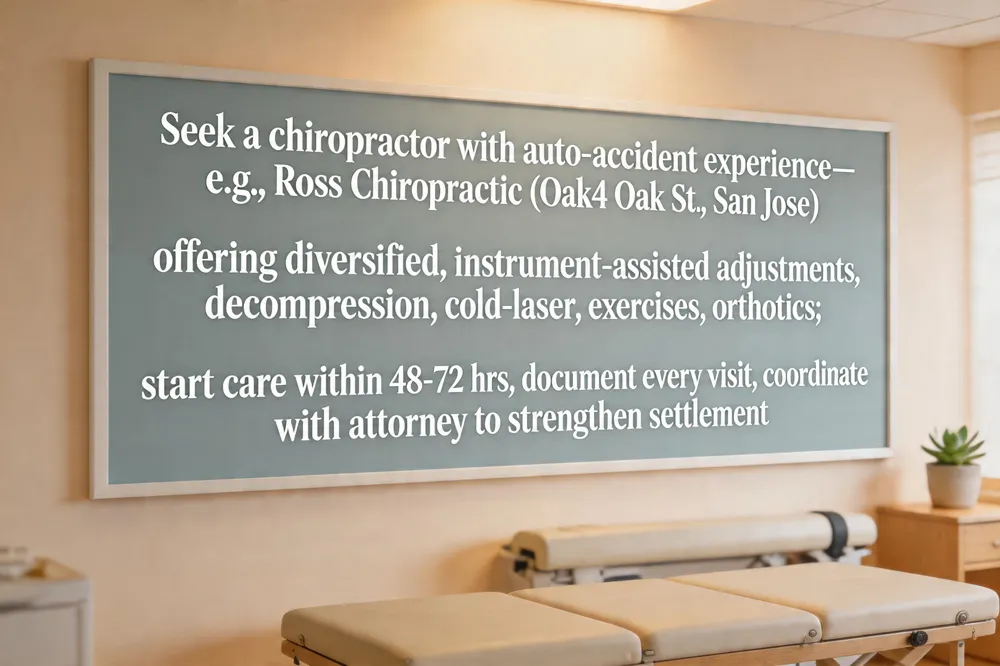 When a car‑accident survivor in San Jose looks for a post‑accident chiropractor, the first step is to locate a provider with proven experience handling whiplash, neck strains, and back sprains. Ross Chiropractic (1234 Oak St., San Jose, CA 95112, (408) 555‑1234) offers a patient‑focused, non‑invasive approach that includes diversified adjustments, instrument‑assisted corrections, spinal decompression, myofascial release, cold‑laser therapy, corrective exercises, and custom orthotics. Other reputable options include Lam & Tran Chiropractic Inc. (2320 Senter Rd) and South Bay Wellness Center & Chiropractic (1066 Saratoga Ave, Ste 120). To maximize settlement value, begin chiropractic care within the first 48‑72 hours, document every visit, imaging, and modality, and share the complete record with your attorney. Consistent appointment attendance, adherence to home‑exercise programs, and obtaining written referrals or specialist opinions further demonstrate the necessity of care, strengthening your claim and potentially increasing the settlement amount.
Putting It All Together
Early, consistent chiropractic care after a car crash cuts inflammation, restores spinal alignment, and prevents minor strains from becoming chronic pain. Studies show that patients who begin treatment within the first 48‑72 hours experience faster symptom relief and shorter overall recovery. To make the most of your first appointment, gather accident reports, police documentation, any prior medical records or imaging, and insurance details; wear loose clothing for easy examination and bring a symptom diary. A patient‑focused approach that blends spinal adjustments, soft‑tissue therapy, therapeutic exercises, and modalities such as spinal decompression supports natural healing and improves posture, core stability, and nervous‑system function. Over time this personalized plan reduces reliance on medication, lowers the risk of future injuries, and promotes lasting wellness, enhances quality of life, for you and your family.