Why Mobility Matters in Aging
Mobility loss threatens independence, as limited walking or standing increases reliance on caregivers, raises fall risk, and often leads to hospitalization and loss of autonomy. Regular physical activity counters this decline: aerobic exercise, strength training, balance work and flexibility routines improve muscle mass, joint range of motion, and cardiovascular health, reducing disease incidence and enhancing daily function. Integrating chiropractic care amplifies these benefits. Adjustments restore spinal alignment, relieve joint stiffness, and improve nerve signaling, which supports better posture, balance, and movement efficiency. Combined with myofascial release, spinal decompression, cold‑laser therapy and custom orthotics, chiropractic care addresses musculoskeletal restrictions, allowing exercise programs to be performed safely and more effectively, sustaining long‑term mobility and independence throughout the later years and beyond.
Understanding Chiropractic Care and How Adjustments Target Mobility
Key Assessment & Adjustment Components
| Assessment Component | Methods | Purpose |
|---|---|---|
| History & Symptom Review | Patient interview, medical records | Identify pain patterns, functional limitations, and possible underlying causes |
| Physical Exam | Posture analysis, range‑of‑motion testing, functional movement observation | Locate movement deficits and postural deviations |
| Palpation | Static & motion palpation, leg‑length checks, skin‑temperature checks | Detect joint restrictions, muscle tension, and end‑feel barriers |
| Imaging (when needed) | X‑ray, MRI, CT | Confirm structural abnormalities, rule out contraindications |
| Adjustment Selection | HVLA thrust, low‑force mobilization, spinal decompression, myofascial release | Restore alignment, reduce irritation, improve nerve signaling |
| Immediate Benefits | Pain relief, increased ROM, better posture | Reduce joint irritation and trigger endorphin release |
| Long‑Term Benefits | Enhanced nervous‑system signaling, lower medication reliance, injury prevention | Support sustained mobility when combined with exercises, laser therapy, orthotics |
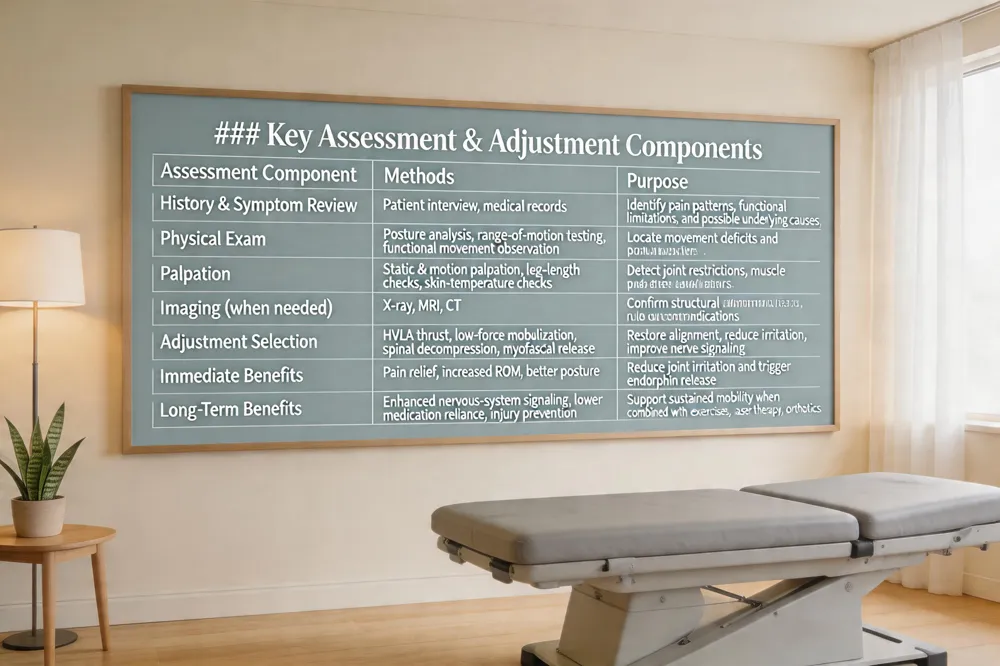 Patient assessment begins with a thorough history and symptom review, followed by a physical exam that evaluates posture, range of motion, and functional movement. Chiropractors use static and motion palpation, leg‑length checks, skin‑temperature checks, and, when needed, imaging to identify joint restrictions, muscle tension, and hard end‑feel barriers. These findings pinpoint the "adjustive lesion"—the specific joint or subluxation limiting motion or causing pain.
Techniques to locate the lesion include manual palpation, instrument‑assisted manipulation, and neuro‑muscular testing. Once identified, the practitioner selects the appropriate adjustment method—high‑velocity low‑amplitude thrust, low‑force mobilization, spinal decompression, or myofascial release —to restore alignment.
Immediate benefits of an adjustment are pain relief through reduced joint irritation and endorphin release, improved range of motion, and better posture. Long‑term advantages include enhanced nervous‑system signaling, reduced muscle tension, lower reliance on medication, and prevention of future injuries when combined with corrective exercises, cold laser therapy, and custom orthotics.
How do chiropractors know where to adjust? They combine history, physical exam, palpation, and imaging to map the exact segment needing correction, guiding the choice of technique.
What are the benefits of chiropractic adjustments? Immediate pain reduction, restored mobility, optimal nerve function, drug‑free care, and long‑term wellness with complementary therapies.
What are the 3 T's in chiropractic? Trauma, Toxins, and Thoughts—major sources of stress that can create vertebral subluxations and disrupt nervous system health.
Mobility Gains for Seniors: Research and Programs
Research Findings & Program Outcomes
| Program/Study | Key Findings | Impact |
|---|---|---|
| LIFE Study (70‑89 yr) | Regular physical activity reduced major mobility disability risk by 18% | Demonstrates effectiveness of walking, strength, flexibility, and balance training |
| CAPABLE Initiative | 30% reduction in ADL assistance; 7‑to‑1 ROI via lower Medicare costs | Shows value of home modifications, OT, nursing support, and chiropractic‑compatible care |
| Sedentary Behavior Risks | 9‑13 h sitting daily ↑ mortality, metabolic disorders, functional decline | Highlights need for frequent movement breaks |
| Stand‑to‑Stand Transitions | Brief transitions ↓ fasting glucose; mortality risk ↓ up to 37% in older women | Simple, low‑cost strategy to maintain metabolic health and mobility |
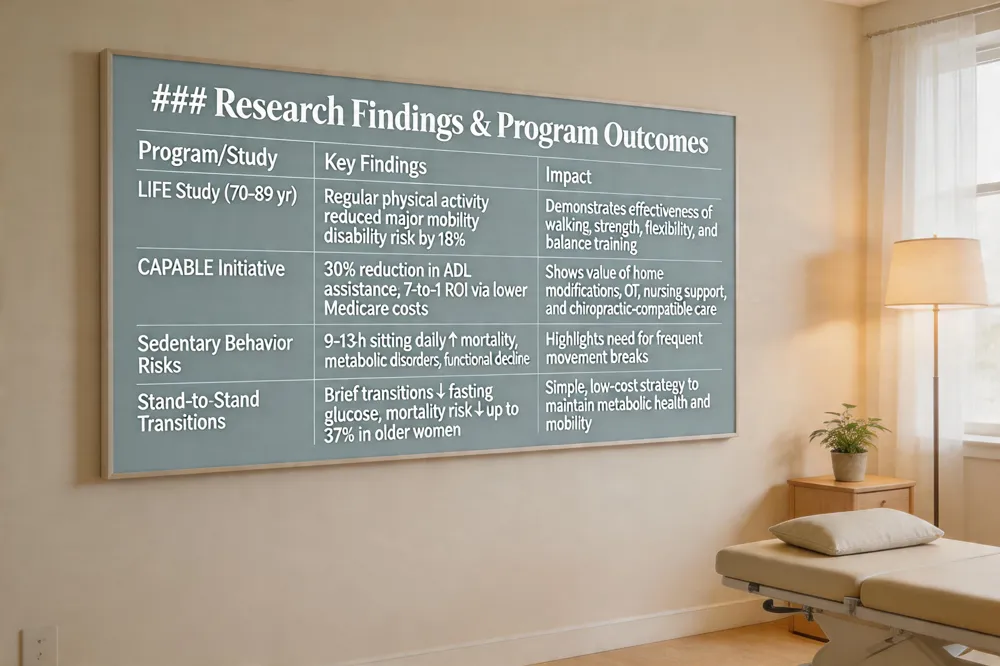 LIFE Study Results – In the landmark LIFE trial, regular physical activity (walking, strength, flexibility, balance) cut the risk of major mobility disability by 18% in adults aged 70‑89 who had been sedentary. CAPABLE Program Impact – The NIA‑funded CAPABLE initiative combines home modifications, occupational therapy, and nursing support. Participants experienced a 30% reduction in needing assistance with daily activities and a 7‑to‑1 return on investment through lower Medicare costs over two years. Risks of Sedentary Behavior – Older adults who sit 9‑13 hours daily face higher mortality, metabolic disorders, and accelerated loss of physical function. Interrupting sitting with brief stand‑to‑stand transitions can lower fasting glucose and reduce mortality risk by up to 37% in older women.
Can a chiropractor help with mobility? Yes. By realigning the spine and joints, a chiropractor removes stiffness and restores proper mechanics for smooth movement. Soft‑tissue techniques (myofascial release, spinal decompression, cold‑laser therapy) reduce muscle tension and inflammation. Personalized corrective‑exercise programs and custom orthotics reinforce adjustments, strengthening supporting muscles and improving posture. These non‑invasive, drug‑free interventions increase flexibility, joint function, and daily freedom. Dr. Allison Ross tailors each plan to individual goals.
What are the effects of reduced mobility in the elderly? Loss of independence, higher fall risk, muscle atrophy, joint stiffness, cardiovascular decline, pressure ulcers, clots, pneumonia, increased healthcare use, social isolation, depression, and accelerated overall decline.
Why is it important to maintain mobility as we age? It preserves functional independence, reduces falls and chronic disease risk, supports muscle, bone, and cardiovascular health, promotes mental well‑being, and enables seniors to age in place with dignity.
Financial Realities: Medicare and Chiropractic Care
Medicare Coverage Overview
| Aspect | Coverage | Notes |
|---|---|---|
| Medically Necessary Spinal Manipulation | Covered under Part B after deductible; 80% of approved amount paid | 20% coinsurance remains; only for acute low‑back, neck, or sciatica |
| Routine Maintenance Visits | Not covered under Original Medicare | May be covered under some Medicare Advantage (Part C) plans |
| Diagnostic Imaging (X‑ray, MRI) | Covered if medically necessary | Must be ordered by a qualified provider |
| Adjunct Therapies (Massage, Acupuncture, Custom Orthotics) | Not covered under Original Medicare | Often billed out‑of‑pocket or via supplemental insurance |
| Potential Risks & Costs | Temporary soreness, rare serious complications; ongoing visits may increase total cost | Patients should weigh benefits vs. out‑of‑pocket expenses |
 Medicare Part B will pay for medically necessary spinal manipulation—such as an adjustment for acute low‑back, neck pain, or sciatica—once the Part B deductible is met. Medicare then covers 80 % of the approved amount, leaving a 20 % coinsurance. Routine maintenance visits, X‑rays, massage, acupuncture, or custom orthotics are not covered under Original Medicare. Some Medicare Advantage (Part C) plans may offer broader chiropractic benefits, so seniors should review their specific policy.
Disadvantages include temporary soreness after adjustments, rare serious complications like vertebral‑artery dissection after neck thrusts, and contraindications for severe osteoporosis, spinal cancer, or significant disc herniation. Ongoing visits may be needed for lasting relief, increasing overall cost.
After a visit, mild soreness that fades within a day or two is normal. Watch for sharp or worsening pain, new numbness or weakness, severe headaches, dizziness, blurred vision, fever, swelling, or prolonged stiffness—these are warning signs that require immediate medical attention. Contact Dr. Ross or your provider if any occur.
Practical Strategies to Boost Mobility in Later Years
Mobility‑Boosting Strategies
| Strategy | Description | Benefit |
|---|---|---|
| Strength Training | Squats, lunges, wall push‑ups, resistance bands | Preserves muscle mass, joint stability, and bone density |
| Flexibility & Stretching | Yoga, static stretches, dynamic warm‑ups | Improves range of motion, reduces stiffness |
| Balance Drills | Single‑leg stance, tai‑chi, heel‑to‑toe walking | Enhances proprioception, lowers fall risk |
| Chiropractic Adjustments | HVLA, mobilization, decompression, myofascial release | Restores alignment, reduces pain, supports tissue health |
| Custom Orthotics | Foot‑mechanics correction devices | Improves posture, reduces compensatory stress on knees/hips/back |
| Patient Education | Body‑mechanics training, ergonomic habits, activity‑integration tips | Empowers self‑management and consistent movement throughout the day |
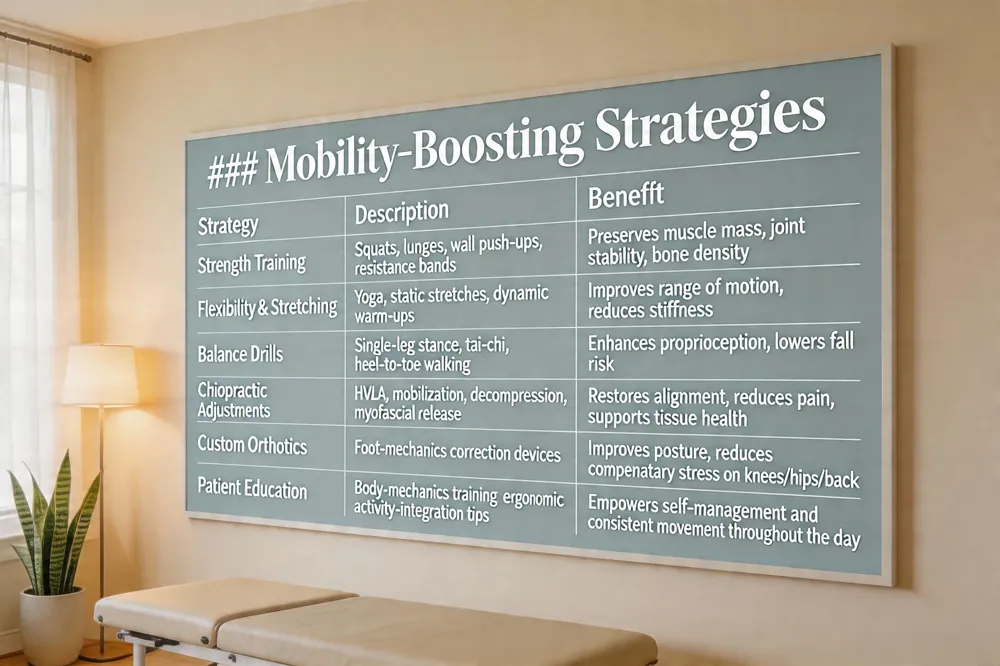 What strategies can increase mobility in later years? Maintaining mobility begins with a balanced exercise routine that blends strength, flexibility, and balance work. Strength training—such as squats, lunges, and wall push‑ups—preserves muscle mass and joint stability; gentle stretching or yoga improves range of motion; and balance drills like single‑leg stance, tai‑chi, or heel‑to‑toe walking enhance proprioception and reduce fall risk. Complementary chiropractic therapies reinforce these gains. Regular adjustments keep the spine and peripheral joints properly aligned, alleviating stiffness and pain, while myofascial release, spinal decompression, and cold‑laser therapy improve tissue health, reduce inflammation, and promote disc hydration. Custom orthotics correct foot mechanics, supporting posture and decreasing compensatory stress on knees, hips, and lower back. Patient education ties everything together—teaching proper body mechanics, ergonomic habits, and how to integrate short activity bouts into daily life (walking groups, water aerobics, home‑based routines). By combining a consistent, varied exercise program with personalized chiropractic care, orthotics, and ongoing education, older adults can preserve independence, prevent injury, and enjoy long‑term mobility without reliance on surgery or medication.
Evidence‑Based Lifestyle Factors Complementing Chiropractic Care
Lifestyle Factors & Chiropractic Synergy
| Lifestyle Factor | Evidence | Synergy with Chiropractic |
|---|---|---|
| Regular Physical Activity (LIFE Study) | 18% ↓ risk of major mobility disability in 70‑89 yr olds | Enhances muscle strength and joint ROM, amplifying adjustment benefits |
| Holistic Programs (CAPABLE) | 30% ↓ ADL assistance; 7‑to‑1 ROI | Addresses environmental barriers, complementing musculoskeletal improvements from care |
| Reducing Sedentary Time | Stand‑to‑stand transitions ↓ fasting glucose & mortality risk | Keeps joints lubricated, maintains nerve signaling, supporting spinal health |
| Nutrition & Hydration (implicit) | Adequate protein & water support muscle recovery and disc hydration | Improves tissue response to adjustments and exercise |
| Stress Management (3 T’s: Trauma, Toxins, Thoughts) | Chronic stress contributes to subluxations | Chiropractic care combined with stress‑reduction techniques promotes overall nervous‑system balance |
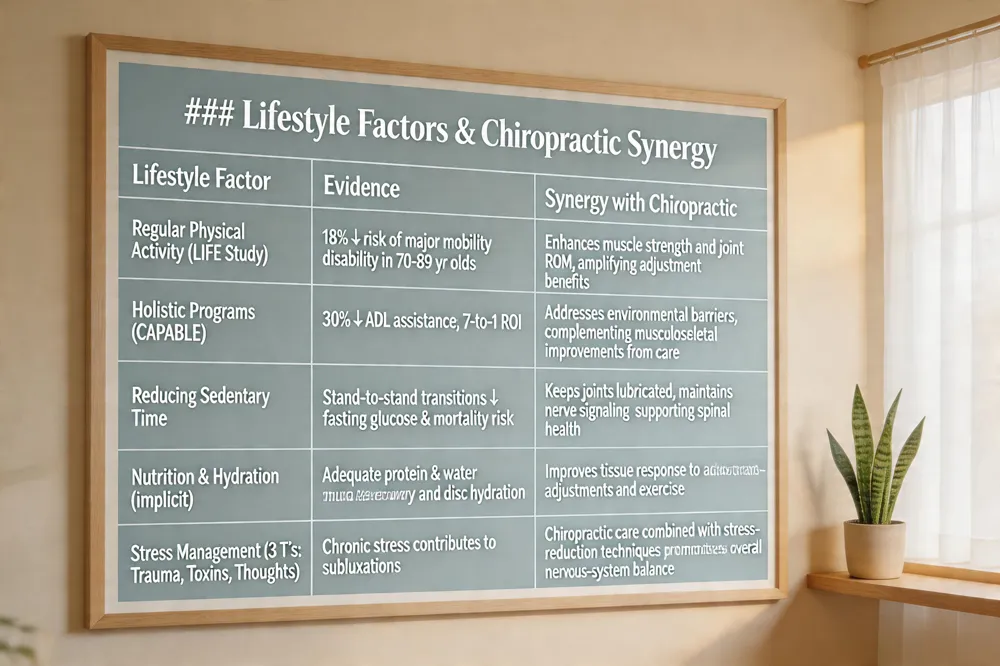 Regular physical activity is a powerful antidote to age‑related mobility loss. The LIFE study demonstrated that adults aged 70‑89 who incorporated walking, strength training, flexibility, and balance exercises into their routine reduced the risk of major mobility disability by 18 %. Exercise boosts muscle strength, joint range of motion, cardiovascular health, and nerve signaling, making everyday movements easier and less painful. When paired with chiropractic care— which restores spinal alignment and tissue health—the combined effect can further enhance mobility and lower fall risk.
The NIA‑funded CAPABLE program highlights the importance of a holistic approach. By integrating home modifications, occupational therapy, and nursing support, the program helped low‑income older adults achieve a 30 % reduction in needing assistance with activities of daily living and delivered a 7‑to‑1 return on investment through lower Medicare costs over two years. This underscores how addressing both the environment and musculoskeletal health—principles mirrored in chiropractic practice—preserves independence and cuts hospital readmissions.
Prolonged sedentary behavior, such as sitting 9‑13 hours daily, dramatically raises the risk of death, metabolic disorders, and functional decline. Extended sitting suppresses muscle activation, impairs circulation, and promotes stiffness. Even brief stand‑to‑sit transitions can lower fasting glucose and cut mortality risk by up to 37 % in older women, emphasizing the need for frequent movement to maintain joint lubrication, nerve signaling, and overall mobility.
Putting It All Together for Lifelong Mobility
Research shows that regular physical activity and targeted chiropractic care together cut the risk of mobility disability, lower pain, and reduce fall‑related hospitalizations. The LIFE study reported an 18 % reduction in major mobility disability with just walking and strength work, while programs such as CAPABLE and routine spinal adjustments add 30 % fewer assistance needs and improve joint range of motion. To launch a personalized mobility plan, start with a baseline assessment of strength, balance and gait, then schedule weekly or bi‑weekly chiropractic visits with Dr. Allison Ross. She will combine adjustments, myofascial release, cold‑laser therapy, corrective exercises and custom orthotics, while teaching posture and home‑exercise routines. Consistent care keeps joints supple, nerves efficient and independence intact—schedule your first appointment today.