Introducing Cold Laser Therapy in Chiropractic Practice
Low‑level laser therapy (LLLT), often called cold laser therapy, delivers non‑thermal photons (600‑1000 nm) that are absorbed by mitochondrial chromophores. This photobiomodulation boosts adenosine triphosphate (ATP) production, enhances microcirculation, and shifts cytokine balance toward anti‑inflammatory mediators, accelerating tissue repair without heat or drug exposure. When combined with chiropractic adjustments, LLLT prepares the soft tissues—relaxing muscle spasms, reducing edema, and improving nerve conductivity—so the vertebral alignments can be performed more comfortably and the post‑adjustment recovery is faster. Dr. Allison Ross embraces a patient‑focused, drug‑free philosophy that prioritizes natural healing pathways. She integrates cold laser sessions (5‑10 minutes, painless) with manual adjustments, myofascial release, corrective exercises, and custom orthotics, offering a holistic, non‑invasive solution that reduces reliance on medication and supports long‑term musculoskeletal wellness.
Scientific Foundations of Cold Laser Therapy
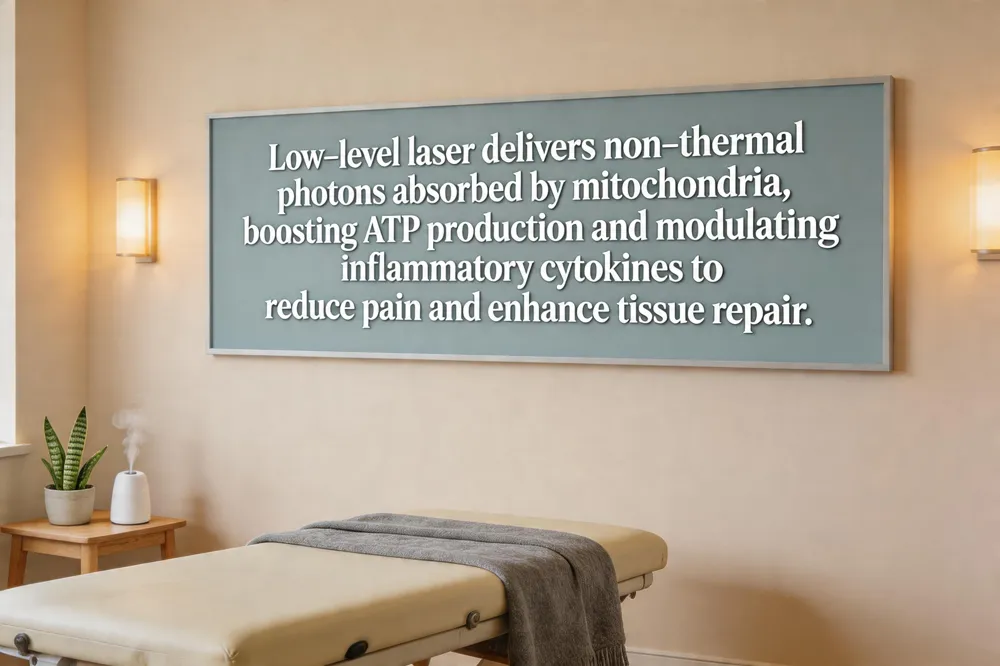 Cold laser therapy, also known as low‑level laser therapy (LLLT) or photobiomodulation, works at the cellular level by delivering non‑thermal photons that are absorbed by mitochondrial chromophores. This absorption boosts adenosine triphosphate (ATP) production
providing cells with the energy needed for faster repair and regeneration. At the same time, the light energy modulates inflammatory pathways, decreasing pro‑inflammatory cytokines (such as IL‑1β and TNF‑α) while increasing anti‑inflammatory mediators. The result is reduced swelling, less pain signaling, and improved microcirculation that brings oxygen and nutrients to injured tissues.
Cold laser therapy, also known as low‑level laser therapy (LLLT) or photobiomodulation, works at the cellular level by delivering non‑thermal photons that are absorbed by mitochondrial chromophores. This absorption boosts adenosine triphosphate (ATP) production
providing cells with the energy needed for faster repair and regeneration. At the same time, the light energy modulates inflammatory pathways, decreasing pro‑inflammatory cytokines (such as IL‑1β and TNF‑α) while increasing anti‑inflammatory mediators. The result is reduced swelling, less pain signaling, and improved microcirculation that brings oxygen and nutrients to injured tissues.
Clinical research supports these mechanisms. Randomized controlled trials have shown significant pain reduction and improved range of motion in patients with low‑back pain, sciatica, muscle strains, and degenerative disc disease when LLLT is applied, especially as an adjunct to chiropractic adjustments. Studies report up to a 70 % decrease in pain scores after 3‑6 sessions, with benefits persisting for months. The therapy’s non‑invasive, drug‑free nature makes it a safe option for acute and chronic back pain, often accelerating recovery when combined with spinal manipulation, myofascial release and corrective exercises.
Does cold laser therapy work for back pain? Yes. Cold laser therapy has been shown to reduce pain and inflammation in a variety of back‑pain conditions such as sciatica, strains, and sprains. The treatment delivers specific wavelengths that penetrate deep tissue without heat, stimulating cellular metabolism, increasing circulation, and promoting faster tissue healing. Clinical experience and research indicate that many patients experience immediate relief, while others notice gradual improvement as the underlying tissue repairs. Because it is non‑invasive, painless, and requires no downtime, it can be used alone or alongside other therapies like chiropractic adjustments, massage, or corrective exercises. In short, cold laser therapy is an effective, drug‑free option for managing both acute and chronic back pain.
Clinical Integration and Treatment Protocols
 Cold laser therapy (LLLT) for back pain is usually delivered in brief 5‑10‑minute pulses per affected area, with most clinics scheduling 2‑3 sessions per week during an initial 4‑6‑week phase. After rapid improvement, frequency often tapers to once‑or‑twice weekly for a total of 8‑12 visits, and the practitioner re‑evaluates progress every 1‑2 weeks to fine‑tune the schedule.
The low‑level treatment is seamlessly paired with spinal adjustments and rehabilitation exercises. Adjustments correct subluxations, while the laser’s anti‑inflammatory and microcirculatory benefits reduce muscle spasm, making tissues more receptive to manipulation. Immediately after an adjustment, a 3‑5‑minute laser pass can diminish post‑manipulation soreness and prime the nervous system for corrective exercises, myofascial release, or custom orthotics.
Cost varies by region and device class. A typical session ranges from $50 to $150; a full 12‑session protocol may total $600‑$1,800. Some private insurers reimburse LLLT when documented as medically necessary, whereas Medicare usually does not. Many practices offer bundled discounts, payment plans, or financing to lessen out‑of‑pocket expenses, positioning laser therapy as an affordable, drug‑free alternative to surgery or long‑term medication.
Safety, Contraindications, and Side Effects
 Cold laser (low‑level laser) therapy is generally safe and painless, but patients may notice mild, tingling or a brief warming sensation during a 5‑10‑minute session. The most common adverse reaction is temporary skin redness or mild irritation at the treatment site; occasional superficial burns can occur if the device is used at excessive power or for too long. Rare visual disturbances have been reported when proper eye protection is omitted, but serious tissue damage is uncommon when a trained clinician follows dosage guidelines.
Absolute contraindications include active cancerous lesions, uncontrolled infections, and pregnancy over the abdomen without prior medical clearance. Relative contraindications are implanted electronic devices (pacemakers, neurostimulators), photosensitizing medications, severe photosensitivity disorders, and uncontrolled thyroid disease. Patients with these conditions should avoid or seek physician approval before laser treatment.
Two notable drawbacks of cold laser therapy are the need for multiple sessions (often 5‑30 minutes each, 2‑3 times per week) to achieve measurable relief, and the variable insurance coverage that can make out‑of‑pocket costs high. Additionally, the limited depth of penetration means deep‑tissue injuries may respond better to other modalities such as spinal decompression or manual therapy.
Practical Implementation for a Modern Chiropractic Practice
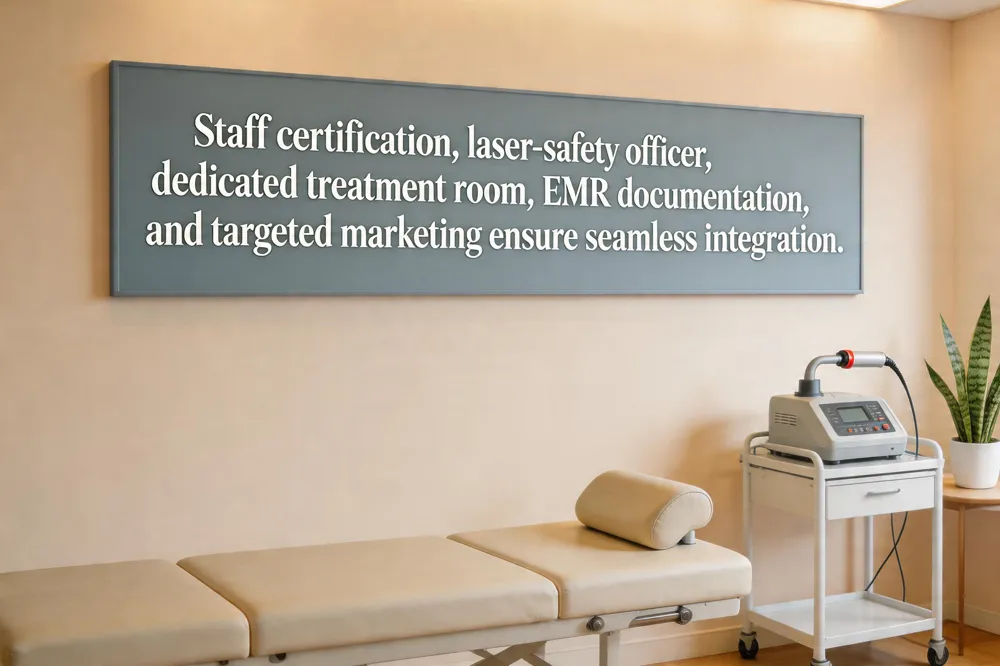 Successful integration of cold‑laser therapy begins with thorough staff training and certification. Every clinician and assistant must learn correct dosage calculations, wavelength selection, and safety protocols, and a designated Laser Safety Officer should conduct regular safety checks, post warning signs, and maintain equipment logs. Marketing should blend in‑office signage with a digital strategy—updated website pages, blog posts, patient‑testimonial videos, and targeted social‑media ads that explain the drug‑free, painless nature of the treatment and its synergy with adjustments. Workflow integration is streamlined by adding the laser as a separate provider in the scheduling software, allocating a dedicated, quiet treatment room, and using EMR templates that capture laser parameters (power, time, area), therapeutic goals, and outcomes for each session. Risk‑management protocols include a safety checklist before each use, eye‑protection policies, and a clear injury‑response plan, ensuring compliance with FDA‑cleared device guidelines and protecting both patients and staff.
Patient Experience and Holistic Outcomes
 When patients first arrive, they receive clear education about the typical cold‑laser plan—usually 5‑10 minute sessions, 2‑3 times per week for 4‑6 weeks—so they know how many visits are needed to see meaningful reductions in pain and inflammation. The combined approach creates synergistic pain relief: spinal adjustments restore proper nerve flow while the laser’s photobiomodulation boosts ATP production, improves microcirculation, and eases muscle tension, making tissues more receptive to manipulation. Case examples illustrate this synergy: a sciatica patient reported a 60 % drop in leg pain after three weeks, a collegiate athlete recovered from a rotator‑cuff strain in half the usual time, and a pregnant woman with lumbar discomfort experienced lasting relief without medication. However, laser therapy does not address cosmetic concerns such as crepey skin; it is a musculoskeletal modality, not a skin‑tightening treatment.
Q: Do chiropractors do cold laser therapy?
A: Yes, many chiropractors incorporate cold laser therapy into their treatment plans. Cold laser, also called low‑level laser therapy uses low‑intensity light to stimulate cellular repair, reduce inflammation and promote pain relief without generating heat. When combined with spinal adjustments, it can accelerate tissue healing, improve circulation and enhance overall outcomes for conditions such as back and neck pain, sciatica, sports injuries and post‑accident discomfort. Clinics like Dr. Allison Ross, DC in San Jose, CA routinely offer this non‑invasive, painless modality alongside chiropractic, myofascial release, and custom orthotics. The integrated approach provides a drug‑free, surgery‑free option for patients seeking faster recovery and long‑term musculoskeletal wellness.
Q: Can laser fix crepey skin?
A: Laser skin resurfacing can improve the texture of “crepey” skin by stimulating collagen production and removing the outermost, rough layer, giving the skin a smoother, brighter appearance. However, the results are typically modest; lasers do not fully lift or tighten significantly saggy skin and may require multiple sessions for noticeable improvement. The procedure is best performed by a board‑certified plastic surgeon or dermatologist with extensive laser experience, as they can assess whether your skin type and condition are suitable. While Dr. Allison Ross’s chiropractic practice excels in musculoskeletal care, it does not offer laser skin treatments. For crepey skin, consider a qualified aesthetic provider and discuss realistic expectations and any complementary skincare strategies.
The Future of Integrated, Musculoskeletal Care
Extensive peer‑reviewed research shows that low‑level (cold) laser therapy boosts mitochondrial ATP production, modulates inflammatory cytokines and and improves microcirculation—resulting in faster tissue repair, reduced swelling and measurable pain relief for back pain, neck pain, sciatica, tendonitis, arthritis and many sports‑related injuries. Because the light is non‑thermal and non‑invasive, the treatment is drug‑free, painless and carries virtually no side‑effects, making it an ideal adjunct to spinal adjustments, myofascial release and corrective exercises. Clinical trials consistently report higher rates of functional improvement and shorter recovery times when laser therapy is combined with chiropractic care, and patients often experience a 30‑50 % drop in pain scores after just a few sessions. Dr. Allison Ross invites you to discuss a personalized laser protocol—tailored wavelength, dosage and frequency—to match your specific condition, health status and goals, ensuring a holistic, non‑pharmacologic path to lasting musculoskeletal wellness.