Understanding Disc Pain
A herniated disc occurs when the gel‑like nucleus pulposus forces through a tear in the outer annulus, pressing on nearby nerves. Patients typically feel sharp, radiating pain (sciatica), numbness, tingling, muscle weakness, and limited mobility, which can hinder work, chores, and sleep. Non‑surgical care is preferred because it avoids anesthesia, infection, and recovery; evidence shows that spinal manipulation, decompression, exercises, and modalities such as cold laser or PRP can relieve pain, restore function, and reduce reliance on drugs or surgery.
Home Management and Immediate Relief
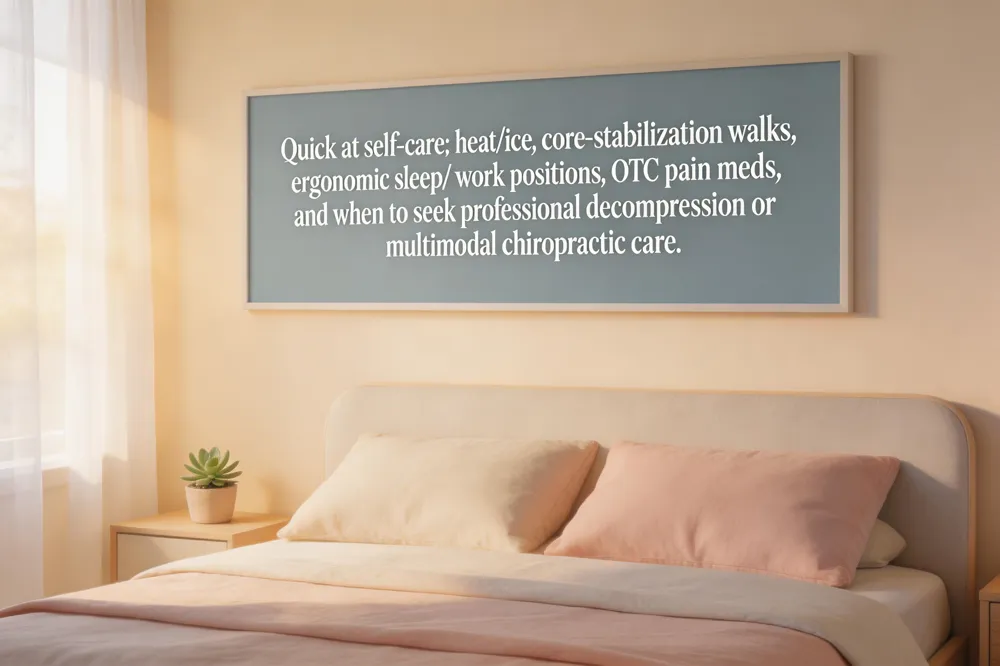 Heat and ice therapy are cornerstone home measures: a low‑heat pad for 15‑20 minutes before activity relaxes muscles, while an ice pack wrapped in a thin towel for 10‑15 minutes every few hours reduces inflammation. [Core stabilization](https://pmc.ncbi.nlm.nih.gov/articles/PMC10211408/) keep the spine mobile—short, level walks every 2‑3 hours and simple exercises such as pelvic tilts, cat‑cow stretches, and bird‑dog poses support the disc and lessen nerve pressure. Sleep positioning and ergonomics matter; a firm mattress with a pillow under the knees when lying on the back, or a pillow between the knees when side‑lying, maintains a neutral spine, and an ergonomic chair with lumbar support reduces prolonged slouching. Over‑the‑counter pain relief includes [NSAIDs (ibuprofen, naproxen)](https://www.mayoclinic.org/diseases-conditions/herniated-disk/diagnosis-treatment/drc-20354101) or acetaminophen for mild pain; muscle relaxants may help spasms, and gabapentin/pregabalin address nerve pain when prescribed. Seek professional care if pain persists beyond a few weeks, worsens, or is accompanied by numbness, weakness, or bladder/bowel changes—then a supervised [spinal‑decompression program](https://my.clevelandclinic.org/health/treatments/10874-spinal-decompression-therapy), [corrective exercises](https://pmc.ncbi.nlm.nih.gov/articles/PMC10211408/), or a [chiropractor’s multimodal plan](https://pmc.ncbi.nlm.nih.gov/articles/PMC12040341/) can provide safe, drug‑free healing.
Chiropractic Diagnosis and Targeted Care
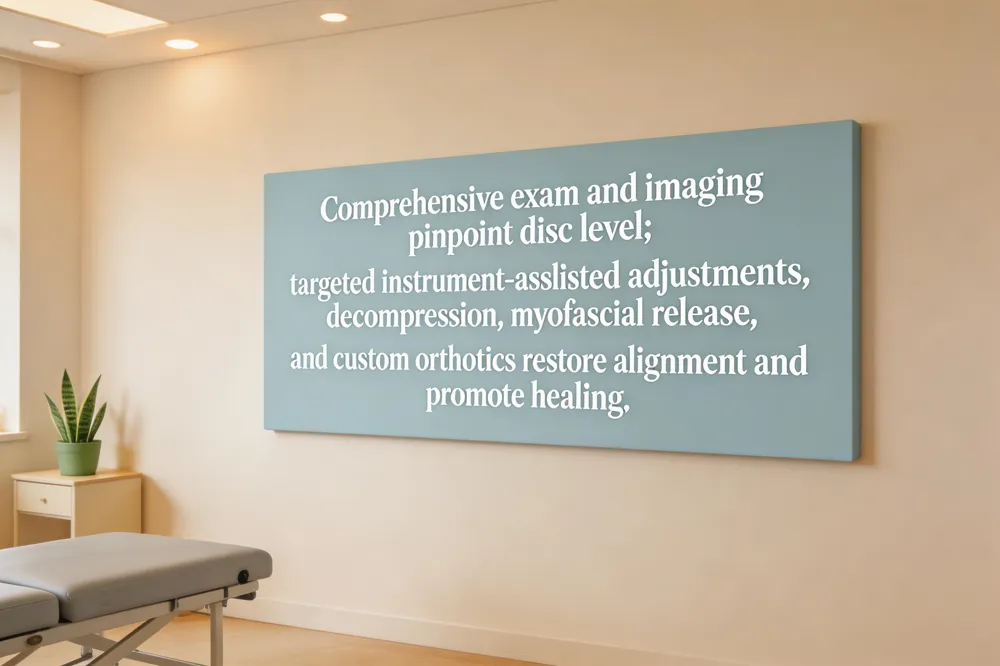 A chiropractor begins with a thorough physical exam and palpation, assessing spinal mobility, tissue tenderness, reflexes and muscle strength to locate functional signs of a herniated disc. While the disc itself cannot be felt, these findings often point to a specific level such as L4‑L5 or L5‑S1. When the clinical picture is unclear, imaging (X‑ray, MRI, CT) is ordered to confirm the herniation. For a disc‑L4‑L5 herniation, gentle instrument‑assisted adjustments and targeted decompression reduce pressure on the bulging disc and the sciatic nerve, while myofascial release, cold‑laser therapy, corrective exercises, and custom orthotics restore alignment and promote re‑hydration. The same multimodal approach applies to L5‑S1, with precise adjustments relieving S1 nerve‑root irritation and spinal decompression encouraging disc healing. Patients typically notice improvement after 4–6 weeks of 2–3 weekly visits, though severity and adherence affect the timeline. Chiropractic care complements physical therapy by providing rapid pain relief through adjustments and decompression, while PT focuses on long‑term core strengthening and posture. Evidence shows that when performed by a qualified, patient‑focused practitioner—such as Dr. Allison Ross—chiropractic interventions can safely alleviate herniated disc symptoms without worsening the condition, though overly aggressive adjustments must be avoided.
Therapeutic Modalities and Innovative Techniques
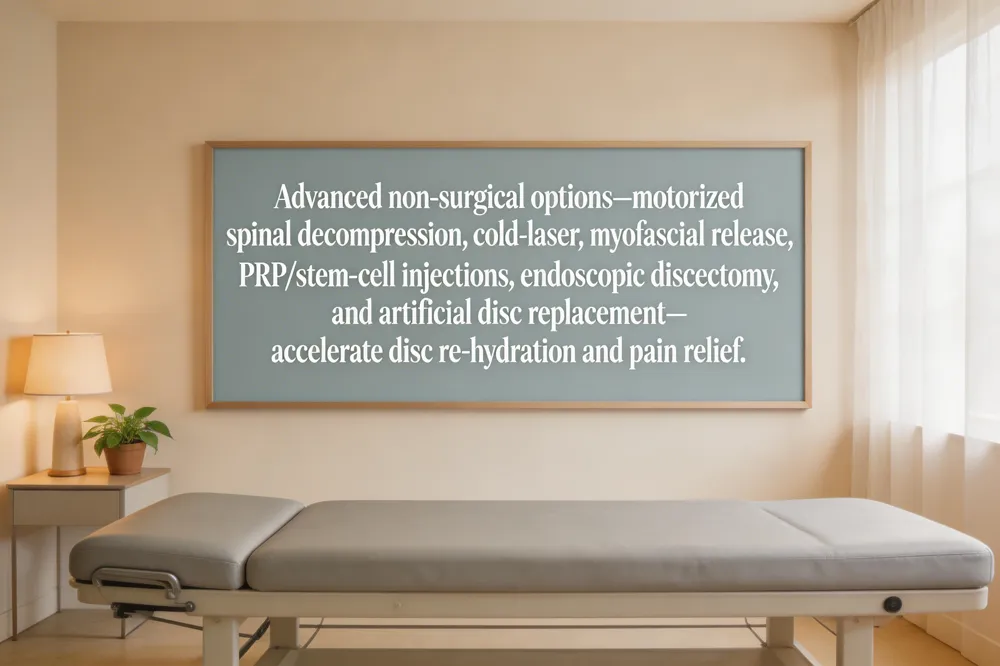 Spinal decompression therapy uses a motorized traction table to create negative pressure inside intervertebral discs, encouraging re‑hydration and re‑traction of herniated material. Modern units such as the DRX9000® allow clinicians to target specific levels while monitoring disc loads. Myofascial release and low‑level cold laser therapy reduce muscular tension and inflammation, improving circulation and accelerating cellular repair. Regenerative injections—platelet‑rich plasma (PRP) and autologous mesenchymal stem cells—deliver growth factors that promote extracellular‑matrix production and disc hydration, offering a biologic alternative to surgery. Ultra‑minimally invasive endoscopic discectomy removes disc fragments through sub‑centimeter incisions, resulting in minimal blood loss, same postoperative pain, and rapid return to activity. Artificial disc replacement preserves segmental motion and lowers rates of adjacent‑segment degeneration compared with fusion. Together, these evidence‑based, non‑surgical options provide a comprehensive, drug‑free pathway for patients with discogenic pain, herniated discs, sciatica, and degenerative disc disease, reducing reliance on medication and invasive surgery.
Pain Management Strategies and Lifestyle Adjustments
 Non‑surgical treatment of herniated discs focuses on reducing inflammation, relieving nerve pressure, and supporting the disc’s natural healing ability. First‑line medication includes NSAIDs (ibuprofen, naproxen) and short‑term muscle relaxants to control pain and spasm, while selective nerve root or epidural steroid injections can provide targeted anti‑inflammatory relief when symptoms persist. Adjunct modalities such as spinal decompression, myofascial release, cold‑laser therapy, and corrective core‑stabilization exercises improve disc hydration, reduce mechanical load, and restore proper alignment. Lifestyle changes are essential: maintain a healthy weight, avoid prolonged slouched sitting, limit forward‑bending or heavy‑lifting activities, and incorporate regular low‑impact aerobic activity (walking, stationary bike). Gentle stretching, core‑strengthening moves (plank, dead‑bug, bird‑dog) and ergonomic education further protect the L4‑L5 disc. Most patients achieve full symptom resolution within six to eight weeks without surgery, though recovery speed varies. Rare side effects of spinal decompression include mild soreness or transient pain spikes, which resolve quickly. A structured, drug‑free program—combining medication, targeted injections, manual therapies, exercise, and ergonomic habits—can often cure a slipped disc and prevent recurrence.
Recovery Timeline, Natural Healing and Long‑Term Wellness
 Typical healing timelines for a herniated disc range from a few weeks of symptom relief to three to six months for full functional recovery, depending on severity and adherence to therapy. Recovery speed is influenced by age, disc health, activity level, body mechanics, and early initiation of non‑invasive care. Preventive lifestyle changes—regular low‑impact cardio, a diet rich in omega‑3s, adequate hydration, weight‑management, and smoking cessation—reduce inflammation and protect disc integrity. Custom orthotics correct lower‑extremity alignment, decreasing abnormal lumbar loading and supporting posture. Structured exercise programs that emphasize core stabilization, hip‑flexor flexibility, and controlled spinal motion provide lasting results and help prevent recurrence.
How to heal a herniated disc quickly: Consistent spinal‑decompression therapy combined with personalized gentle strengthening, posture education, anti‑inflammatory diet, cold‑laser, and myofascial release can yield significant improvement within weeks.
How to heal a bulging disc naturally: Low‑impact activities, core‑strengthening, heat or massage, anti‑inflammatory foods, hydration and optional decompression or laser therapy promote re‑hydration and pain reduction.
Signs herniated disc is healing: Decreased pain intensity, reduced numbness/tingling, improved range of motion, better sleep, and follow‑up imaging showing disc re‑hydration or shrinkage confirm recovery.
Patient‑Focused Care at Ross Chiropractic
 Insurance coverage for spinal decompression varies; many carriers label it experimental, so patients often pay out‑of‑pocket ($75‑$125 per session, $1,000‑$5,000 for a full course) but may receive partial reimbursement when billed under broader chiropractic codes.
Local and national availability: While Ross Chiropractic is based in San Jose, CA, reputable spinal decompression providers exist near Chicago (e.g., Chicago Chiropractic, Lakeside Spine & Wellness) and Naperville, IL (Naperville Rehab Clinic, Pins Family Chiropractic), offering 20‑45‑minute computer‑controlled traction sessions often combined with supportive modalities.
For those seeking “spinal decompression therapy near me,” Dr. Ross’s San Jose clinic offers 15‑20‑minute sessions two to three times weekly, with online booking and insurance consultation available.
Empowering Patients for a Pain‑Free Future
Modern spinal care offers a menu of innovative, non‑surgical tools—spinal decompression, myofascial release, cold‑laser therapy, core‑stabilization exercises, custom orthotics, PRP and stem‑cell injections—all designed to reduce inflammation, restore disc hydration, and improve alignment without drugs. At Ross Chiropractic, Dr. Allison Ross prioritizes a personalized, drug‑free plan that blends these modalities with patient education and lifestyle coaching. Begin your holistic recovery today by scheduling an assessment, embracing gentle movement, and committing to long‑term spinal wellness. Consistent follow‑up ensures progress, adjusts therapy, and sustains results effectively.