Why Hidden Injuries Matter
Adrenaline released during a crash can temporarily block pain signals, so victims often feel fine while soft‑tissue, neck, or internal injuries are already forming. Because this hormonal surge fades within 24‑48 hours, symptoms such as neck stiffness, headaches, tingling, dizziness, or abdominal pain may not appear until days later, making the injury “hidden.” Early medical evaluation is crucial: it creates a documented medical record that links the crash to the emerging symptoms, helps rule out serious conditions like concussion, disc herniation, or internal bleeding, and starts timely treatment that can prevent chronic pain, functional loss, or life‑threatening complications. Prompt assessment also strengthens a personal‑injury claim, reducing the chance that insurers will dispute the severity or causation of the injury. In short, recognizing that adrenaline can mask pain and that delayed onset is common underscores the need for immediate professional care after any motor‑vehicle collision.
Common Hidden Injuries and Their Warning Signs
Common Hidden Injuries & Warning Signs
| Injury Type | Typical Warning Signs | Recommended Action |
|---|---|---|
| Soft‑tissue (sprains, strains, whiplash) | Neck stiffness, reduced ROM, base‑of‑skull headaches, arm tingling/numbness, grip weakness | Seek early chiropractic evaluation; document symptoms |
| Concussion / mild TBI | Persistent head pain, dizziness, nausea, light sensitivity, memory or mood changes | Medical clearance; monitor for worsening; consider neuro‑cognitive testing |
| Spinal disc (herniated/bulging) | Vague back soreness → sharp pain, radiating numbness, limb weakness | Imaging if symptoms persist > 2 weeks; chiropractic decompression & exercises |
| Internal organ damage (seat‑belt forces) | Abdominal pain, deep bruising, dizziness, fainting, nausea | Immediate ER evaluation; imaging (CT/US) as indicated |
| Nerve irritation (radiculopathy) | Pins‑and‑needles, shooting arm pain, decreased sensation | Neurological exam; targeted adjustments & nerve gliding exercises |
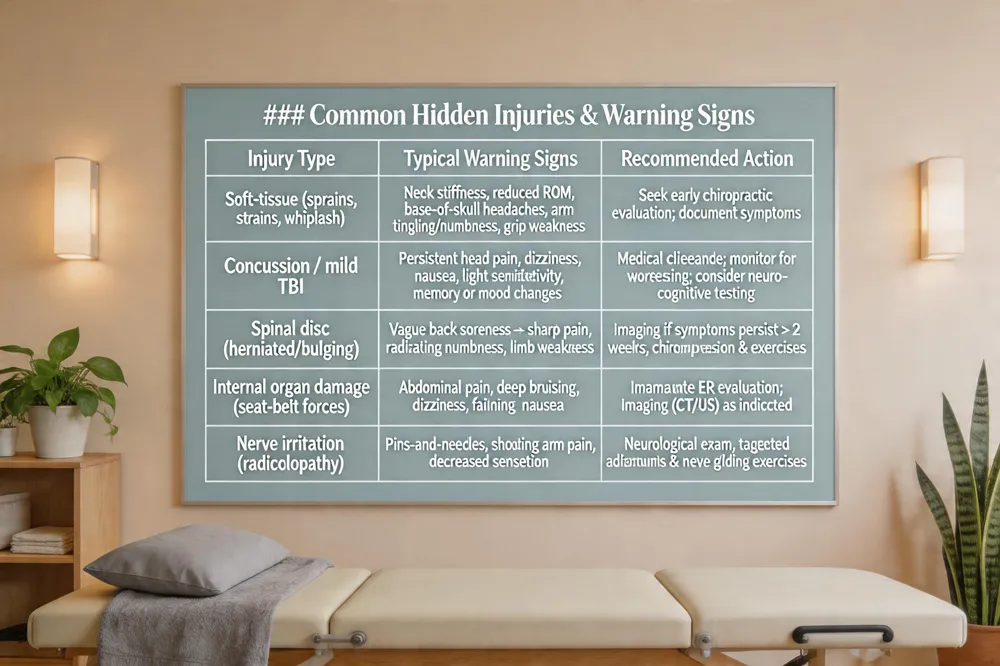 After any motor‑vehicle collision, adrenaline can mask pain, causing injuries to surface hours or days later. The most common hidden injury is soft‑tissue damage—sprains, strains, bruising and whiplash—affecting muscles, ligaments, tendons and intervertebral discs. Whiplash and neck strain often produce neck stiffness, reduced range of motion, headaches at the base of the skull, and nerve‑related tingling or numbness in the arms and hands. If nerves are irritated, patients may feel a pins‑and‑needles sensation, shooting pain down the arm, or weakness in grip.
Concussions and mild traumatic brain injuries can occur without loss of consciousness; watch for persistent head, dizziness, nausea, light sensitivity, memory problems or mood changes. Spinal disc issues such as herniated or bulging discs may initially feel like vague back soreness but can evolve into sharp pain, radiating numbness, or weakness in the limbs. Internal organ damage—especially from seat‑belt forces—may present later as abdominal pain, deep bruising, dizziness, or fainting and can be life‑threatening.
What should you watch for after a crash? Delayed neck, back, shoulder pain, headaches, tingling, changes in motion, or any neurological signs merit prompt medical evaluation. Early chiropractic assessment can document injuries, realign the spine, reduce inflammation and prevent chronic disability, while also strengthening any personal‑injury claim.
Why Neck Pain Can Appear Days Later
Delayed Neck Pain – Physiology & Timeline
| Phase | Physiological Process | Symptoms | Typical Onset |
|---|---|---|---|
| Immediate (0‑2 hrs) | Adrenaline & endorphins mask pain | Feeling fine, no pain | Collision |
| Early inflammatory (24‑48 hrs) | Hormones drop, cytokines cause swelling | Neck stiffness, headache, shoulder pain, reduced ROM | 1‑2 days |
| Sub‑acute (48‑72 hrs) | Tissue edema peaks, nerve irritation | Tingling, numbness, mild weakness | 2‑3 days |
| Chronic (>1 week) | Persistent inflammation if untreated | Persistent pain, limited motion, possible headaches | Days‑to‑weeks |
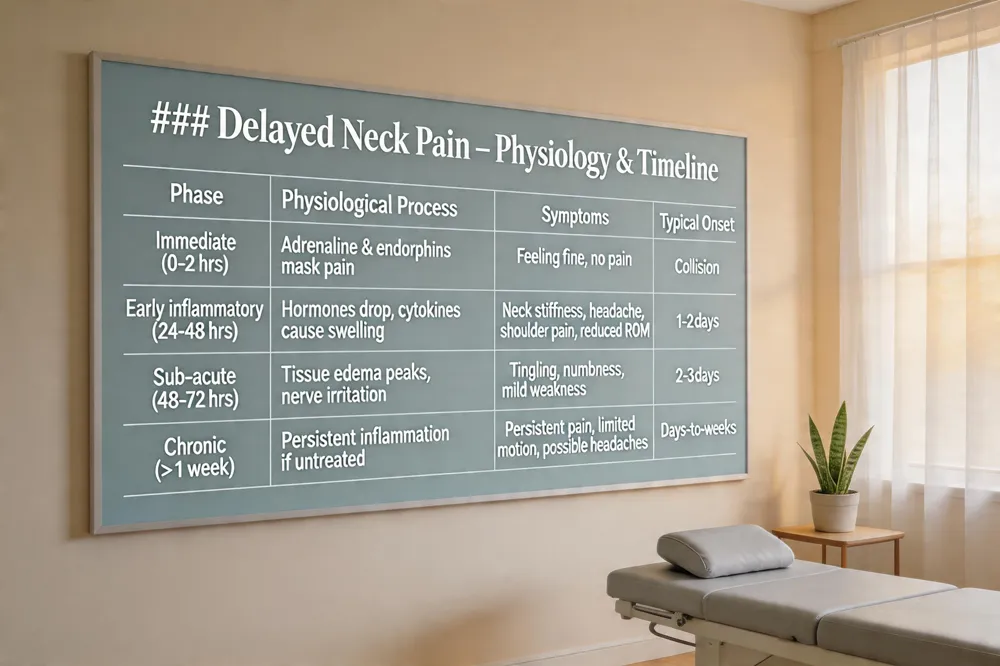 After a collision, the surge of Adrenaline and endorphins can temporarily mute pain signals, making you feel fine while microscopic tears in neck ligaments, muscles, discs, or facet joints are already forming. As these stress hormones wear off, the body’s inflammatory response kicks in over the next 24‑48 hours, swelling the injured tissues and triggering the classic whiplash symptoms—neck stiffness, headache, shoulder pain, and reduced range of motion. This delayed onset is why neck pain often appears hours or days after the crash.
Red‑flag signs that require immediate medical attention include worsening headache, loss of consciousness, numbness, weakness, vision changes, or severe dizziness.
Delayed neck pain after car accident – why does it happen and how can it be treated?
The pain originates from soft‑tissue damage that was hidden at the scene. Inflammation and nerve irritation develop over time, producing stiffness, headaches, and referred shoulder pain. Early chiropractic evaluation can uncover these injuries; targeted spinal adjustments, myofascial release, spinal decompression, and cold‑laser therapy reduce inflammation and restore alignment. A personalized regimen of corrective exercises and custom orthotics supports long‑term mobility without surgery or medication.
Neck pain after car accident – what can chiropractic care offer?
At Ross Chiropractic, Dr. Allison Ross applies gentle, precise adjustments to correct cervical misalignments, combined with myofascial release, cold laser treatment, and spinal decompression to ease tissue strain. Customized exercise programs and orthotics rebuild strength, improve posture, and help prevent chronic pain, providing a drug‑free recovery pathway that also strengthens your personal‑injury claim.
Chiropractic Care: A Drug‑Free Solution
Drug‑Free Chiropractic Modalities
| Modality | Primary Purpose | Typical Session Length | Key Benefits |
|---|---|---|---|
| Spinal Adjustments | Realign vertebrae, reduce joint irritation | 10‑15 min | Immediate pain relief, improved ROM |
| Myofascial Release | Lengthen tight muscles, break adhesions | 15‑20 min | Decreased muscle spasm, better circulation |
| Cold‑Laser Therapy | Reduce inflammation, promote tissue repair | 5‑10 min | Lower swelling, accelerated healing |
| Spinal Decompression | Gently stretch discs, relieve pressure | 20‑30 min | Pain herniated disc symptoms, improved nerve flow |
| Corrective Exercise Program | Strengthen supporting muscles, restore posture | 30‑45 min (incl. home program) | Long‑term stability, injury prevention |
| Custom Orthotics | Correct biomechanical imbalances | 15‑30 min (fabrication) | Reduced strain on spine, improved gait |
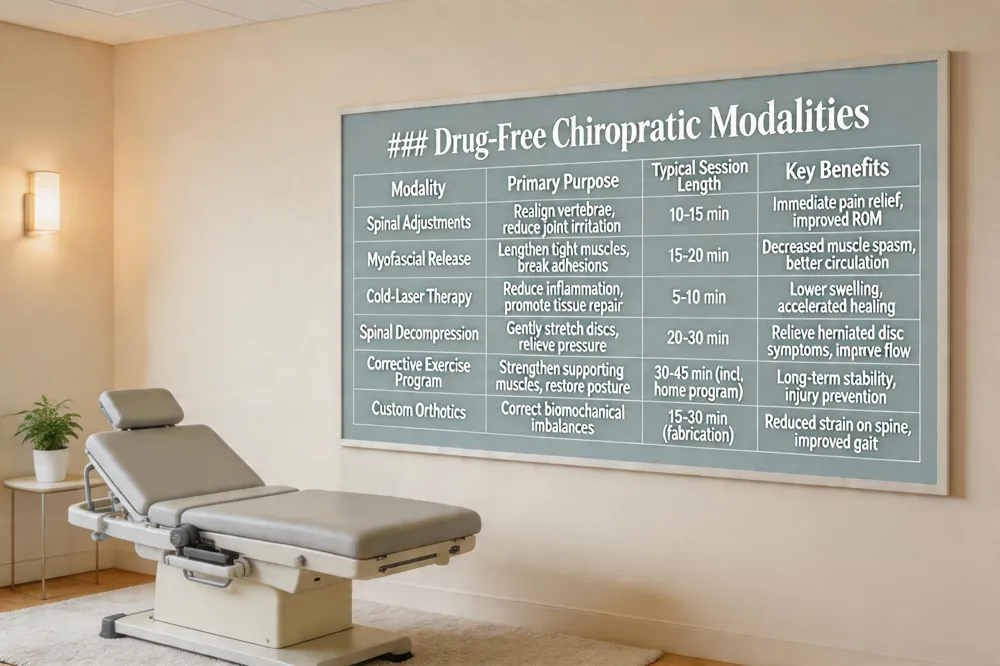 Even a low‑speed fender‑bender can leave tension, minor whiplash, or joint misalignments. Early spinal adjustments gently realign cervical vertebrae, reducing irritation and restoring motion. Myofascial release and cold laser therapy target tight muscles and inflamed tissue, decreasing spasm and accelerating healing. Spinal decompression gently stretches the spine, relieving disc and ligament pressure. A corrective‑exercise program restores range of motion, strengthens supporting muscles, and reinforces posture. Orthotics correct imbalances, preventing strain on the spine. Together these drug‑free modalities prevent small injuries from becoming chronic pain and support a return to activities.
Whiplash treatment options at Ross Chiropractic
Ross Chiropractic uses spinal adjustments to realign the neck, followed by traction and spinal decompression to ease disc and ligament stress. Myofascial release and cold‑laser therapy reduce muscle tension and inflammation. Patients receive a corrective‑exercise regimen—including neck stretches, posture drills, and strengthening moves—and, when needed, orthotics to maintain alignment during healing.
Neck pain from an old whiplash injury – can chiropractic help?
Chronic neck pain often stems from lingering joint restrictions, scar tissue, and tight muscles. Gentle adjustments combined with myofascial release and cold‑laser therapy break down adhesions, restore mobility, and lower inflammation. Corrective exercises and orthotics prevent flare‑ups, providing relief without surgery or medication.
Legal and Insurance Considerations
Legal & Insurance Checklist
| Aspect | Details | Why It Matters |
|---|---|---|
| Statute of Limitations | 2 years (3 years in WI) | Preserves right to file a claim |
| Symptom Documentation | Daily log, photos, timestamps | Links injuries to crash, counters adjuster claims |
| Early Medical Records | First 24‑48 hrs | Establishes baseline for injury timeline |
| Chiropractic Coverage | PIP, MedPay, at‑fault driver liability | Reduces out‑of‑pocket costs, supports claim with medical evidence |
| Claim Evidence | Bills, treatment notes, imaging | Strengthens personal‑injury claim, aids settlement negotiations |
 After a collision, the statute of limitations for personal‑injury claims in most U.S. states is two years (three in some states such as Wisconsin). Acting quickly preserves your right to recovery and gives you time to gather the medical evidence insurers will demand.
Documenting every symptom, examination, and treatment is essential. A detailed medical record—preferably started within the first 24‑48 hours—creates a clear timeline that links your injuries to the crash. This documentation is the backbone of any personal‑injury claim and helps counter insurance adjusters who often argue that later‑appearing symptoms are unrelated.
Insurance coverage for chiropractic care is typically included in auto policies. Personal Injury Protection (PIP) and Medical Payments (MedPay) reimburse chiropractic adjustments, soft‑tissue therapy, and follow‑up visits when a qualified practitioner, such as Dr. Allison Ross, DC, deems them medically necessary. Liability coverage from the at‑fault driver can also pay for these services, and many health‑insurance plans offer additional chiropractic benefits.
Q&A
Does accident insurance cover chiropractic care? Yes—most auto‑insurance policies provide chiropractic coverage for medically necessary treatment after an accident. PIP, MedPay, and at‑fault driver liability can reimburse these expenses, often with little or no out‑of‑pocket cost.
What should I watch for after a car crash? Monitor for delayed neck, back, or shoulder pain, headaches, tingling in the extremities, and reduced range of motion. Prompt chiropractic evaluation when these signs appear can prevent chronic problems and strengthen your legal claim.
Recovery Timeline and Long‑Term Wellness
Recovery Timeline & Wellness Strategies
| Injury Severity | Expected Recovery Time | Key Interventions | Long‑Term Wellness Tips |
|---|---|---|---|
| Mild (strain/grade I) | 2‑4 weeks | Early adjustments, myofascial release, home exercises | Neutral spine posture, ergonomic workstation |
| Moderate (grade II/III strain, bulging disc) | 3‑6 months | Adjustments, decompression, laser, custom orthotics | Regular stretching, supportive pillow, activity modification |
| Severe (herniated disc, persistent nerve compression) | 6‑12 months+ | Intensive chiropractic care, targeted rehab, possible referral | Ongoing strength program, posture awareness, periodic check‑ups |
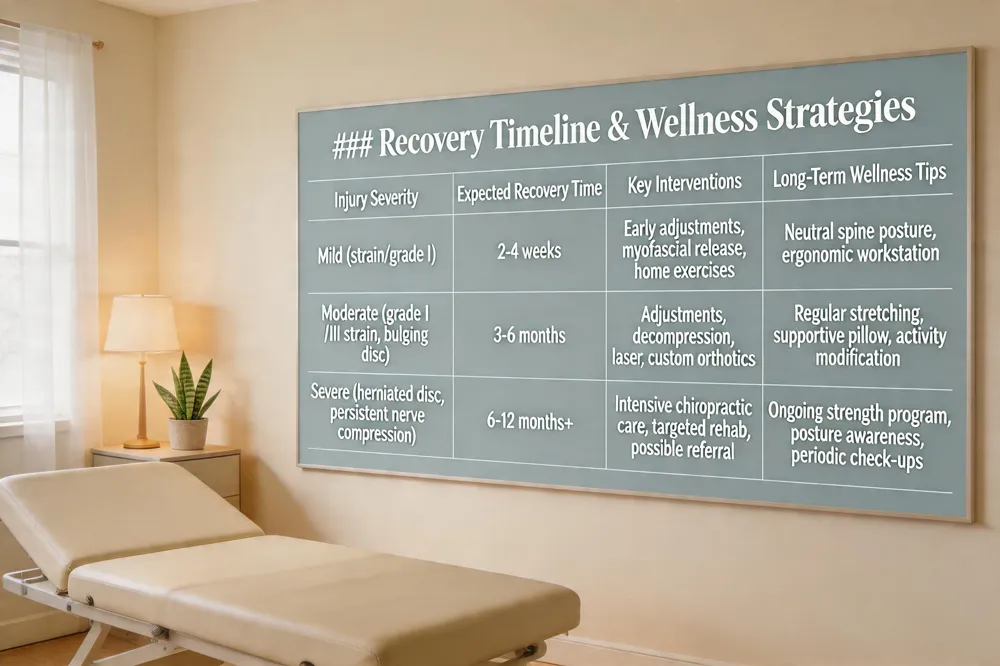 Typical whiplash recovery duration varies: mild strains often improve within two to four weeks, moderate injuries may last three months or longer, and severe cases can persist six months to a year. Healing is influenced by age, overall health, pre‑existing spinal conditions, and how quickly treatment begins. Early, targeted chiropractic care—spinal adjustments, myofascial release, cold‑laser therapy, and corrective exercises—can shorten this timeline by restoring proper mechanics and reducing inflammation.
Preventive strategies focus on maintaining neutral spine alignment, using supportive pillows, and avoiding prolonged static positions. Post‑accident posture and ergonomics are crucial; adjust seat height, headrest, and workstations to keep the cervical spine in a neutral position, and take regular breaks to move and stretch.
How long does whiplash usually last? Most people feel significant improvement within two to four weeks for mild strains; moderate cases may take three months, and severe injuries can linger six months to a year. Prompt, personalized chiropractic care can accelerate recovery.
Neck pain from an old whiplash injury – can chiropractic help? Yes. Gentle spinal adjustments, myofascial release, cold‑laser therapy, targeted exercises, and custom orthotics can restore mobility, break down adhesions, and reduce inflammation, providing lasting relief without surgery.
Take Action Now
After a crash, don’t wait for pain to become severe. Schedule a medical evaluation within 24‑48 hours so doctors can detect hidden injuries such as whiplash, concussion, disc strain or internal bleeding before adrenaline wears off. Keep a symptom journal noting when each ache, headache, dizziness, numbness or mood change begins, its intensity, triggers and any activities that worsen it; this record becomes medical evidence for both treatment planning and personal‑injury claims. Once a practitioner confirms the injury pattern, begin a chiropractic program that combines gentle spinal adjustments, soft‑tissue therapies, corrective exercises and pain relief to restore alignment, reduce inflammation and accelerate recovery.