Understanding Soft‑Touch Chiropractic
Low‑velocity, low‑amplitude (LVLA) techniques are gentle chiropractic methods that use light, precise pressure and controlled movements instead of the rapid thrusts of traditional high‑velocity adjustments. By minimizing force and avoiding twisting or popping, LVLA approaches reduce post‑treatment soreness and are ideal for patients who are anxious, have osteoporosis, arthritis, pregnancy‑related discomfort, or are children and seniors. These soft‑touch options—such as the Activator Method, Thompson Drop‑Table, Flexion‑Distraction, and myofascial release—provide effective spinal alignment while keeping the experience comfortable and reassuring. Ross Chiropractic embraces this patient‑focused philosophy, offering personalized, non‑invasive care in San Jose that combines LVLA adjustments with adjunct therapies like spinal decompression, cold laser, corrective exercises, and custom orthotics. The practice emphasizes education, holistic wellness, and tailored treatment plans that respect each individual’s comfort level and promote natural healing without surgery or medication.
Gentle Techniques Offered at Ross Chiropractic
Gentle Techniques Offered at Ross Chiropractic
| Technique | Category | Typical Use Cases |
|---|---|---|
| Palmer‑diversified adjustment | Traditional manual | General spinal misalignments |
| Thompson drop‑table | Traditional manual | Patients needing gentle thrust reduction |
| Flexion‑distraction (Cox) | Traditional manual | Herniated discs, spinal stenosis, post‑surgery |
| Hand‑loaded Activator | Instrument‑assisted | Seniors, children, pregnant patients |
| Myofascial release | Soft‑touch | Fascial restrictions, muscle tightness |
| Cranial‑sacral therapy | Soft‑touch | Headache, CNS regulation, stress relief |
| TMJ corrective care | Soft‑touch | Facial joint pain, jaw dysfunction |
| Spinal decompression | Adjunctive modality | Disc herniation, nerve root compression |
| Cold laser (K‑Laser) therapy | Adjunctive modality | Inflammation, acute pain |
| Corrective exercise program | Adjunctive modality | Biomechanical reinforcement, rehab |
| Custom foot orthotics | Adjunctive modality | Foot‑biomechanics, kinetic chain alignment |
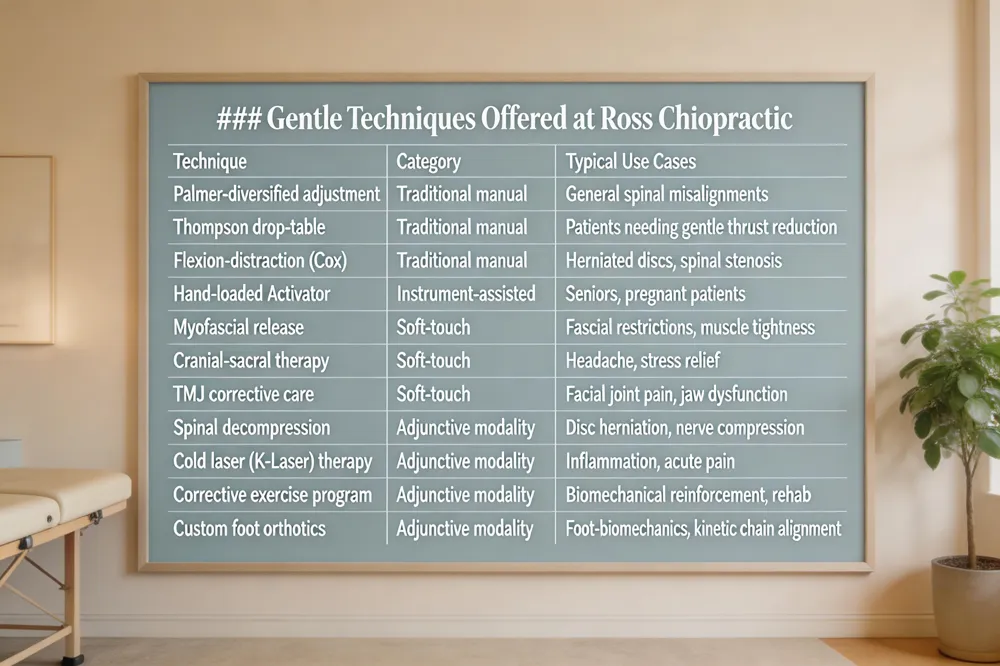 At Ross Chiropractic in San Jose, Dr. Allison Ross combines traditional manual spinal adjustments with a suite of low‑force, LVLA methods to meet each patient’s comfort level. Manual techniques include the classic Palmer‑diversified adjustment, the Thompson drop‑table method, and the gentle flexion‑distraction (Cox) therapy that rhythmically stretches the spine without rapid thrusts. Instrument‑assisted options such as the Hand‑loaded Activator deliver precise, low‑impulse taps to vertebral joints, providing a silent, controlled correction ideal for seniors, children, and pregnant patients. Soft‑touch therapies augment the adjustments: myofascial release eases fascial restrictions, cranial‑sacral therapy balances cerebrospinal fluid rhythms, and TMJ corrective care addresses facial joint issues. Adjunctive modalities further support healing—spinal decompression stretches discs, cold laser (K‑Laser) reduces inflammation, and customized corrective exercise programs reinforce proper biomechanics. Custom foot orthotics correct biomechanical imbalances that affect spinal alignment.
List of chiropractic techniques used at Dr. Allison Ross, DC in San Jose, CA: traditional manual adjustments (Palmer‑diversified), Thompson drop‑table, Activator instrument‑assisted, flexion‑distraction, soft‑touch spinal mobilization, myofascial release, cranial‑sacral therapy, TMJ care, spinal decompression, cold laser therapy, corrective exercises, and custom orthotics.
What is the safest chiropractic technique?: The safest approach is a gentle, low‑force method that stays within normal joint motion and minimizes stress on bones, discs, and nerves. Techniques such as low‑force flexion‑distraction, soft‑touch spinal mobilization, and the instrument‑assisted Activator are consistently cited as the most patient‑friendly, especially for osteoporosis, pregnancy, or recent injury. Dr. Ross frequently incorporates these gentle methods to ensure safe, effective care.
Post‑Adjustment Recovery: Managing Soreness and Side Effects
Post‑Adjustment Recovery: Managing Soreness and Side Effects
| Side Effect | Typical Duration | Management Tips |
|---|---|---|
| Muscle soreness | 24‑48 hrs (occasionally up to 3 days) | Hydration, warm compresses (15‑20 min), light dynamic stretches |
| Stiffness | 1‑2 days | Gentle movement, ergonomic posture |
| Fatigue | Same day to next day | Rest, adequate sleep |
| Light headache | <24 hrs | Hydration, avoid bright screens, mild ibuprofen if needed |
| Brief dizziness | <24 hrs | Sit or lie down, sip water, avoid sudden position changes |
| Swelling (rare) | First 24 hrs | Cold pack, elevation, monitor for worsening |
If any symptom persists beyond a few days or is accompanied by numbness, tingling, or severe pain, contact the clinic for a follow‑up evaluation.
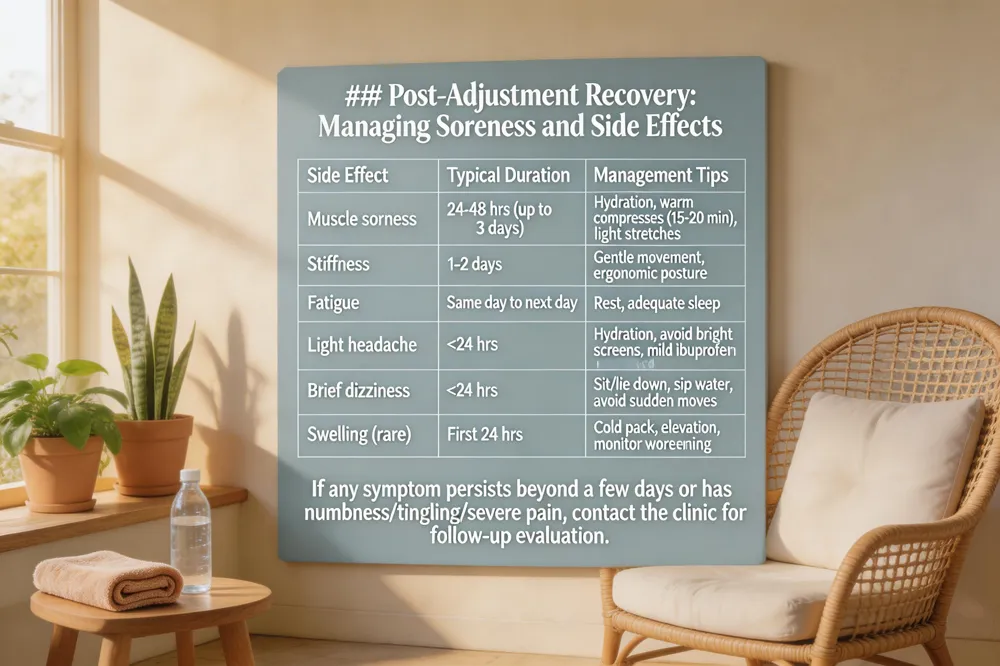 Gentle LVLA adjustments gently reposition joints, which can trigger a short‑term inflammatory response similar to delayed‑onset muscle soreness. This explains why some patients feel achy muscles three days after treatment—tissues that were previously locked are now being ‘woken up’ and need extra blood flow to adapt.
Practical recovery tips: stay well‑hydrated, apply a warm compress or heating pad for 15‑20 minutes several times daily (or a cold pack in the first 24 hours if swelling occurs), and perform the chiropractor‑prescribed light dynamic stretches. Avoid heavy lifting, prolonged sitting, and maintain good posture while the spine settles into its new alignment.
Common side effects are mild and transient: temporary muscle soreness, stiffness, fatigue, light headache, or brief dizziness, usually resolving within 24‑48 hours. If discomfort worsens, persists beyond a few days, or is accompanied by numbness, tingling, or severe pain, a follow‑up evaluation is warranted. In such cases, contact the office promptly for further assessment.
Financial Transparency and Treatment Planning
Financial Transparency and Treatment Planning
| Service | Cost Range (USD) | Notes |
|---|---|---|
| Initial exam & gentle adjustment | $120‑$150 | Includes health history, exam, possible imaging |
| Follow‑up adjustment (single session) | $70‑$90 | Standard low‑force adjustment |
| 6‑session package | $378‑$540 (≈10 % discount) | Saves ~$12‑$18 per visit |
| 12‑session package | $672‑$960 (≈20 % discount) | Saves ~$14‑$18 per visit |
| Insurance | Accepted (most major plans) | Estimate provided after initial exam |
| Out‑of‑pocket | Transparent estimate after exam | No hidden fees |
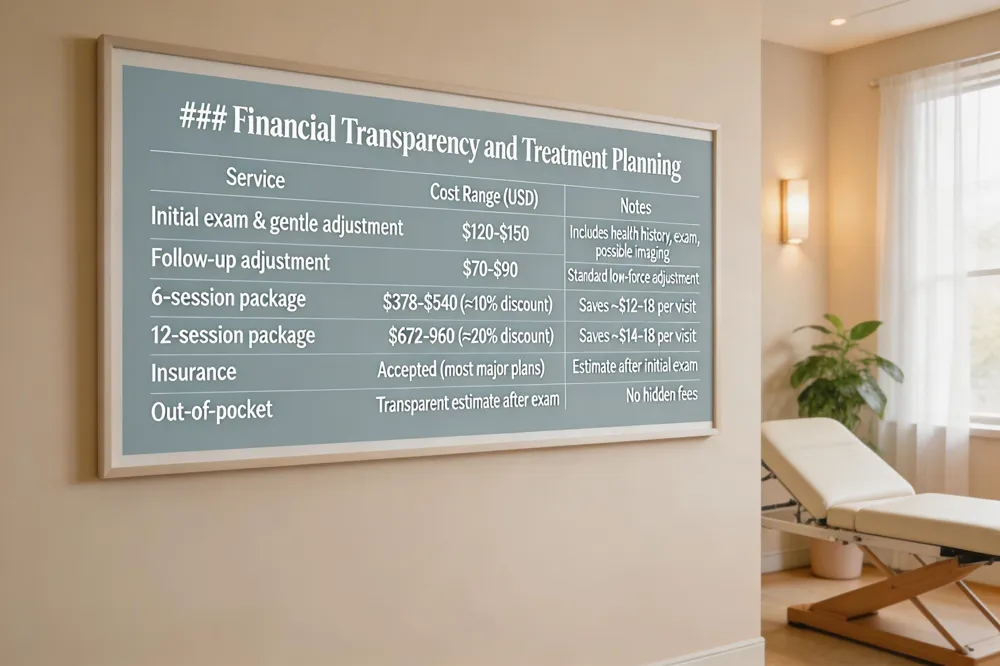 At Ross Chiropractic the first visit—comprising a health history, physical exam, diagnostic imaging when needed, and an initial gentle adjustment—typically costs between $120 and $150. Regular follow‑up adjustment sessions are priced at $70 to $90 each. To make ongoing care more affordable, the clinic offers multi‑visit packages; a six‑session bundle can reduce the per‑visit fee by roughly 10 percent and a twelve‑session package can bring savings up to 20 percent. Most major insurance plans are accepted, and after the initial exam the office provides a clear estimate of any remaining out‑of‑pocket costs, ensuring patients know exactly what they will owe. This transparent pricing model balances affordable individual appointments with discounted packages, while insurance coverage and clear out‑of‑pocket expectations help patients plan their care without surprise expenses.
Effectiveness, Benefits, and Limitations of Soft‑Touch Chiropractic
Effectiveness, Benefits, and Limitations of Soft‑Touch Chiropractic
| Benefits | Limitations / Risks |
|---|---|
| Gentle, low‑force adjustments reduce anxiety and audible “pop” | May require multiple sessions for lasting results |
| Suitable for children, seniors, pregnant patients, osteoporosis | Temporary soreness common after first few visits |
| Improves nervous‑system function, sleep, digestion, immune response | Variable insurance coverage may increase out‑of‑pocket cost |
| Enhances balance and reduces fall risk in older adults | Rare aggravation of existing bone/joint pathology |
| Faster recovery and sustained alignment compared to HVLA | High‑velocity neck manipulations (not used) carry very low stroke risk |
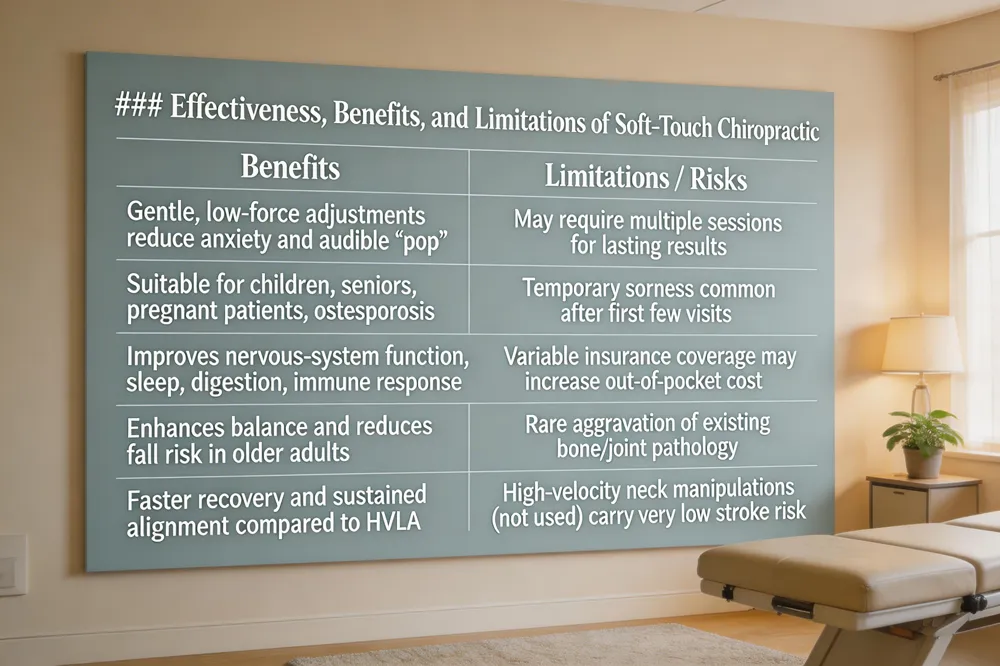 Soft‑touch, low‑force chiropractic (LVLA) techniques have a growing evidence base that supports their clinical effectiveness. Studies and practitioner experience show that precise, low‑amplitude impulses—delivered with instruments such as the Activator or via drop‑table and Flexion‑Distraction methods—mobilize joints, reduce nerve irritation and trigger the body’s natural healing cascade without the post‑treatment soreness typical of high‑velocity adjustments. This approach works well for children, seniors, pregnant patients, and individuals with osteoporosis, post‑surgery concerns, or heightened anxiety, often requiring fewer visits when combined with adjunct therapies like spinal decompression, myofascial release, cold laser, corrective exercises, and custom orthotics.
Key advantages for vulnerable populations include a gentle, comfortable experience that minimizes anxiety about the audible “pop,” reduced risk of tissue injury, and the ability to tailor care to low pain thresholds. The low‑force touch improves nervous‑system function, promotes better sleep, digestion, and immune response, and can enhance balance and fall‑risk reduction in older adults. Because the adjustments are less traumatic, patients frequently report faster recovery and sustained alignment.
Potential downsides are generally mild: temporary soreness, the need for multiple sessions to achieve lasting results, and variable insurance coverage that may increase out‑of‑pocket costs. Rare risks involve aggravation of existing bone or joint pathology and, in the case of high‑velocity neck manipulations (not used in soft‑touch protocols), a very low incidence of vascular injury or stroke. Selecting a licensed, board‑certified practitioner such as Dr. Allison Ross, DC mitigates these risks while maximizing therapeutic benefit.
Does soft‑touch (low‑force) chiropractic work? Yes—soft‑touch, low‑force chiropractic techniques are effective for relieving pain and restoring mobility. By using gentle, precise pressure instead of high‑velocity thrusts, these adjustments mobilize joints, reduce nerve irritation, and stimulate the body’s natural healing response without the post‑adjustment soreness that some patients experience with traditional HVLA methods. Research and clinical experience confirm their safety and efficacy for children, seniors, pregnant patients and those with osteoporosis or post‑surgery concerns, often achieving lasting alignment with fewer total visits when paired with complementary therapies.
What are the main benefits and disadvantages of chiropractic care? Benefits include non‑invasive pain relief, improved mobility, reduced reliance on medication, and enhanced overall wellness through better nervous‑system function. Disadvantages are usually mild—temporary soreness, the need for several visits, and insurance coverage limitations. Rare serious risks involve potential aggravation of existing bone or joint problems and an extremely low risk of vascular injury from high‑velocity neck manipulations, which are avoided in soft‑touch protocols.
What alternative chiropractic methods are offered at Ross Chiropractic? Ross Chiropractic supplements traditional adjustments with a suite of gentle alternatives: Activator Method instrument‑assisted adjustments, Thompson Drop‑Table, Flexion‑Distraction, myofascial release, cold laser (K‑Laser) therapy, spinal decompression, corrective exercises, and custom orthotics. These modalities allow Dr. Ross to tailor treatment to each patient’s comfort level and specific musculoskeletal condition while maintaining a non‑invasive, drug‑free approach.
Access, Session Frequency, and Holistic Integration
Access, Session Frequency, and Holistic Integration
| Component | Description | Typical Frequency / Integration |
|---|---|---|
| Low‑force LVLA adjustments (Activator, Thompson Drop‑Table, Flexion‑Distraction) | Core spinal care | 2 sessions/week for 6 weeks (≈12 visits) |
| Spinal decompression | Disc stretching, nerve relief | As prescribed, often weekly |
| Myofascial release | Fascial restriction relief | Integrated into each visit as needed |
| Cold laser (K‑Laser) | Anti‑inflammatory, pain reduction | 1‑2 times/week during acute phase |
| Corrective exercise program | Personalized rehab & strength | Daily home exercises, periodic reassessment |
| Custom orthotics | Foot‑biomechanical correction | Issued after assessment, worn daily |
| Lifestyle counseling (ergonomics, posture) | Supports long‑term alignment | Discussed at each visit, ongoing |
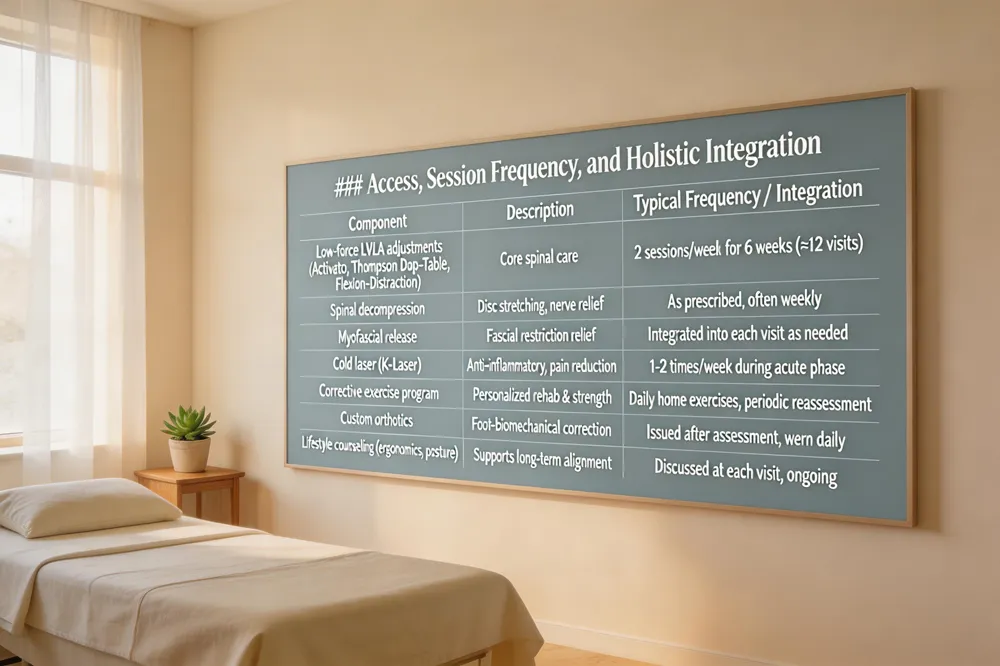 Finding gentle care in San Jose is straightforward: Dr. Allison Ross, DC runs a patient‑focused clinic that specializes in low‑force, LVLA adjustments. The practice combines the Activator Method, Thompson Drop‑Table, and Flexion‑Distraction with adjunct therapies such as spinal decompression, myofascial release, cold‑laser treatment, corrective exercises, and custom orthotics. This comprehensive, non‑invasive approach is ideal for back and neck pain, sciatica, sports injuries, auto‑accident trauma, and pregnancy discomfort.
Typical number of sessions for back‑pain relief – Clinical experience shows that most patients achieve meaningful improvement after roughly 12 visits over six weeks (about two sessions per week). Acute or mild cases may respond after only a few appointments, while chronic or severe pain may require a longer series and periodic maintenance. Dr. Ross begins with a six‑week, 12‑session plan and tailors the schedule based on individual progress and co‑existing factors.
Connection with lifestyle, exercise, and orthotics – After each gentle adjustment, patients receive personalized corrective‑exercise programs and ergonomic counseling to reinforce spinal alignment. Custom orthotics address foot‑biomechanics, reducing strain up the kinetic chain and supporting long‑term posture. Integrating these lifestyle components with low‑force adjustments maximizes pain relief, enhances mobility, and promotes overall wellness without surgery or medication.
Key Q&A
- Where can I find gentle chiropractic care near me in San Jose, CA? You can find gentle chiropractic care at Dr. Allison Ross, DC’s practice in San Jose, CA, which offers low‑force adjustments plus spinal decompression, myofascial release, cold‑laser therapy, corrective exercises, and custom orthotics.
- How many chiropractic sessions are typically needed to relieve back pain? Most patients experience significant relief after about 12 sessions (two per week for six weeks), though the exact count varies based on severity and response.
- What are the three T’s in chiropractic philosophy? Thoughts, Trauma, and Toxins – mental stress, physical injury, and environmental/dietary exposures that can interfere with nervous‑system function.
Embracing Soft‑Touch Care for Long‑Term Wellness
Gentle chiropractic techniques such as the Activator Method, Thompson Drop‑Table, Flexion‑Distraction, cervical mobilization, myofascial release, and craniosacral therapy use low‑velocity, low‑amplitude forces that avoid rapid thrusts and audible popping. Because the pressure is light and movements are controlled, these approaches are safe for children, seniors, pregnant patients, and anyone anxious about traditional adjustments; contraindications are limited to severe osteoporosis, acute trauma, or spinal instability.
Ross Chiropractic builds each visit on a thorough history, physical exam, and, when needed, diagnostic imaging. The practitioner then creates a personalized, holistic plan that blends low‑force adjustments with spinal decompression, cold‑laser therapy, corrective exercises, and custom orthotics. This integrative strategy addresses the root cause of pain, supports nervous‑system function, and promotes long‑term mobility without medication or surgery.
Residents of San Jose are invited to experience the comfort and effectiveness of low‑force care at Ross Chiropractic, where patient‑centered, non‑invasive treatment is the standard.