Understanding Whiplash From the Start
Whiplash, also called cervical acceleration‑deceleration (CAD) syndrome, is a soft‑tissue neck injury produced by a rapid forward‑then‑backward motion of the head. The most frequent cause is a rear‑end motor‑vehicle collision, although sports impacts, falls, roller‑coaster rides, and sudden jolts can generate the same mechanism. Typical acute symptoms appear within minutes to hours and include neck pain and stiffness, reduced range of motion, headaches at the base of the skull, and sometimes shoulder or upper‑back tenderness. Neurological signs such as tingling, numbness, or weakness in the arms indicate a higher‑grade injury. Early assessment—ideally within the first 48‑72 hours—is critical because prompt pain control, gentle motion, and education reduce inflammation, prevent scar tissue formation, and dramatically lower the risk of chronic whiplash‑associated disorders.
Immediate Diagnosis and Early Red‑Flag Indicators
 A thorough clinical exam for whiplash starts with a detailed history of the injury event, followed by Physical exam checks neck motion, tenderness, reflexes, strength, and sensation in the upper limbs. Imaging (X‑ray, CT, MRI) is rarely diagnostic for soft‑tissue strain but is essential to rule out fractures, dislocations, disc herniations, or spinal cord injury. Red‑flag symptoms—known as the 5 D’s—require urgent medical attention: dizziness, drop attacks, diplopia (double vision), dysarthria (speech difficulty), and dysphagia (swallowing difficulty). Other alarming signs include severe neck pain, arm weakness, numbness, loss of coordination, or persistent headaches. Whiplash symptoms often begin with neck pain and stiffness, headaches at the skull base, shoulder discomfort, and can later involve tingling, nauseaness, or weakness in the arms. Delayed onset of pain, hours to days after a collision, signals evolving inflammation and should prompt early evaluation to prevent chronic disability.
Safe Movement: Exercises to Do and Avoid
 Gentle range‑of‑motion drills are the cornerstone of early whiplash rehab. Begin with slow neck tilts toward each shoulder and careful head turns to look over each shoulder, holding each position 5‑10 seconds. Add chin‑tucks (seated or supine) to activate deep cervical flexors, holding five seconds and repeating 8‑10 times. Strengthen the upper back with scapular squeezes and shoulder rolls, and include the prone cobra to relieve tension. These movements should be pain‑free, performed several times a day, and supervised by a chiropractor such as Dr. Allison Ross.
High‑impact motions to skip include rapid neck rotations, jerky forward or backward bends, heavy resistance exercises (over‑presses, deadlifts, power cleans), and high‑intensity aerobic activities like running or jumping. Avoid self‑cracking, heavy lifting, and prolonged static positions. Do not apply heat in the first 24‑48 hours; use ice instead. A personalized PDF from Dr. Ross can guide safe home exercises, proper pillow support, ice application, and posture strategies, ensuring a drug‑free, natural recovery.
Therapeutic Modalities: From Home Care to Clinical Interventions
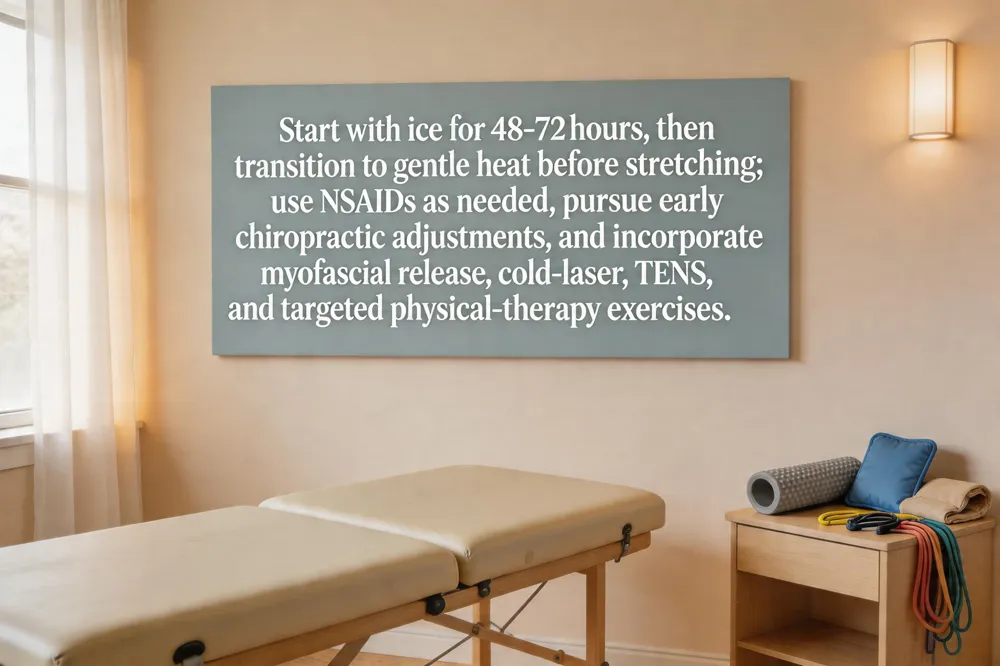 After a whiplash injury, begin with cold therapy for the first 48‑72 hours—apply a wrapped ice pack for 15‑minutes every 3‑4 hours to curb inflammation and muscle spasm. Once swelling subsides, switch to gentle heat (warm compress or heating pad for 15‑20 minutes) before stretching to improve blood flow and range of motion. Over‑the‑counter NSAIDs such as ibuprofen or acetaminophen help control pain and swelling; use as directed and avoid prolonged bed rest. Early chiropractic care, ideally within 48‑72 hours, provides spinal adjustments that restore joint alignment, while adjunct therapies—myofascial release, cold‑laser, spinal decompression, and custom orthotics—address soft‑tissue tension and promote tissue healing. Physical‑therapy or physiotherapy complements this with manual mobilizations, targeted neck‑strengthening exercises, posture education, and modalities like TENS or electrical stimulation. Home exercises (chin tucks, neck rotations, shoulder rolls) performed 3‑5 times daily, combined with proper ergonomics and supportive sleep posture, accelerate recovery and reduce the risk of chronic whiplash symptoms.
Recovery Timelines, Long‑Term Management, and Chronic Risks
 How long does whiplash take to heal
Mild cases often improve within 2–4 weeks; moderate injuries need 6–12 weeks of care; severe or pre‑existing neck issues may require several months. Early intervention (first 48‑72 hours) speeds recovery, and most patients feel notable relief by week 4‑6 with chiropractic adjustments, soft‑tissue work, and home exercises. Persistent symptoms beyond three months call for a customized plan including spinal decompression, myofascial release, and corrective exercises.
Whiplash recovery time
Recovery varies by severity. Mild injuries resolve in 2‑4 weeks, moderate in 6‑12 weeks, and severe can extend past three months. Older adults or those with prior neck problems often need a longer, gradual approach.
Is whiplash dangerous
Yes. Untreated severe whiplash may cause cervical instability, nerve irritation, chronic pain, and disability. Prompt, personalized chiropractic care reduces these risks and promotes full functional restoration.
Legal and Financial Considerations After a Whiplash Injury
 Typical Settlement Ranges
Whiplash claims usually settle between $10,000 and $50,000 for soft‑tissue injuries. More severe cases involving herniated discs, nerve damage, or surgery can reach $80,000‑$300,000 or higher. The exact figure reflects medical costs, lost wages, and pain‑and‑suffering ratings.
Typical Settlement Ranges
Whiplash claims usually settle between $10,000 and $50,000 for soft‑tissue injuries. More severe cases involving herniated discs, nerve damage, or surgery can reach $80,000‑$300,000 or higher. The exact figure reflects medical costs, lost wages, and pain‑and‑suffering ratings.
Factors Affecting Compensation Severity and duration of symptoms, the need for ongoing therapy, pre‑existing conditions, and the impact on daily activities all influence the payout. Insurance companies often open with low offers, so detailed documentation of every expense and functional limitation is critical.
Documentation and Legal Advice Maintain a complete medical record, receipts for all treatments (chiropractic adjustments, physical therapy, cold‑laser, orthotics, etc.), and a diary of pain levels and activity restrictions. Consulting a personal‑injury attorney experienced in neck‑injury claims maximizes the chances of a fair settlement.
Neck Pain Car Accident Settlement Settlements for neck‑pain typically fall between $10,000 and $50,000, climbing to $80,000‑$300,000 for severe nerve or disc injuries, depending on treatment costs and pain‑and‑suffering assessments.
What Is a Typical Settlement Amount for Whiplash? Most whiplash settlements land in the $10,000‑$50,000 range, with higher awards for extensive treatment, long‑term prognosis, or strong documentation.
Whiplash Nerve Damage Symptoms Nerve involvement may cause burning, tingling, numbness down the arm, muscle weakness, coordination loss, headaches, dizziness, and vertigo. Persistent neurological signs warrant prompt medical evaluation.
Your Path to Whiplash Free Living
Early intervention is the cornerstone of successful whiplash recovery. Beginning treatment within the first 48‑72 hours after a collision reduces inflammation, limits scar‑tissue formation, and lowers the risk of chronic pain. Prompt evaluation also identifies any hidden fractures or nerve involvement, allowing the care to be tailored before symptoms become entrenched.
At Ross Chiropractic we commit to a personalized, drug‑free approach. Each patient receives a thorough history, physical exam, and, when necessary, imaging to rule out serious injury. Treatment plans combine gentle spinal adjustments, myofascial release, spinal decompression, cold laser therapy, corrective exercises, and custom orthotics. This multimodal strategy restores cervical alignment, eases muscle tension, and promotes natural tissue healing without reliance on medication or surgery.
If you have experienced neck pain, stiffness, headaches, or tingling after a motor‑vehicle incident, seek professional evaluation promptly. A qualified chiropractor can diagnose the injury, explain the recommended plan, and guide you through active rehabilitation. Early, targeted care not only speeds recovery but also empowers you to return to daily activities with confidence and long‑term neck health.
By embracing this evidence‑based, holistic regimen, you lay the foundation for lasting neck stability and a pain‑free future today.