Introduction
Whiplash occurs when a forward‑and‑backward motion of the head stretches neck muscles, ligaments, facet joints and discs. In the moments after the crash, adrenaline and cortisol surge, dulling pain and creating a false sense of normalcy. As these stress hormones wane over the next 24‑72 hours, micro‑tears trigger an inflammatory cascade—cytokines, swelling, and muscle guarding—that gradually irritates nerves and soft tissue. Early evaluation by a chiropractor or other professional can identify these injuries, begin care, and prevent the transition to chronic pain.
Mechanisms Behind Delayed Symptom Onset
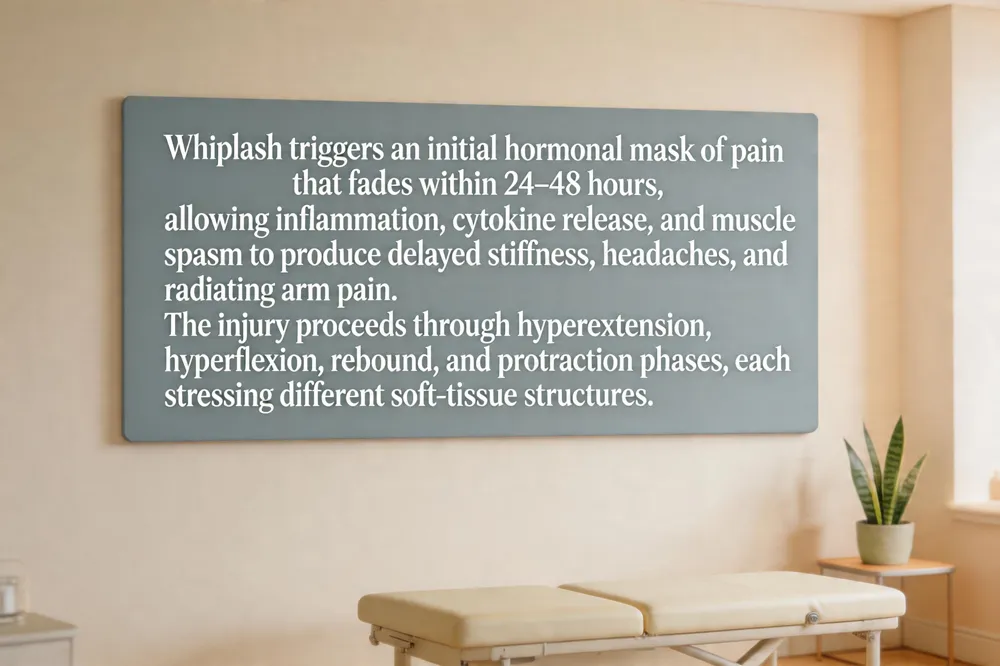 Whiplash is a rapid forward‑and‑backward motion of the neck that strains muscles, ligaments, facet joints, and discs. The injury often appears harmless at first because adrenaline and endorphins released in the fight‑or‑flight response mask pain. Within 24–48 hours the hormonal surge fades, allowing inflammation to become apparent. The inflammatory cascade—driven by cytokines, prostaglandins, and increased blood flow—causes swelling, fluid buildup, and heightened nerve sensitivity, which together generate the delayed neck stiffness, headaches, and reduced range of motion. Protective muscle spasm also develops as a reflex to guard the injured area; as the spasm persists it creates further guarding and sensitizes cervical nerves, producing delayed tingling or radiating arm pain. Biomechanically, whiplash proceeds through four phases: (1) hyperextension (head pulled backward), (2) hyperflexion (head snaps forward), (3) rebound to neutral, and (4) protraction as the torso moves ahead of the head. Each phase stresses different soft‑tissue structures, contributing to the overall symptom complex. Because the inflammatory and neural processes evolve over days, symptoms can appear weeks or even months after the trauma, underscoring the importance of early gentle activity, ice‑then‑heat therapy, NSAIDs and prompt chiropractic or physical‑therapy evaluation to reduce swelling, restore motion, and prevent chronic pain.
Common and Specific Whiplash Symptoms
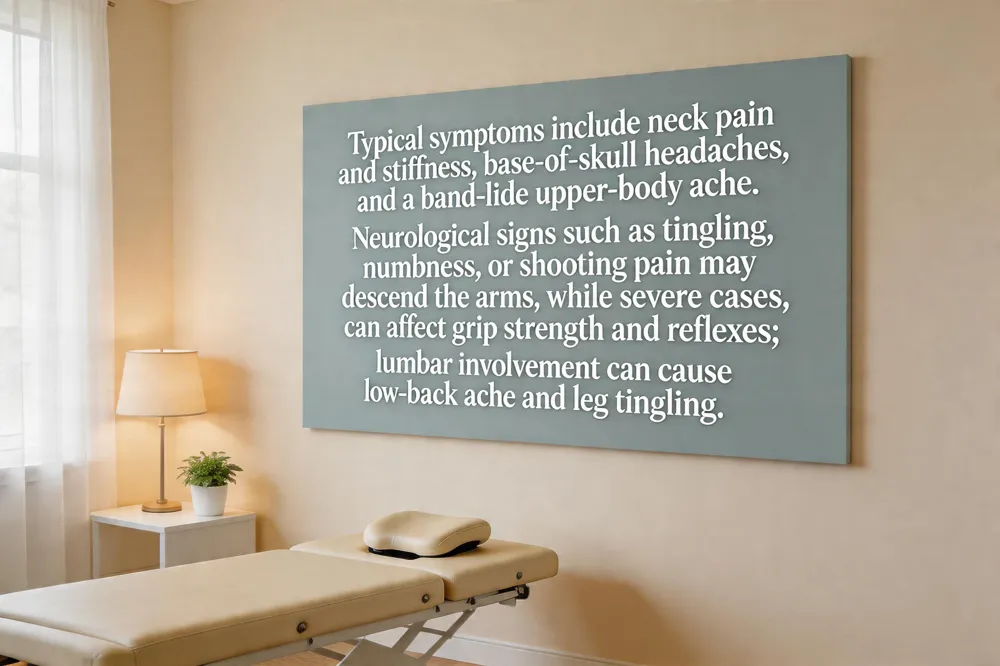 Whiplash most often begins with neck pain and stiffness that limit head movement and are accompanied by headaches at the base of the skull. The pain frequently spreads to the shoulders, upper back, and arms, creating a band‑like discomfort across the upper body. Neurological signs appear when swollen ligaments or muscles irritate cervical nerve roots, producing tingling, "pins‑and‑needles," numbness, or shooting pain that travels down the arms and into the hands. In more severe cases, mild weakness, reduced grip strength, or altered reflexes may develop, indicating nerve involvement. Although the cervical spine is the primary focus, the rapid hyper‑extension‑hyper‑flexion motion can also transmit forces to the lumbar region. Lower‑back whiplash typically presents as a dull, aching lumbar pain that may radiate into the buttocks or thighs, accompanied by muscle tightness, stiffness, and occasional leg tingling if lumbar nerve roots are irritated. Overall, whiplash pain is most common in the neck and upper‑body areas, but it can extend to the lower back and lower extremities, especially when inflammation, muscle spasm, or nerve compression progresses over the first 24‑72 hours after the injury.
Recovery Timeline, Activity Guidelines and Safe Practices
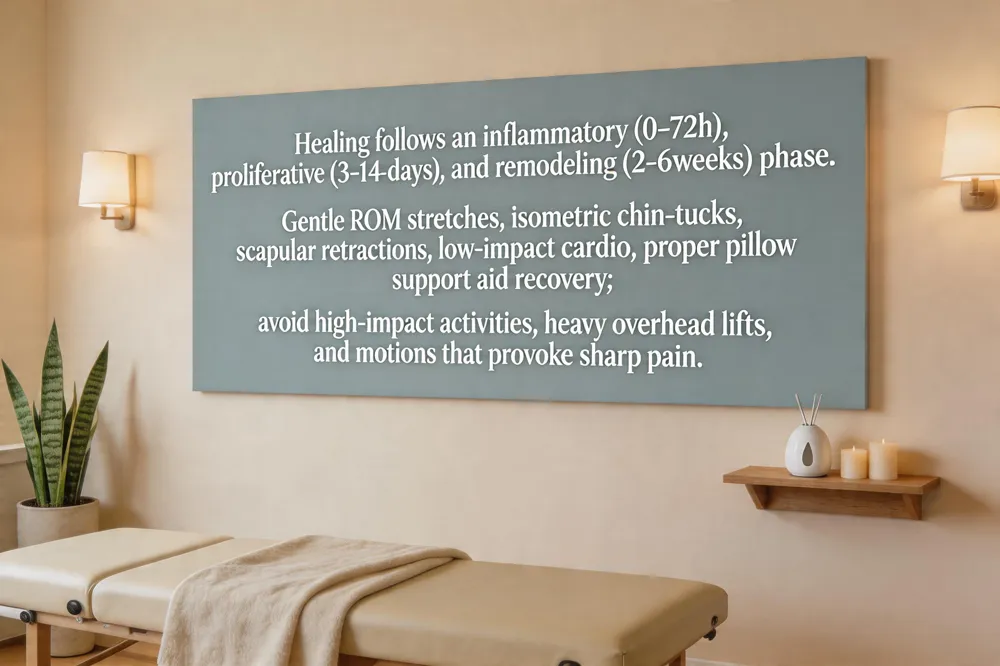 Whiplash healing follows three typical phases: an inflammatory stage (0‑72 hours) where pain and swelling peak, a proliferative stage (3‑14 days) when soft‑tissue repair begins, and a remodeling stage (2‑6 weeks) during which mobility improves. Gentle range‑of‑motion stretches—neck flexion/extension, lateral flexion, slow rotation—are recommended to restore motion without over‑loading the cervical spine. Isometric strengthening such as chin‑tuck (head‑retraction) and resisted side‑bending builds deep neck flexors, while scapular retraction drills correct forward‑head posture. Low‑impact aerobic activity like brisk walking promotes circulation.
Avoid high‑impact actions (running, jumping, contact sports), heavy overhead lifting, and aggressive neck extensions or deep side‑bends that can aggravate micro‑tears. Any exercise that triggers sharp pain, dizziness, or sudden discomfort should stop stopped.
Sleep with a thin pillow or rolled towel under the neck while on your back, or a firm high‑loft pillow when on the side; avoid stomach‑lying. Gentle pre‑bed stretches and a warm shower can relax tissue; brief ice before sleep reduces swelling if needed.
Most mild‑to‑moderate cases return to light duties within 1‑2 weeks and full work by 4‑6 weeks, depending on job demands. A phased return with modified tasks and early active treatment—stretching, chiropractic adjustments, myofascial release—helps shorten time off work.
Therapeutic massage, when performed by a clinician familiar with whiplash mechanics, can relax tight muscles, improve blood flow, and reduce stiffness, but should complement—not replace—active rehabilitation and be tailored to the healing stage.
Safety, Risks and Comprehensive Chiropractic Care
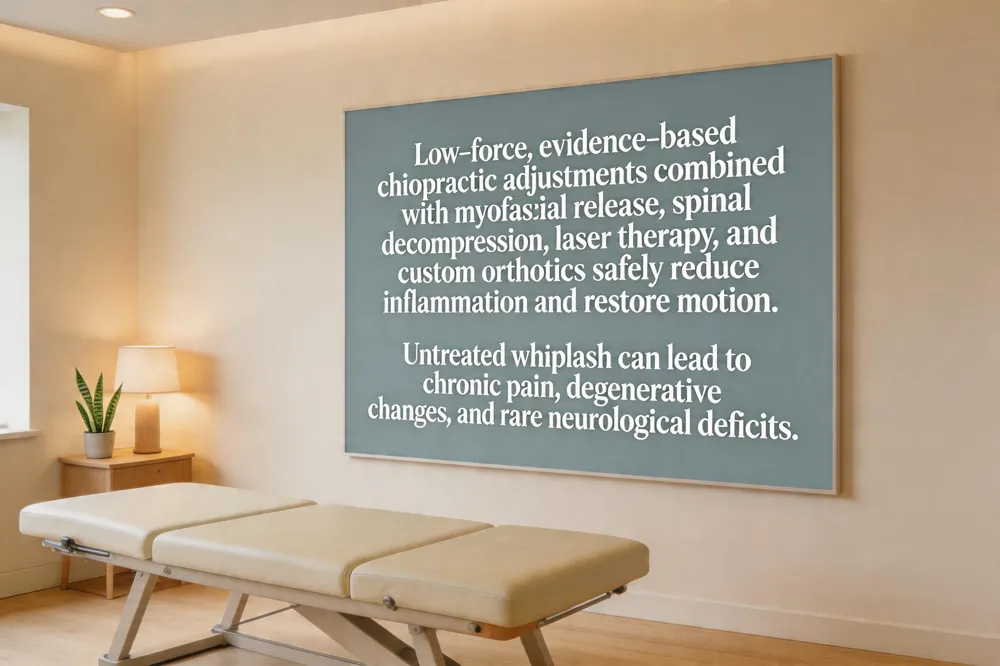 Whiplash can be frightening, but when managed by a qualified chiropractor the risk of worsening the injury is low. Evidence‑based protocols, such as the Croft Whiplash Management Protocol, call for gentle, low‑force adjustments after a thorough assessment of cervical stability, ligament integrity, and neurological status. By avoiding high‑velocity thrusts and using adjunctive therapies like myofascial release and spinal decompression, a skilled clinician (e.g., Dr. Allison Ross, DC) minimizes the chance of aggravating symptoms.
If left untreated, whiplash may become dangerous. Persistent inflammation can lead to chronic neck pain, reduced range of motion, headaches, dizziness, and, in rare cases, neurological deficits. Over time, poor posture and muscle imbalance increase the risk of degenerative joint disease and long‑term disability. Early, non‑invasive care prevents these complications.
Comprehensive treatment combines a detailed evaluation with gentle adjustments, spinal decompression, myofascial release, targeted therapeutic exercises, posture training, cold‑laser therapy, and custom orthotics. This multimodal approach restores alignment, reduces inflammation, and rebuilds strength.
Late whiplash syndrome is addressed with the same multimodal strategy, beginning with pain‑relief measures (ice, anti‑inflammatories, laser) and progressing to precise adjustments, soft‑tissue work, corrective‑exercise programs, and ergonomic education to support lasting recovery.
Finding Expert Care in San Jose and Patient Guidance
 Where can I find a whiplash‑specialized chiropractor near me in San Jose, CA?
You can receive whiplash‑focused care at Dr. Allison Ross, DC – Ross Chiropractic in San Jose, CA. The clinic offers patient‑centered, non‑invasive treatment such as spinal adjustments, decompression, myofascial release, cold‑laser therapy, corrective exercises, and custom orthotics. It accepts most major insurances and provides same‑day or urgent appointments for auto‑accident injuries.
Where can I find a whiplash‑specialized chiropractor near me in San Jose, CA?
You can receive whiplash‑focused care at Dr. Allison Ross, DC – Ross Chiropractic in San Jose, CA. The clinic offers patient‑centered, non‑invasive treatment such as spinal adjustments, decompression, myofascial release, cold‑laser therapy, corrective exercises, and custom orthotics. It accepts most major insurances and provides same‑day or urgent appointments for auto‑accident injuries.
What are the symptoms of late whiplash syndrome? Late‑onset whiplash often appears weeks or months after the impact with persistent neck stiffness, reduced range of motion, throbbing headaches, dizziness, fatigue, concentration difficulty, shoulder/upper‑back pain, arm tingling, and occasional jaw or ear discomfort. Symptoms worsen with prolonged sitting, driving, or head turning.
Can whiplash symptoms come and go? Yes. Pain, stiffness, and headaches may improve after rest or gentle movement, then flare with prolonged sitting, heavy lifting, or sudden neck motions. Swelling and muscle spasm fluctuate with posture, stress, and activity, creating “good” and “bad” days.
How long does whiplash typically last? Most people improve within a few days to two‑three months, returning to normal activities. Without proper care, symptoms can persist for several months, and a minority may have issues for up to a year. Early, active recovery reduces chronic risk.
What does the term “whiplash” mean? Whiplash is a neck injury caused by rapid forward‑then‑backward motion of the head, stretching muscles, ligaments, tendons, and sometimes discs. It commonly follows rear‑end car collisions, sports impacts, or falls, producing neck pain, stiffness, headaches, shoulder/arm discomfort, dizziness, and tingling.
Conclusion
Delayed whiplash pain arises from a cascade of factors: adrenaline and endorphins mask early discomfort, micro‑tears trigger inflammation that peaks 24‑72 hours later, protective muscle spasm and nerve sensitization develop gradually, and cytokine buildup heightens pain sensitivity. Prompt, gentle chiropractic intervention—soft tissue, myofascial release, and gentle motion—can modulate spasm spread, restore alignment, and promote circulation, reducing chronic risk. San Jose residents, schedule an evaluation within days of a collision to protect your neck and recover faster.