Why Combine Chiropractic Care with Strength Training?
Chiropractic adjustments restore spinal alignment, which optimizes nervous‑system signaling and allows muscles to fire more efficiently during lifts. When the spine is properly aligned, joint mobility and range of motion increase, reducing compensatory strain and improving balance—key factors for both athletes and everyday lifters. A growing body of evidence supports this synergy: studies report 7‑20 % greater strength gains, up to 64 % acute increases in muscle force after a single adjustment, and faster recovery due to reduced inflammation and enhanced blood flow. For athletes, the result is deeper squats, stronger deadlifts, and fewer overuse injuries; for recreational lifters, it means pain‑free workouts, better posture, and consistent training progress. Integrating chiropractic care with strength programs thus creates a drug‑free, holistic loop that boosts performance while protecting the musculoskeletal system.
Neuromuscular Activation and Strength Gains
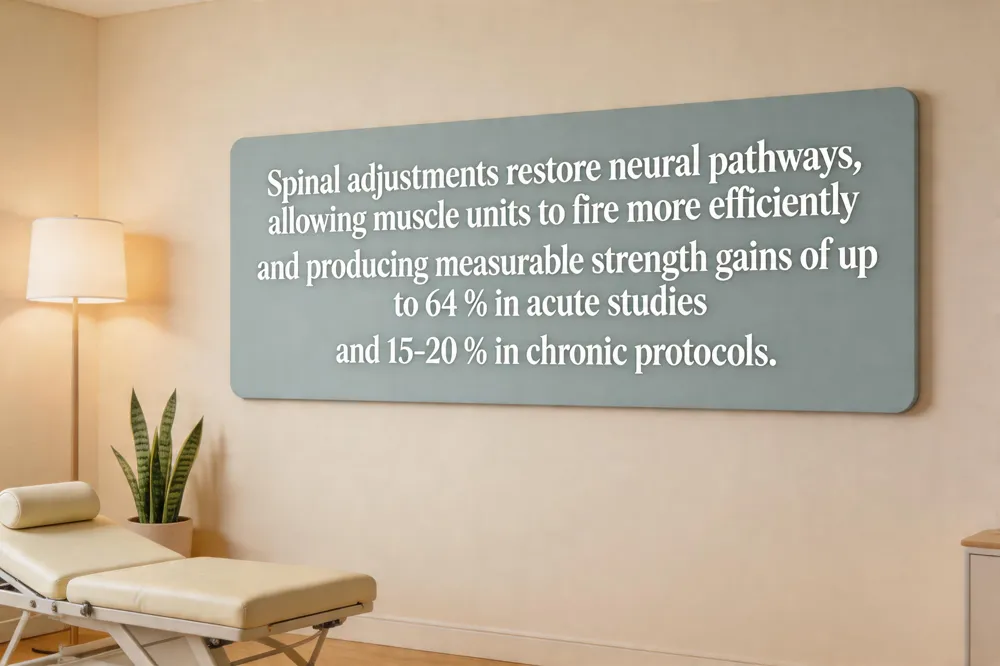 Chiropractic adjustments restore spinal alignment and reduce nerve interference, allowing clearer signaling from the brain to the muscles. When vertebral subluxations are corrected, the nervous system can fire motor units more efficiently, improving muscle recruitment during weight‑lifting movements. Acute research supports this mechanism: a single session of chiropractic care increased plantar‑flexor strength by 64 % in stroke patients and boosted cortical drive (V‑wave/Mmax) by 54 %, indicating supraspinal activation of the motor‑neuron pool. Similar studies in healthy adults showed a 15‑20 % strength advantage after regular chiropractic care. By priming the nervous system, adjustments prepare the musculature for heavier loads, enhance balance, and reduce the risk of compensatory injuries.
Can a chiropractor help with weak muscles? Yes—by identifying spinal or nerve imbalances, delivering precise adjustments, myofascial release, and prescribing corrective exercises, a chiropractor restores proper neural communication, enabling weaker muscles to fire more efficiently and regain strength.
Is chiropractic care science based? Yes; peer‑reviewed trials and systematic reviews demonstrate that spinal manipulation improves pain, function, range of motion, and neuromuscular performance, and it is now listed as a first‑line, for musculoskeletal complaints in professional guidelines.
What are the 3 T's in chiropractic? The three T’s are Thoughts, Trauma, and Toxins—mental stress, physical injuries or repetitive micro‑trauma, and environmental/biochemical stressors that can create subluxations and disrupt nervous‑system function.
Injury Prevention and Recovery for Weightlifters
 Weightlifters place repetitive loads on the spine and peripheral joints, making joint alignment essential for injury prevention. Chiropractic adjustments restore proper vertebral positioning, eliminating small subluxations that can disrupt nerve signaling and cause compensatory movement patterns. When joints move smoothly, the nervous system efficiently activates muscle groups, reducing strain on the back, neck, and shoulders.
Soft‑tissue therapies such as myofascial release and Active Release Technique break down adhesions, increase fascial glide, and improve range of motion. These modalities lessen muscular tension, allowing lifters to achieve deeper squat depth and more controlled deadlift mechanics while lowering the risk of strains and sprains.
Cold‑laser therapy further accelerates recovery by reducing inflammation and promoting cellular repair after intense sessions. Combined with myofascial work, it shortens soreness duration and supports faster return to training.
Should you go to the chiropractor if you lift weights? Yes—regular visits keep spinal alignment, enhance nerve‑muscle communication, and address imbalances with core‑stabilization drills, myofascial release, and corrective exercises, reducing injury risk and improving performance.
Should athletes get chiropractic adjustments? Absolutely. Adjustments maintain joint mobility, curb inflammation, and boost neuromuscular efficiency, helping athletes stay competitive without medication.
Chiropractor for athletes near me? Dr. Allison Ross, DC in San Jose, CA offers spinal adjustments, myofascial release, cold‑laser therapy, corrective exercises, and custom orthotics tailored to weight‑lifters and other athletes.
Performance Enhancements Through Biomechanics
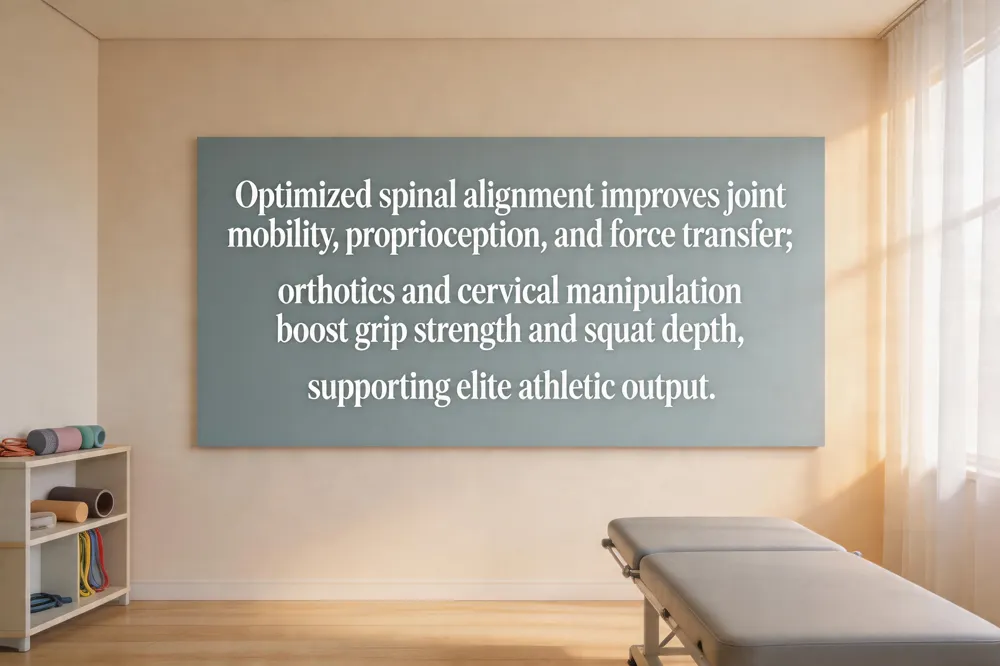 Spinal alignment is the foundation of efficient biomechanics; when the spine is properly aligned, nerve signaling is optimized, allowing muscles to fire synchronously and generate greater force during lifts. Research shows that adjustments improve joint mobility, balance, and proprioception, translating into deeper squat depths and more stable deadlifts. Grip‑strength studies reinforce this link—cervical manipulation increased judo athletes’ grip by 16 % on the right side and 11 % on the left, while a single chiropractic session boosted plantar‑flexor strength up to 64 % in clinical trials, indicating acute neuromuscular activation. Orthotics further enhance performance by correcting foot biomechanics, creating a stable kinetic chain that improves force transfer from the ground through the hips and spine, essential for maximal power output in squats and presses.
Sports chiropractic research demonstrates accelerated recovery, reduced pain, and higher proprioceptive acuity, supporting its integration into elite programs. Systematic reviews of randomized trials confirm pain reduction and functional gains, with multiple studies reporting measurable strength improvements such as increased grip. NFL athletes routinely employ chiropractors; approximately 31 % of franchises have a chiropractor on staff, using adjustments to maintain alignment, alleviate back and neck issues, and speed post‑game recovery. This evidence‑based, holistic approach maximizes biomechanical efficiency and overall athletic performance.
Holistic Wellness and Long‑Term Mobility
 Chiropractic articles for patients
Our website offers a growing library of patient‑focused articles that break down common spine and musculoskeletal issues in plain language. Each piece explains how gentle, non‑invasive treatments—such as spinal decompression, myofascial release, cold laser therapy, and custom orthotics—work to relieve pain, restore alignment, and support overall wellness. We also cover active care, including corrective exercises and lifestyle tips, so patients understand how to maintain progress at home.
Chiropractor for pain relief
Dr. Allison Ross, DC provides fast, drug‑free pain relief through spinal adjustments, myofascial release, and targeted cold laser therapy. Personalized plans may include spinal decompression, corrective exercises, custom orthotics, and ergonomic education, addressing the root cause of back, neck, joint, and sciatica discomfort without surgery or medication.
Basics of chiropractic
Chiropractic restores proper motion and nerve flow by correcting vertebral subluxations. Using precise spinal adjustments, soft‑tissue work, and corrective exercises, chiropractors relieve pain, improve posture, and enhance overall wellness, while offering nutrition, sleep, and lifestyle education to support long‑term mobility.
Integrating Chiropractic into Your Training Program
 Designing a Combined Routine
Start each workout with a brief chiropractic assessment to identify joint restrictions and muscular imbalances. Follow the chiropractor’s prescribed preparatory exercises—dynamic stretches, core activation drills, and myofascial release—to prime the nervous system. After the weight‑training session, a post‑workout adjustment can restore alignment, reduce tissue tension, and enhance blood flow for faster recovery.
Designing a Combined Routine
Start each workout with a brief chiropractic assessment to identify joint restrictions and muscular imbalances. Follow the chiropractor’s prescribed preparatory exercises—dynamic stretches, core activation drills, and myofascial release—to prime the nervous system. After the weight‑training session, a post‑workout adjustment can restore alignment, reduce tissue tension, and enhance blood flow for faster recovery.
Scheduling and Frequency Optimal results are seen with 1‑2 chiropractic visits per week during high‑intensity phases, tapering to a maintenance visit every 3‑4 weeks during lower‑volume periods. Consistent timing—such as a pre‑training check‑in on Monday and a post‑training follow‑up on Thursday—keeps the spine neutral and supports neuromuscular efficiency throughout the week.
Local Resources in San Jose Chiropractor near me – Dr. Allison Ross, DC, offers spinal adjustments, decompression, myofascial release, cold‑laser therapy, corrective exercises, and custom orthotics at her San Jose clinic. She tailors programs for athletes and everyday lifters alike.
Do athletes use chiropractors? – Yes. Professional and amateur athletes regularly incorporate chiropractic care to maintain spinal health, prevent injuries, and boost performance. Studies show significant pain reduction and faster recovery after adjustments.
Chiropractic alternative medicine – Chiropractic is a complementary, non‑invasive approach that restores musculoskeletal alignment and nervous‑system function. When combined with modalities like acupuncture, therapeutic massage, and nutrition counseling, it provides a holistic, drug‑free pathway to sustained strength and wellness.
Take the Next Step Toward Stronger, Safer Workouts
Chiropractic care prepares the body for weight‑training by aligning the spine, improving nerve signaling, and increasing joint mobility. Adjustments reduce muscle tension, enhance range of motion, and allow more efficient muscle activation, leading to greater strength gains and fewer injuries. Soft‑tissue therapies such as myofascial release and cold laser accelerate recovery, while corrective exercises and custom orthotics address individual imbalances. Together these non‑invasive, drug‑free interventions create a holistic environment where athletes can train harder, recover faster, and stay pain‑free.
Ready to experience these benefits? Schedule a personalized consultation at Ross Chiropractic in San Jose today. Our team will assess your posture, identify subluxations, and design a customized plan that integrates spinal adjustments, targeted stretches, and performance‑focused exercises. Take the next step toward stronger, safer workouts—contact us now and start your drug‑free path to optimal strength. You’ll notice improved balance, quicker recovery, and sustained progress without reliance on medication.