Why Foot Scanning Matters for Your Health
Digital foot scanning creates a precise 3‑D model of each foot in seconds, capturing arch height, heel width, pressure distribution and even forward‑head posture. This high‑resolution data replaces messy plaster casts, reduces appointment time, and can be stored electronically for future updates. In a chiropractic setting the scan feeds directly into CAD software, allowing the practitioner to design custom orthotics that align the foot, ankle and spine, thereby supporting spinal adjustments and reducing compensatory lumbar strain. Patients benefit from a quick, non‑invasive scan that improves fit, comfort and durability of orthotics, often leading to a 30 % reduction in foot and lower‑limb pain. Because the scan can be repeated easily, clinicians can monitor changes due to weight loss, pregnancy or injury and adjust the orthotic without starting from scratch. The result is a personalized, drug‑free solution that enhances gait, posture and overall musculoskeletal health.
Diabetic Neuropathy and the Best Insoles for Pressure Relief
 What are the best insoles for diabetic neuropathy?
For diabetic neuropathy the most effective insoles are those that evenly redistribute pressure, cushion sensitive zones, and provide stable arch support. Top over‑the‑counter options include Scholl’s Pressure Relief Insoles (clinically shown to lower nerve‑pain episodes), Spenco Medics Diabetic+ Insoles with moisture‑wicking, durable foam, and New Balance Therapeutic Cushion Insoles that combine shock‑absorbing material with metatarsal pads. Pedag’s Sensitive orthotic insole, made of Nora® material and carrying the APMA Seal of Acceptance, offers extra softness and a full‑length heel cup for superior comfort.
What are the best insoles for diabetic neuropathy?
For diabetic neuropathy the most effective insoles are those that evenly redistribute pressure, cushion sensitive zones, and provide stable arch support. Top over‑the‑counter options include Scholl’s Pressure Relief Insoles (clinically shown to lower nerve‑pain episodes), Spenco Medics Diabetic+ Insoles with moisture‑wicking, durable foam, and New Balance Therapeutic Cushion Insoles that combine shock‑absorbing material with metatarsal pads. Pedag’s Sensitive orthotic insole, made of Nora® material and carrying the APMA Seal of Acceptance, offers extra softness and a full‑length heel cup for superior comfort.
Do orthotics prevent overpronation? Custom‑fit orthotics, designed from high‑resolution 3D foot scans, can correct overpronation by supporting the medial arch and aligning the heel. Studies show that digitally‑designed orthotics improve ankle, knee, hip and spinal alignment, reducing the risk of plantar fasciitis, shin splints, and knee or hip joint issues. Scanners ranging from high‑end Artec Leo to smartphone‑based TrueDepth apps capture accurate foot geometry, allowing clinicians to tailor orthotics that off‑load pressure points and maintain a neutral gait.
Why choose custom orthotics for diabetes? Digital foot scanning captures exact arch height, heel width, and pressure distribution within seconds, eliminating messy plaster casts. The resulting 3‑D model enables a custom orthotic that matches the patient’s unique foot shape, providing targeted off‑loading of high‑pressure areas that can lead to ulceration. Low‑cost scanner options (e.g., iPhone TrueDepth) make this technology accessible in most U.S. clinics, including Ross Chiropractic, where a comprehensive foot‑mechanics evaluation guides the selection of the optimal insole or a fully custom‑fit orthotic for long‑term foot health.
Is It Worth Investing in Custom‑Made Orthotics?
 Custom‑made orthotics provide a range of measurable benefits that go beyond the comfort of a generic insole. Because they are built from a high‑resolution 3D scan of your exact foot shape and gait, they can correct arch height, redistribute pressure, and align the kinetic chain, leading to pain reduction of up to 30 % in the feet, ankles, knees, and lower back. The initial cost is offset by long‑term value: fewer visits for pain management, reduced reliance on medication, and a lower risk of secondary injuries, which together save time and money over the lifespan of the device (often a year or more).
Chiropractors, such as Dr. Allison Ross, are fully qualified to prescribe and fit orthotics. Their training in biomechanics and gait analysis, combined with digital foot‑scanning tools, allows them to integrate orthotics into a holistic, drug‑free treatment plan that includes spinal adjustments, myofascial release, and corrective exercises.
Is it worth getting custom made orthotics? Yes—when persistent foot, ankle, or lower‑limb discomfort interferes with daily life, the personalized support, alignment correction, and improved posture offered by custom orthotics far outweigh the upfront cost.
Can a chiropractor do orthotics? Absolutely. Chiropractors possess the expertise to evaluate foot mechanics, use digital scans, and prescribe custom inserts that complement spinal and musculoskeletal care.
What are custom orthotics good for? They treat conditions such as plantar fasciitis, heel pain, bunions, and diabetic foot ulcers, while also relieving knee, hip, and back pain by correcting abnormal foot motion and providing targeted cushioning.
Digital Foot Scanning: Technology, Accuracy, and Cost
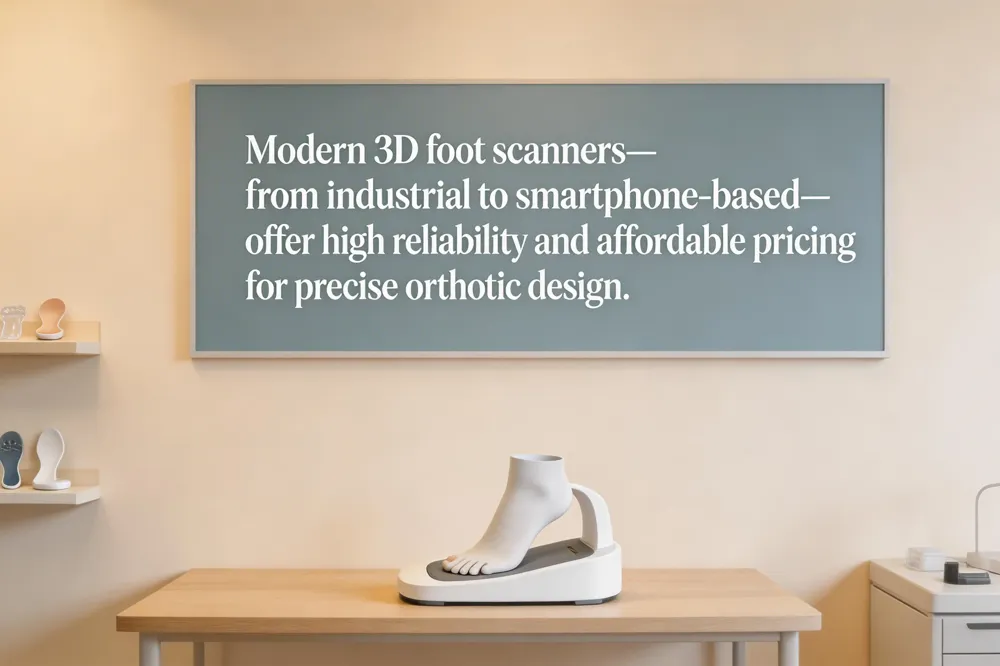 Modern podiatric clinics use a range of 3‑D foot scanners—from high‑resolution industrial devices like the Artec Leo (0.1 mm accuracy) to affordable smartphone‑based apps such as iOrthotics Truedepth (≈1 mm). A recent Sensors (2025) study compared three scanners (Artec Leo, iOrthotics laser flatbed, and phone app) and found intra‑scanner reliability of 61.75 % ± 2.23 % within a ±1 mm tolerance, while orthotic designs derived from the scans were 83.59 % ± 1.97 % similar—showing that scanner type has minimal impact on the final insole when the foot‑bearing condition is controlled. The same work highlighted that weight‑bearing position (non‑weight‑bearing vs. partial weight‑bearing) significantly altered medial arch height and heel width, making scan posture the critical factor for accurate orthotic fabrication.
How much does a foot scan cost? At Ross Chiropractic a 3‑D foot scan typically costs $150‑$200, often covered partially by insurance or HSA/FSA funds, far cheaper than a medical foot CT scan.
What is an orthotic scan? It is a digital imaging process that creates a precise 3‑D model of the foot’s shape and biomechanics, sometimes combined with gait and posture analysis, to design fully customized orthotics.
Is 3D foot scanning worth it? Yes—studies show scanner resolution matters less than proper loading during the scan, and low‑cost mobile scanners can deliver clinically acceptable data, making the technology cost‑effective and valuable for personalized orthotic care.
Are digital foot scanners accurate? Reliability is high (ICC = 0.81‑0.99); standard error of measurement ranges from 0.30‑1.13 mm for foot dimensions and about 0.45°‑0.54° for rear‑to‑forefoot alignment.
Advanced Imaging and the Rise of 3‑D Printed Orthotics
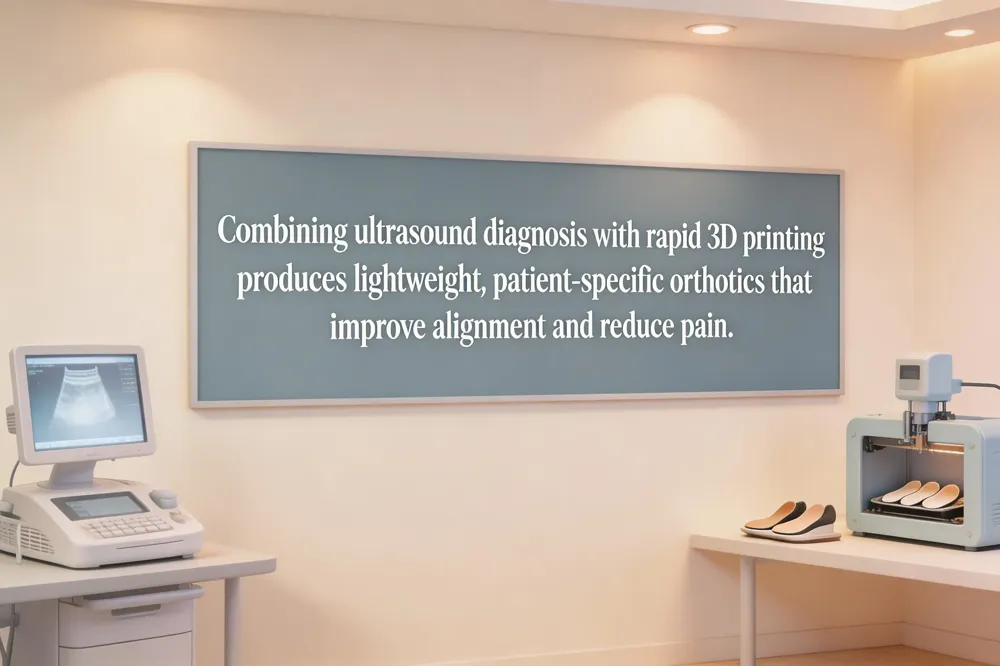 Foot ultrasound has become a first‑line tool for soft‑tissue diagnosis because it offers real‑time, radiation‑free visualization of tendons, ligaments, bursae, and neuromas that X‑rays and MRI can miss. High‑frequency sound waves reveal plantar‑fasciitis, tendon tears, and fluid collections with excellent detail, allowing clinicians to confirm a diagnosis instantly and, when needed, guide therapeutic injections during the same visit.
When a foot ultrasound or clinical exam indicates a biomechanical problem, the next step is a high‑resolution 3‑D scan. Scanners such as the Artec Leo, iOrthotics laser flatbed, and even smartphone‑based TrueDepth apps capture the entire foot geometry—including dorsal, plantar, and posterior heel surfaces—in seconds. The digital model is processed by CAD software, where orthotic geometry is refined, material properties are selected, and pressure‑mapping data are incorporated. The final STL file is sent to a lab that mills or 3‑D prints the insole, often within 24–48 hours, providing a precise, lightweight device that matches the patient’s anatomy.
Clinical outcomes consistently show that digitally designed orthotics reduce foot and lower‑limb pain by 20‑30 % and improve alignment of the ankle, knee, and spine. Future trends point toward AI‑driven gait analysis, higher‑resolution scanners, and wider adoption of low‑cost smartphone solutions, making custom 3‑D printed orthotics an increasingly accessible standard of care.
Future Directions: Precision, Materials, and Holistic Care
 Emerging 3‑D printing materials are reshaping orthotic performance. Lightweight carbon‑fiber‑reinforced polymers, thermoplastic polyurethane (TPU) lattices, and advanced EVA blends now deliver a combination of stiffness where shock absorption that can be fine‑tuned for each patient’s activity level. These materials reduce bulk, improve durability, and enable rapid, on‑demand fabrication that fits inside any shoe.
Artificial‑intelligence‑enhanced foot analysis is the next logical step after high‑resolution scanning. AI algorithms can automatically detect arch height, pronation patterns, and pressure‑distribution hotspots from the 3‑D model, generate predictive gait simulations, and suggest optimal material thicknesses before a technician ever touches the design. Early clinical studies show AI‑driven designs reduce pain scores up to 30 % faster than conventional workflows.
Integration with chiropractic therapies creates a truly holistic care pathway. When a chiropractor performs spinal adjustments or myofascial release, the AI‑derived foot model can be updated in real‑time to reflect altered biomechanics, ensuring the orthotic continues to support corrected posture. Combined with pressure‑mapping platforms, the orthotic can be fine‑tuned to off‑load vulnerable joints, reinforcing the kinetic chain and promoting long‑term musculoskeletal health.
Putting It All Together for Better Health
Digital foot scanning delivers rapid, millimeter‑level accuracy (≤ 0.1 mm) and captures the full three‑dimensional geometry of a foot in seconds, eliminating messy plaster casts and reducing turnaround time to 1–2 weeks. The high‑resolution data feed CAD software that creates a virtual model, allowing clinicians to design orthotics that match a patient’s exact arch height, heel width, and pressure distribution. This precision improves pain relief (up to 30 % reduction) and alignment of the knees, hips, and spine, while the ability to store and re‑scan data supports ongoing adjustments for weight changes, pregnancy, or injury.
Because scans can be performed with low‑cost devices—smartphone apps, portable laser flatbeds, or even the iPhone TrueDepth camera—patients gain direct access to their foot metrics. Retail programs like Fleet Feet’s fit id® and viSo’s free scanner let consumers view measurements, track asymmetries, and share the data with any provider, fostering informed decision‑making and a collaborative care model that empowers individuals to take charge of their musculoskeletal health.