Why Ergonomics Matters
Prolonged sitting flattens the lumbar curve, raises intervertebral disc pressure and reduces muscle nutrition, leading to stiffness, disc degeneration and low‑back pain. Micro‑breaks every 30‑60 minutes—standing, shoulder rolls, hip hinges—restore joint circulation and prevent static overload. A properly designed workstation counters these forces: an adjustable chair with lumbar support keeps the natural ‘S’ curve, feet flat on the floor (or footrest) and knees at 90°, and the monitor at eye level about an arm’s length away to avoid forward‑head posture. Keyboard and mouse positioned for 90° elbows and neutral wrists reduce shoulder and upper‑back strain. Combining ergonomic setup with regular movement breaks enhances spinal health, while professional care such as chiropractic adjustments, myofascial release and corrective exercises restores joint motion, alleviates pain and reinforces proper posture for long‑term relief.
Foundations of a Spine‑Friendly Workstation
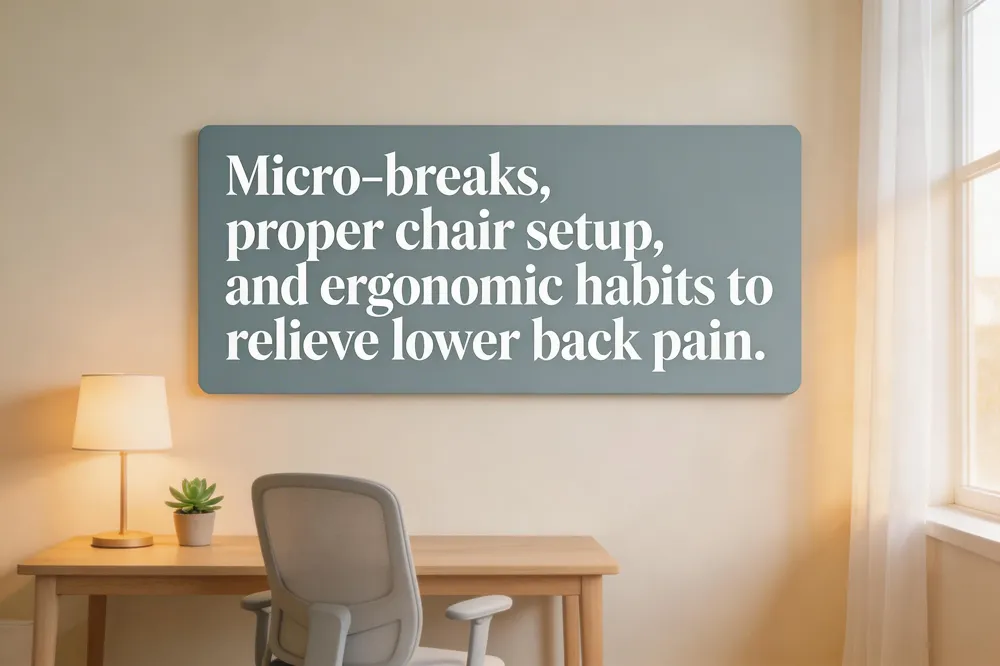 How to relieve lower back pain at work? Take micro‑breaks every 20‑30 minutes to stand, walk, and perform gentle stretches such as knee‑to‑chest or seated cat‑cow, keeping the lumbar spine mobile. Adjust chair height, use a lumbar roll, and ensure feet are flat. If pain persists, see a chiropractor for personalized adjustments.
How to avoid back pain while sitting for long hours? Maintain 90‑degree hips and knees, use a footrest when needed, and alternating sitting with standing every 30–60 minutes on an adjustable desk. Incorporate short mobility drills (hip‑flexor stretch, seated twist, ankle pumps) and keep elbows at 90 degrees with shoulders relaxed.
What can an employer do to prevent back injuries? Conduct ergonomic assessments, provide adjustable chairs and workstations, schedule regular movement‑break reminders, and offer safe‑lifting training and mechanical aids. Wellness programs that include access to chiropractic or physical‑therapy services, core‑strengthening exercise classes, and stress‑management resources further support long‑term spinal health.
Movement Breaks and Micro‑Exercises
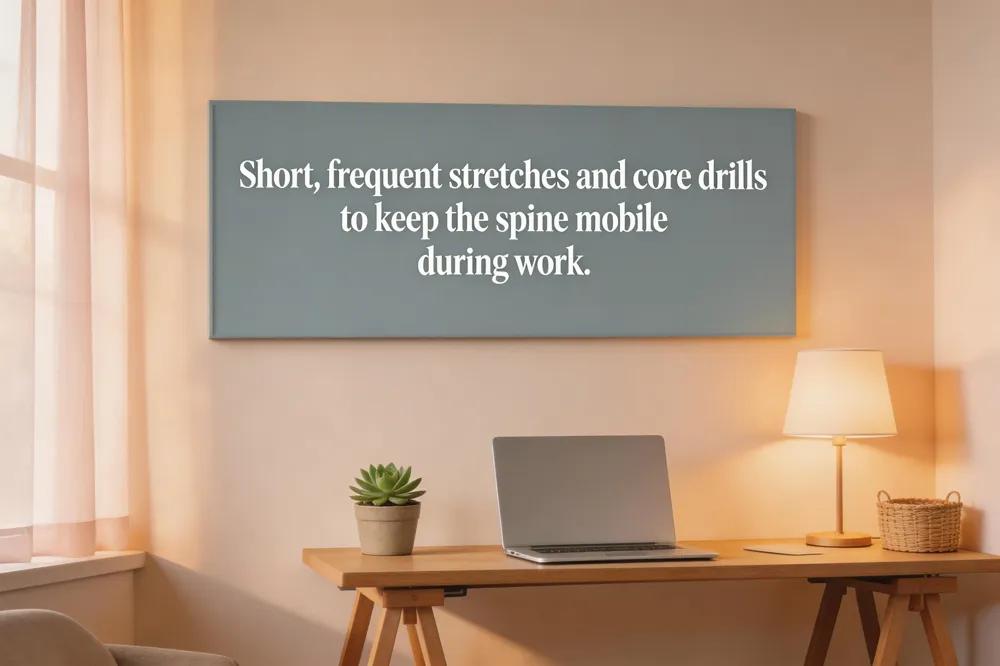 Micro‑breaks should be taken every 30–60 minutes and last 1–2 minutes, allowing you to stand, walk, or perform a quick stretch. This short interruption reduces intervertebral disc pressure, improves circulation, and prevents muscle fatigue.
Upper‑back mobility drills include thoracic extensions over a foam roller or rolled towel, shoulder‑blade squeezes (wall angels), and seated thoracic rotations. Perform each for 10–15 seconds to unlock the thoracic spine and counteract slouching.
Core‑strengthening routines for desk workers can be done in a few minutes: seated marches with abdominal bracing, glute‑bridges on the floor, and plank variations (modified on a stability ball or against a wall). Aim for 8–10 repetitions or hold for 30 seconds each session.
Simple workstation stretches: doorway chest opener, seated figure‑four stretch, neck rolls, and wrist extensions. Keep the monitor at eye level, elbows at a 90‑degree angle, and feet flat on the floor with lumbar support.
How to relieve upper back pain from sitting at a desk? Adjust the monitor to eye level, use a lumbar roll, and take a 20‑second thoracic extension every 30–60 minutes. Add shoulder‑blade squeezes and rows for strength. If pain persists, see Dr. Allison Ross, DC for chiropractic adjustments and myofascial release.
Exercise for back pain due to sitting long hours? Begin each break with seated marches, follow with a figure‑four stretch, then a thoracic extension, and finish with a glute‑bridge. Repeat hourly and finish the day with a short walk.
Upper back pain from desk job? Ensure proper workstation ergonomics, take micro‑breaks with shoulder‑blade squeezes, and incorporate doorway chest openers, thoracic rotations, and rows. Persistent discomfort warrants a personalized chiropractic evaluation by Dr. Ross.
Integrating Chiropractic Care for Long‑Term Relief
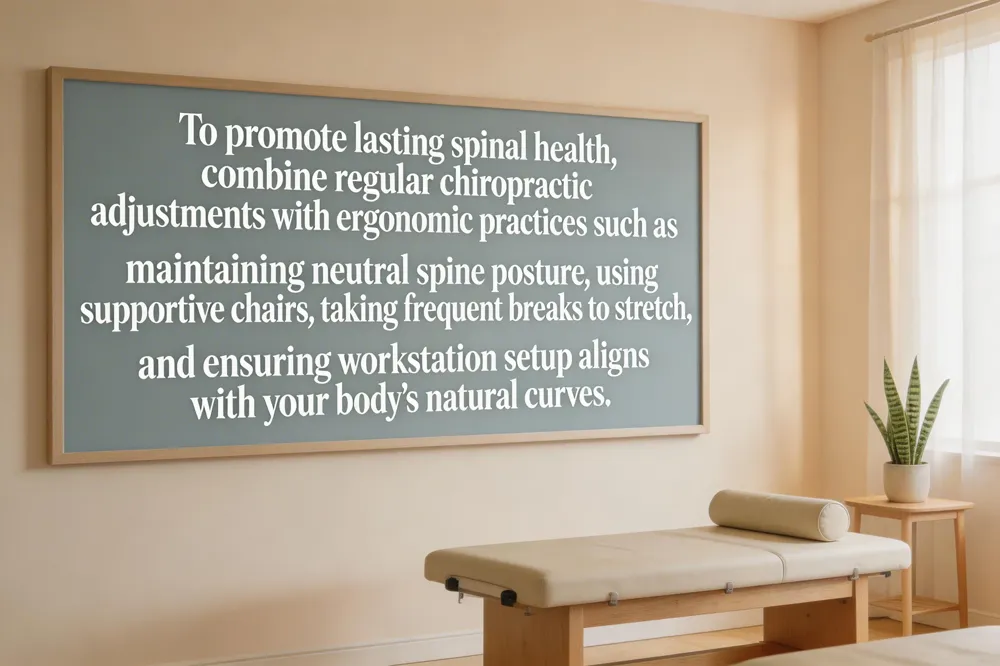 Integrating chiropractic care with ergonomic workplace practices creates a comprehensive, drug‑free strategy for lasting spinal health.
How to fix lower back pain from sitting? Start by adjusting the workstation: set the chair so hips are slightly higher than knees, use a lumbar roll or built‑in support, and place the monitor at eye level to avoid forward lean. Take micro‑breaks every 30‑60 minutes—stand, walk, and perform shoulder squeezes, cat‑cow, or seated twists—to keep the spine mobile. Add daily hip‑flexor, hamstring, glute, and lower‑back stretches (knee‑to‑chest, lumbar rotations, bridges). For persistent discomfort, apply ice or heat and consider low‑level laser or myofascial release. Schedule a chiropractic adjustment to restore vertebral alignment and develop a personalized, drug‑free plan.
Lower back pain when sitting but not standing? Pain that appears only while seated often reflects added disc or nerve pressure from slouching and inadequate lumbar support. Use an ergonomic chair with firm lumbar support, keep hips and knees at 90°, and insert short micro‑breaks to stand, walk, or perform pelvic‑tilt stretches every 10‑15 minutes. Strengthen core, glutes, and hip stabilizers, and add myofascial release or spinal decompression therapy to reduce nerve irritation. A chiropractic evaluation can determine if adjustments, custom orthotics, or other non‑invasive treatments are needed.
Back pain at work standing? Prolonged standing can strain the lumbar spine especially footwear is unsupportive or the workstation is mis‑aligned. Use an anti‑fatigue mat, wear supportive shoes, and keep the work surface at elbow height so shoulders stay relaxed. Alternate weight between legs, perform subtle hip circles, and take brief micro‑breaks for standing child’s pose or gentle forward flexion. If pain persists, chiropractic adjustments, myofascial release, or spinal decompression therapy can restore mobility.
Does back pain get worse with age? Age‑related disc dehydration, loss of collagen elasticity, facet‑joint arthritis, and reduced muscle mass increase vulnerability to back pain. However, pain is not inevitable. Regular chiropractic care can correct misalignments, improve joint mobility, and provide spinal decompression and myofascial release to counteract degeneration. Combined with corrective exercises, custom orthotics, and lifestyle education, these interventions preserve function and often reverse mild symptoms, keeping back pain from worsening as we age.
Preventive Workplace Policies and Education
 How to prevent back pain at work?
Implement regular ergonomic training and participatory ergonomics so employees can adjust chairs, monitors, keyboards and footrests to keep the spine’s natural S‑curve and feet flat on the floor. Encourage micro‑breaks every 20‑30 minutes for standing, shoulder rolls or gentle hip hinges to restore joint nutrition and reduce muscle fatigue. Teach safe‑lifting techniques—keep loads close, bend the knees, engage the core, avoid twisting, and provide mechanical aids such as lift‑assist devices or dollies for heavy items. Include core‑strengthening and spinal‑mobility exercises in wellness programs and offer on‑site chiropractic access for spinal adjustments, myofascial release and corrective exercises that maintain alignment and prevent chronic pain.
How to prevent back pain at work?
Implement regular ergonomic training and participatory ergonomics so employees can adjust chairs, monitors, keyboards and footrests to keep the spine’s natural S‑curve and feet flat on the floor. Encourage micro‑breaks every 20‑30 minutes for standing, shoulder rolls or gentle hip hinges to restore joint nutrition and reduce muscle fatigue. Teach safe‑lifting techniques—keep loads close, bend the knees, engage the core, avoid twisting, and provide mechanical aids such as lift‑assist devices or dollies for heavy items. Include core‑strengthening and spinal‑mobility exercises in wellness programs and offer on‑site chiropractic access for spinal adjustments, myofascial release and corrective exercises that maintain alignment and prevent chronic pain.
Workplace posture and ergonomics? Maintain a neutral spine: ears over shoulders, shoulders over hips, knees at 90°. Position the monitor at eye level about an arm’s length away to keep the neck in a neutral posture and reduce strain. Keep elbows at a 90° angle with wrists neutral, and use adjustable armrests and lumbar support. Provide footrests for those who cannot place feet flat, and keep frequently used tools within easy reach to avoid over‑reaching. Incorporate stress‑reduction initiatives such as mindfulness breaks and posture‑awareness reminders, which lower muscle tension and improve concentration. When discomfort persists, a personalized chiropractic evaluation can restore motion, address tightness and support long‑term spinal health.
Practical Tips for Home and Office Seating
 How to sit on a sofa with lower back pain? Choose a firm sofa with built‑in lumbar support or add a firm cushion/rolled towel behind the lower back to preserve its natural curve. Sit with hips pressed into the seat, feet flat on the floor or on a low footstool, keeping knees level with hips. Engage the core lightly, relax shoulders, and avoid slouching. Limit continuous sitting to 30‑45 minutes, then stand, stretch or walk briefly to relieve disc pressure. If pain persists, consider a custom orthotic or a brief spinal‑decompression session with a chiropractor such as Dr. Allison Ross.
Sit‑stand desk transition strategies – Start with 20 minutes of standing, gradually increasing to 30‑45 minutes while keeping the monitor at eye level and elbows at a 90-degree angle. Use an anti‑fatigue mat and alternate tasks to avoid fatigue.
Footrest and seat‑depth adjustments – Ensure footrest or on a footstool, knees at 90°, and seat depth that lets you slide a hand under the thigh. Adjust lumbar support to maintain a slight inward curve.
Personalized orthotics and supportive footwear – Custom orthotics correct lower‑limb alignment, reducing compensatory lumbar strain. Choose shoes with arch support and cushioned soles, especially when using standing desks, to promote overall spinal health.
Putting It All Together
A truly pain‑free office combines three pillars: an ergonomic workstation, regular movement, and professional spinal care. Start by setting up a chair with adjustable lumbar support, keeping feet flat (or on a footrest) and knees at 90°, and placing the monitor at eye level about an arm’s length away; elbows should rest at a 90° angle while typing. Pair this setup with micro‑breaks every 30–60 minutes—stand, roll shoulders, do gentle hip hinges—to restore joint nutrition and prevent muscle fatigue. Finally, schedule periodic chiropractic evaluations with Dr. Allison Ross, who can fine‑tune spinal alignment, address lingering joint restrictions, and provide corrective exercises that reinforce the ergonomic gains. Consistency is the secret: maintain the ergonomic habits daily, take the brief movement breaks habit and follow Dr. Ross’s personalized plan to keep your spine healthy for the long haul.