Why Expecting Moms Turn to Chiropractic Care
Prenatal chiropractic care is regarded as safe when performed by a practitioner with prenatal training and using pregnancy‑friendly tables, cushions, and low‑force techniques. Adjustments avoid direct abdominal pressure and are tailored to the mother’s changing biomechanics, eliminating concerns about miscarriage or fetal harm. The most frequent complaints pregnant women seek relief for include lower‑back pain, pelvic girdle strain, sciatica, neck tension, round‑ligament pain, and headaches—issues that arise from hormonal ligament laxity and shifting center of gravity. Because chiropractic treatment is non‑invasive, drug‑free, and focuses on restoring spinal and pelvic alignment, it offers a holistic option that reduces reliance on medication, supports nervous‑system function, and promotes overall comfort throughout pregnancy. Regular visits improve posture, circulation, and may shorten labor for delivery.
Myth #1: Adjustments Are Unsafe and Can Harm the Baby
 Prenatal chiropractic care uses gentle, pregnancy‑specific techniques that are adapted for the changing anatomy of expectant mothers. Chiropractors employ low‑force adjustments often with an Activator instrument or the Webster Technique, and position patients in side‑lying, seated, or supported postures that keep the abdomen free of direct pressure. Professional research and clinical observations consistently show no increased risk of miscarriage, preterm labor, or fetal harm when adjustments are performed by a qualified practitioner with prenatal training. Major bodies such as the American College of Obstetricians & Gynecologists and the International Chiropractic Pediatric Association endorse chiropractic as a safe, non‑invasive complement to obstetric care.
Is chiropractic safe during pregnancy?
Yes. When delivered by a certified prenatal chiropractor, adjustments are gentle, drug‑free, and tailored to each trimester, helping maintain spinal and pelvic alignment, relieve pain, and may even aid optimal fetal positioning.
Can you lie on your stomach at the chiropractor while pregnant?
No. Pregnant patients are never placed prone; instead, side‑lying or seated positions with cushions and pelvic‑blocking wedges are used to protect the uterus while allowing effective adjustments. This approach ensures comfort and safety for both mother and baby throughout pregnancy.
Myth #2: Chiropractic Causes Miscarriage or Preterm Labor
 Extensive research shows No evidence that chiropractic care causes miscarriage between prenatal chiropractic adjustments and miscarriage or preterm labor. Large retrospective reviews and systematic analyses report adverse of such events when treatments are performed by chiropractors with specialized prenatal training. These practitioners use gentle, low‑force techniques—often side‑lying on padded tables, instrument‑assisted (Activator) impulses, or the Webster Technique—to avoid any direct pressure on the abdomen and to respect the increased ligament laxity of pregnancy. Because the uterus is not the target of the adjustment, the risk of uterine stimulation is negligible.
Is chiropractic safe during pregnancy? Yes. When a chiropractor holds certifications such as DACCP, CACCP or Webster Certification, and follows pregnancy‑specific protocols, care is considered safe throughout all trimesters. Adjustments are drug‑free, non‑invasive, and aim to restore spinal and pelvic alignment, reduce musculoskeletal pain, and may improve fetal positioning. Coordination with the obstetrician or midwife is essential to ensure that any contraindications—such as bleeding, placenta previa, or severe preeclampsia are identified before treatment.
Can chiropractic help ALS? Chiropractic can provide temporary relief of neck, back, or joint discomfort that often accompanies amyotrophic lateral sclerosis (ALS), helping patients maintain a more comfortable posture. However, there is no evidence that spinal adjustments alter the neurodegenerative progression of ALS. Chiropractic should be viewed as an adjunct for symptom management, not a disease‑modifying therapy. Patients should continue primary care with a neurologist and a multidisciplinary team for comprehensive ALS management.
Myth #3: Chiropractic Is Only for Back Pain
 Many expectant mothers think chiropractic care only eases back pain, but prenatal chiropractors also treat joint discomfort, sciatica, and tension‑type headaches. Gentle, low‑force adjustments restore proper spinal and pelvic alignment, which can increase intrauterine space and encourage optimal fetal positioning, reducing the chances of breech or posterior presentations and potentially lowering the need for cesarean delivery. The same adjustments promote relaxation, lower muscular tension, and improve sleep quality, helping pregnant women cope with stress and fatigue.
Benefits of chiropractic care during pregnancy Chiropractic care safely relieves low‑back, neck, hip, and sciatic pain by correcting misalignments, improves posture, and can lessen nausea. Maintaining pelvic balance creates more space for the baby and supports optimal fetal positioning. A well‑aligned nervous system supports overall maternal health, and regular adjustments have been linked to shorter, smoother labor.
Pros and cons of chiropractic care during pregnancy Pros include pain relief, better posture, enhanced fetal space, reduced nausea, improved sleep, and possible labor shortening. Cons are minimal when care is provided by a trained prenatal chiropractor; patients must avoid high‑force thrusts, use pregnancy‑adjusted tables, and obtain obstetric clearance. While scientific evidence continues to grow, the benefits generally outweigh the modest risks for most pregnant women.
Trimester‑Specific Care: What to Expect in 1st, 2nd, and 3rd Trimesters
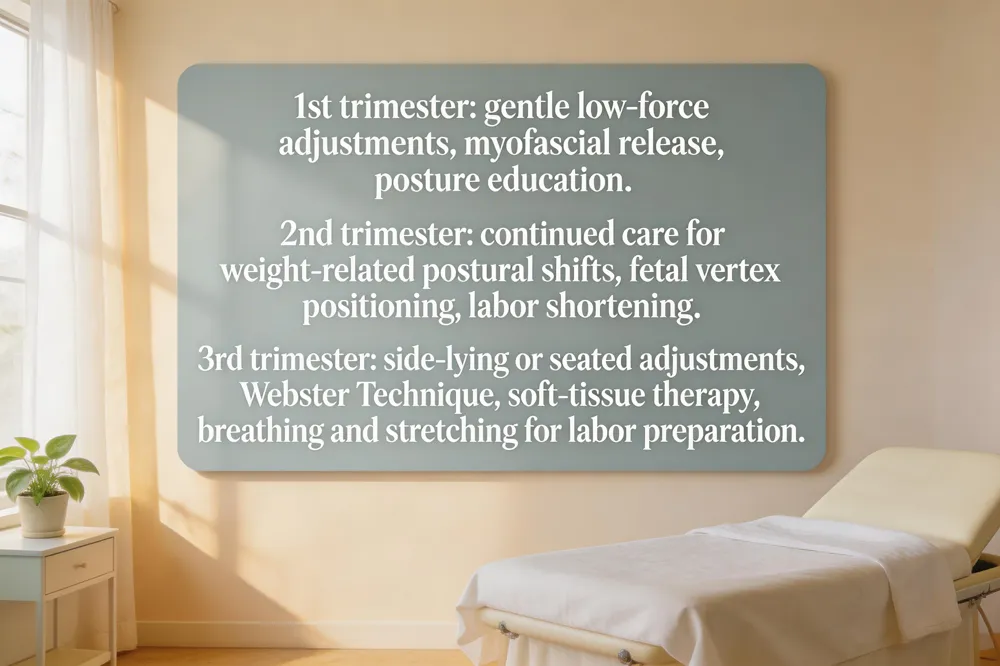 Chiropractor while pregnant 1st trimester
During the first trimester, prenatal chiropractic is safe and uses gentle, low‑force adjustments that avoid abdominal pressure. Trained practitioners employ pregnancy‑specific tables, myofascial release, corrective exercises, and posture education to relieve early low‑back, neck, and pelvic discomfort. Maintaining spinal and pelvic alignment supports the nervous system, which can lessen nausea, improve sleep, and promote optimal fetal positioning, reducing later intra‑uterine constraints.
Chiropractor while pregnant 2nd trimester
The second trimester is ideal for continued care as weight gain and postural shifts increase strain on the spine and pelvis. A certified prenatal chiropractor—such as Dr. Allison Ross, DC—provides drug‑free, gentle adjustments, soft‑tissue work, and ergonomic advice. Regular visits help keep the pelvis balanced, may encourage the baby to settle into a vertex position, and can shorten labor while lowering cesarean risk. Coordination with the obstetric provider ensures safe, complementary treatment.
Chiropractor while pregnant 3rd trimester
In the third trimester, comfort is paramount. Adjustments are performed in side‑lying or seated positions, often using the Webster Technique to relax the sacrum and round ligaments. Soft‑tissue therapies, myofascial release, and cold‑laser treatment reduce tension and improve circulation. Personalized stretching and breathing exercises prepare the pelvis for labor, supporting a smoother, less‑intervention delivery.
Special Techniques: The Webster Technique and Pregnancy‑Friendly Adjustments
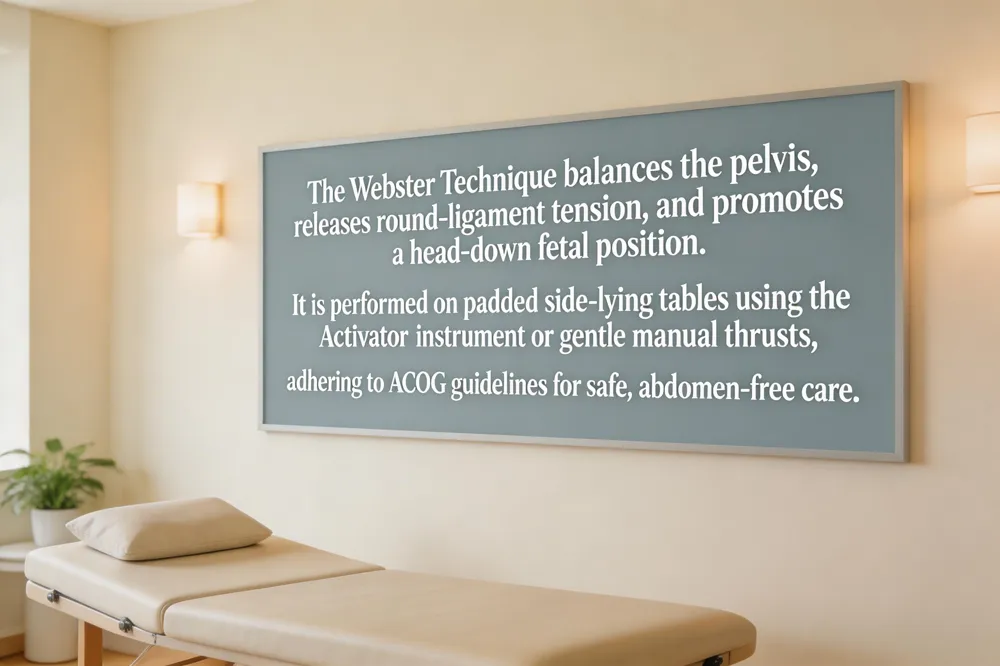 The Webster Technique is a gentle, pregnancy‑specific chiropractic adjustment that balances the pelvis, eases sacral subluxations, and releases tension in the round ligaments. By creating more intra‑uterine space, it helps relieve lower‑back pain, sciatica, and pelvic discomfort while encouraging the baby to assume a head‑down (vertex) position, which can contribute to a smoother labor. Dr. Allison Ross, DC, is certified in the Webster Method and performs it on a padded, side‑lying table to protect the abdomen.
ACOG acknowledges that chiropractic care, when delivered with low‑force, abdomen‑free techniques, can be a safe, non‑pharmacologic adjunct to prenatal care. Dr. Ross follows these recommendations, using specialized tables, pelvic‑blocking wedges, and the Activator instrument to maintain spinal and pelvic alignment, reduce pain, and support optimal fetal positioning.
Finding the Right Prenatal Chiropractor Near You
 When selecting a prenatal chiropractor, look for credentials such as DACCP, CACCP, or Webster certification, which signal specialized training in pregnancy‑specific biomechanics. The office should feature pregnancy‑friendly equipment—adjustable tables, bolsters, and side‑lying positions—to avoid abdominal pressure and ensure comfort. Visit frequency is individualized: many women begin with weekly or bi‑weekly sessions in the first trimester, continue weekly in the second, and maintain weekly or bi‑weekly care in the third trimester, while occasional month‑to‑month check‑ins may suffice once alignment is established.
Prenatal chiropractor near me – Dr. Allison Ross, DC offers gentle, drug‑free prenatal care in San Jose, CA, using the Webster Method and pregnancy‑friendly tables to relieve back, pelvic and sciatic discomfort and promote optimal fetal positioning.
How often should a pregnant woman see a chiropractor? – Schedule starts with weekly or bi‑weekly visits, tapering to monthly check‑ins if pain eases, with adjustments made as the pregnancy progresses.
Pros and cons of chiropractic care during pregnancy – Pros include pain relief, improved pelvic alignment, reduced nausea, better sleep, and possibly shorter labor; cons are minimal when care is provided by a trained specialist, though high‑force techniques must be avoided and obstetric clearance is recommended.
Bottom Line: Safe, Gentle, and Beneficial Care
Research and clinical experience show that chiropractic adjustments, when performed by a practitioner with prenatal training, are safe for pregnant women and their developing babies. Gentle, low‑force techniques avoid pressure on the abdomen and respect hormonal ligamentous laxity, eliminating any credible link to miscarriage or preterm labor. Benefits include reduced low‑back, pelvic and joint pain; improved spinal and pelvic alignment that can promote optimal fetal positioning; enhanced mobility and reduced stress; and a smoother, potentially shorter labor. Expecting mothers should seek chiropractors with certifications such as DACCP, CACCP, or Webster Technique training, and discuss care with their obstetric provider to ensure coordinated, compassionate support.